


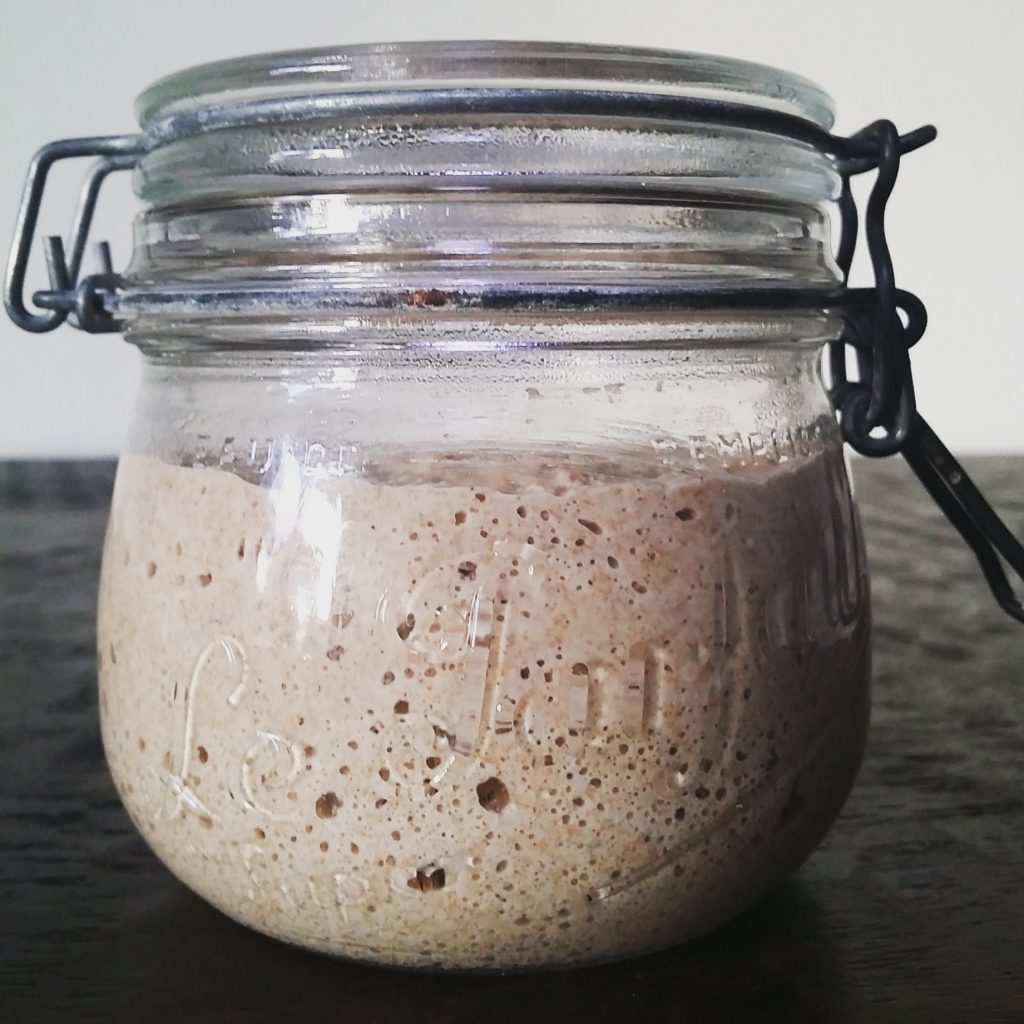
I can’t look after more than four starters. My ginger bug Mary Ann, my kombucha SCOBY Etheldreda, my sourdough starter Eleanor and my buttermilk Betty all need regular feedings or they’ll die. I take care of this little family in addition to fermenting all sorts of other foods that don’t require starters—kimchi, dill pickles, chutney, beet kvass, salsa, preserved lemons and limes, mead… Jars of fermented food have taken over at least half of my refrigerator.
If I take on another starter I will become the crazy cat lady of fermentation. Starters, like pets, need regular attention. They also need names. I have a theory that if you name a starter, you’ll take better care of it. But keep in mind that I have also knit my starters sweaters. So that alone may have already conferred “crazy cat lady of fermentation” status…

If fear of committing to the responsibility of taking care of starters has prevented you from taking one (or more) on, I have good news. Unlike with pets, you can take little—or even long—breaks from dealing with your starters.
Kombucha SCOBY
If we have a hot humid summer, my kombucha will ferment in three days rather than the usual seven or eight. I basically have a part-time job brewing the stuff. So I’ll take a break by checking my SCOBYs into a SCOBY hotel. I do this in the winter also, when we tend to drink less kombucha.
To make a SCOBY hotel, prepare a large jar of tea for kombucha as usual—brew it, sweeten it and after it cools, add kombucha from the previous batch—then fill the jar with SCOBYs. Let this sit for up to two months, then start the process again.
If, during that two months, you want to make kombucha, brew some in a jar and pull out a SCOBY from your SCOBY hotel. But let the spares sit in there and give yourself—and your SCOBYs—a vacation. I always fill a few SCOBY hotels with occupants. If disaster—mold—should strike my brewing kombucha or a hotel, I have backup and can start over.

Ginger Bug
About a month ago, I brewed several bottles of natural sodas using my ginger bug. To make these, I strain minced ginger out of my ginger bug and add the remaining liquid to my concoctions—sweetened hibiscus tea or lemonade or sweetened ginger-infused water. A few days later, I’ll have an incredibly delicious carbonated drink.
I don’t like to waste the minced ginger I strain out. I usually make additional drinks by simply adding this bacteria- and yeast-rich ginger to another concoction. It works well. But after having already brewed several bottles of soda, I wanted a break. I didn’t want to deal with the minced ginger. I didn’t need more soda. So I put it in the freezer in a small jar. Weeks later, I pulled it out and made absolutely fabulous limeade with it. (I wish I had a glass of it right now!)
Freezing the minced ginger gave me a nice little respite from brewing something right then and there.

Sourdough Starter
If I keep my sourdough starter out on the counter—usually the case when I bake weekly—I feed it daily. If I don’t feel like baking one week, I’ll put Eleanor in the refrigerator and pull her out to feed her after a week or so. If I still don’t feel like baking, I’ll put her back in the refrigerator.
In a sourdough bread boot camp I taught at the end of May, attendees asked me if sourdough starter would survive freezing. I regularly freeze apple peels and cores until I have amassed a large enough pile to ferment a batch of scrap vinegar. It works well. The microbes go dormant rather than die as they would if exposed to high heat. So, I figured my starter would survive in the freezer. I told the class I would freeze a few tablespoons as an experiment.

How sourdough starter fared in the freezer
Last week—now September, almost four months later—I thawed out the frozen starter. Let’s call this Day 1. I took her to work to keep an eye on her (totally normal behavior).

At night, as I prepared to feed now-thawed Eleanor, I realized I had no flour! So I ground up some wheat berries and rye berries in my grain mill. My grain mill does a nice job on small amounts of flour and my starter needs only a little at each feeding.


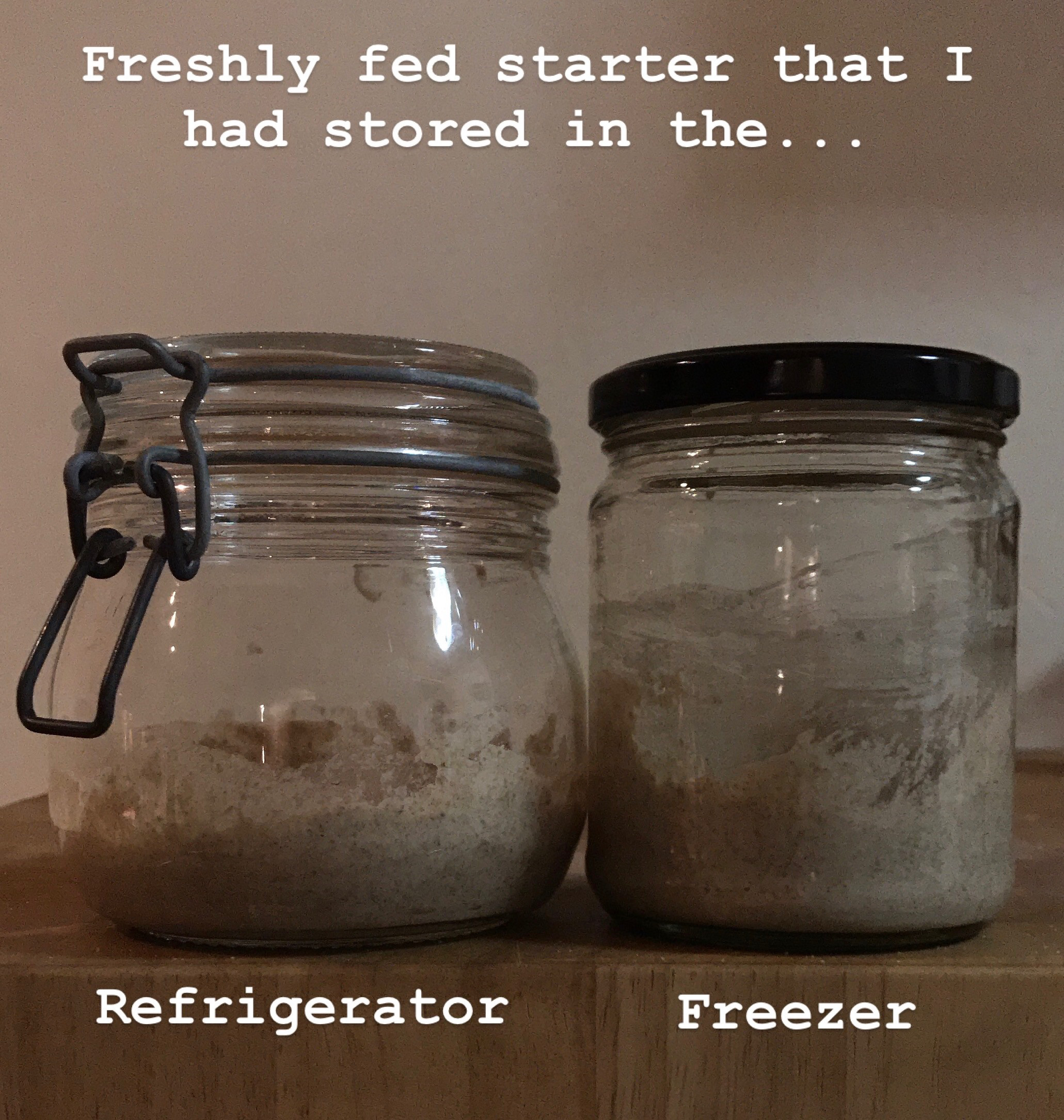

I fed the thawed starter and also some starter that I had kept in the refrigerator for a little over a week. After one feeding, the refrigerator starter rose and fell, smelled sour and yeasty and slightly fruity and tasted quite tangy—all the usual sort of behavior for a healthy sourdough starter. The previously frozen starter developed a few bubbles and only a very slightly sour flavor and odor.
I fed both starters a second time—now day 2.


Overnight, they both rose nicely, developed lots of gas-filled bubbles, and smelled and tasted as they should. All was well.
I have named my starters. I have flown with my starters. I have knit clothing for my starters. I have thrown birthday parties for my starters. I am a crazy starter lady. I may as well go all out and take on kefir grains too. If you live in the Bay Area and have any to spare, please let me know.