

Click here to go straight to the recipe

If you can brew a pot of tea, you can brew kombucha.
The only trick to making kombucha is obtaining a mother to get started. A generous Twitter friend sent me part of hers and my mother (I named her Etheldreda) has been reproducing like mad.
Otherwise known as a SCOBY (a symbiotic community of bacteria and yeasts), a mother will transform sweetened tea into an effervescent, probiotic and delicious fermented beverage.
You cannot make kombucha without sugar—the sugar fuels the fermentation. I realize sugar is bad (I’ve read Dr. Lustig’s book; I’ve seen the movie) but very little sugar remains in kombucha. In fact, if you let yours ferment for several weeks, your mother will consume all the sugar and transform your ferment into vinegar—a useful accident in my opinion. Between kombucha and scrap vinegar, I can make most of the vinegar I need.
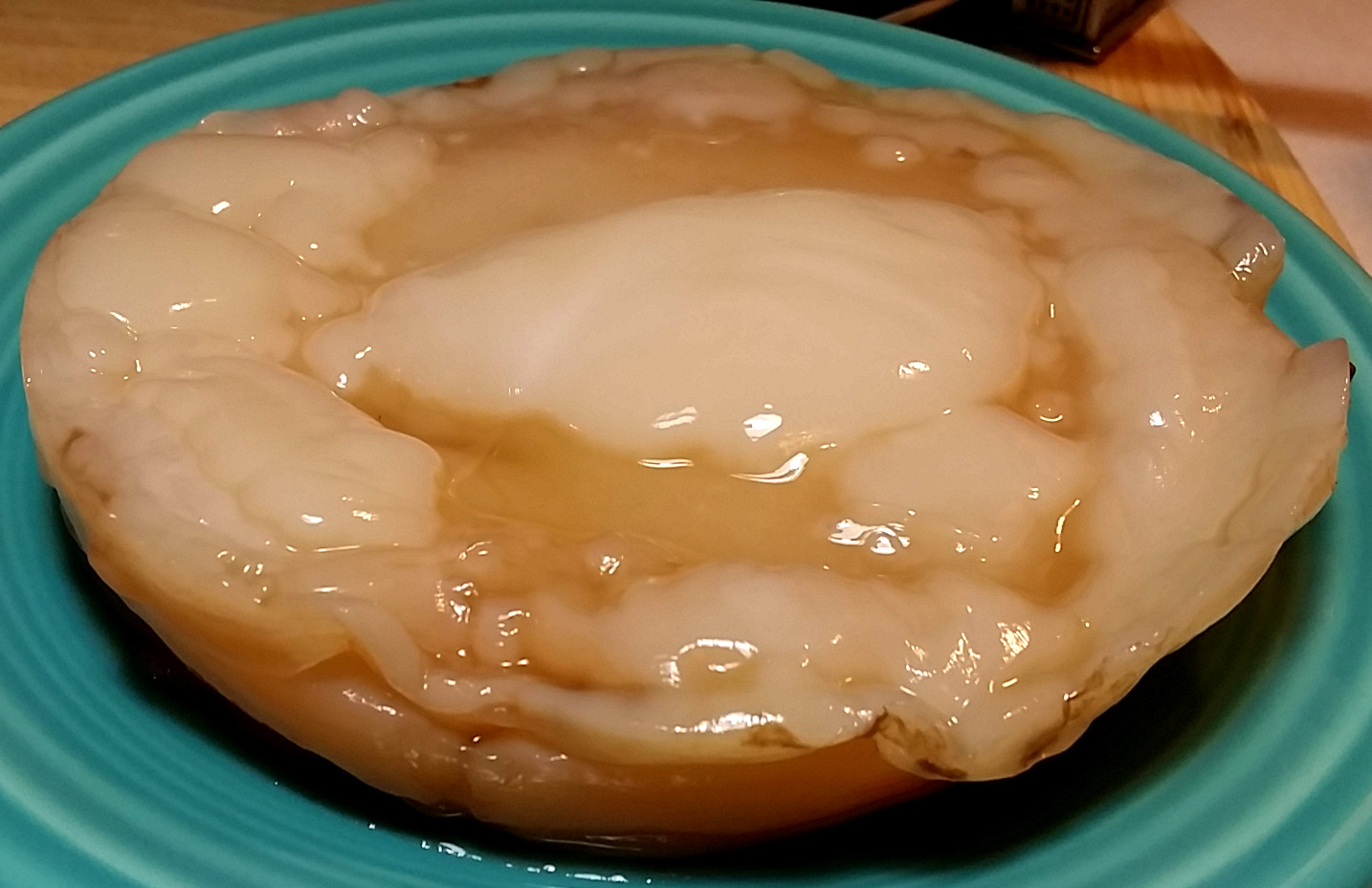
In Search of a Mother
To make kombucha, you will first need to procure yourself a mother. You have a few methods:
- Find a community of fermentos. They will love to share some of their ever-growing mothers with you. I searched Craigslist just now and found someone trying to unload theirs.
- Buy a bottle of fresh and active raw kombucha, pour some into a wide-mouth vessel and cover with a cloth that allows air to circulate. A thin mother will begin to form on top in a few days (see below).

- Order a culture from a store such as Cultures for Health.
Ingredients
Yields approximately two, 400-ml bottles
- Enough looseleaf tea for 4 cups brewed tea
- 1/2 cup sugar
- 4 cups water
- 1/3 cup kombucha from previous batch OR 2 tbsp raw cider vinegar
For zero-waste, I buy all my ingredients in bulk, shopping with jars and homemade cloth produce and bulk bags.
Directions (based on Sandor Katz instructions in The Art of Fermentation)
Use a wide-mouth jar for brewing kombucha. Unlike some other ferments (such as mead), you want this one to come into contact with as much air as possible in order to attract acetic acid bacteria.
1. Brew a cup of very strong, concentrated tea. Black, green, oolong or white tea will work. Don’t use anything scented with oils, like Earl Grey. The oils may cause your mother to shrivel and die.
2. Add about 1/2 cup of sugar to the hot tea. Stir to dissolve. You may want more or less sugar in your next batch.
3. After the sugar has dissolved, add three cups of cool water. Hot water will kill your mother, so brewing concentrated tea and then cooling it with water takes less time than waiting for a full four cups of hot tea to cool down.
Chlorine may also adversely affect your mother. If your tap water contains high amounts of chlorine, several hours before you make kombucha, pour tap water into a vessel and leave open to the air to dissipate the chlorine.
4. When the tea has reached room-temperature, stir in either fresh, lively kombucha (about 1/3 cup) OR 2 tbsp raw cider vinegar (i.e., Braggs). Throw in your mother and cover the vessel with a porous cloth that allows air to circulate. The mother should float to the surface.
The first time I made kombucha, my mother sank to the bottom and there she remained. I had put off making my kombucha for at least a week after I received her in the mail. Initially, no transformation took place in my brew and I felt guilty for neglecting my mother and allowing her to die (so I thought). However, after about a week, a new film formed on the surface of my tea! Weak yet alive, my mother slowly fermented my tea over a period of a few weeks. Today, my active, lively, fertile mother constantly makes babies and my kombucha ferments quickly (about a week).
5. Taste the kombucha after a week or so. If you like the taste, you can drink it straight from the jar at room temperature or you can bottle it for a secondary fermentation and then chill it. Either way, set some aside to brew the next batch.
6. If I bottle my kombucha, I flavor it with a few pieces of candied ginger per bottle. It tastes SO good! For the secondary fermentation, I use bottles with a rubber gasket and clamp. Fill them, seal them and let the kombucha sit out on the counter for a couple of days to carbonate before transferring it to the fridge where fermentation and carbonation will slow down. Depending on how much sugar remains in your kombucha, the secondary fermentation may be very active. BE CAREFUL! Due to pressure from CO2, a byproduct of fermentation, bottles can and do explode if you let them ferment too long.

When opening your bottle, wrap a towel around it in case it spews into the air like a bottle of shaken soda. I haven’t had much trouble with volcanic bottles (or exploding ones—knock on wood), but the towel is a good precaution. After you have brewed several batches you will get a better idea of how long to ferment your kombucha to the taste you crave.
Enjoy!
Kombucha
Yields approximately two, 400-ml bottles
Ingredients
- Enough looseleaf tea for 4 cups brewed tea
- 1/2 cups sugar
- 4 cups water
- 1/3 cup kombucha from previous batch OR 2 tbsp raw cider vinegar
Directions
1. Brew a cup of very strong tea in a wide-mouth vessel. Black, green, oolong or white tea will work.
2. Add about 1/2 cup of sugar to the hot tea. Stir to dissolve.
3. After the sugar has dissolved, add three cups of cool water.
4. When the tea has reached room-temperature, stir in either fresh, lively kombucha (about 1/3 cup) OR 2 tbsp raw cider vinegar (i.e., Braggs). Throw in your mother and cover the vessel with a porous cloth that allows air to circulate. The mother should float to the surface.
5. Taste the kombucha after a week or so. If you like the taste, you can drink it straight from the jar at room temperature or you can bottle it for a secondary fermentation and then chill it. Either way, set some aside to brew the next batch.
6. For the secondary fermentation, fill and seal bottles. Flavor with candied ginger if desired. Let the kombucha sit out on the counter for a couple of days to carbonate before transferring it to the fridge. BE CAREFUL! Bottles can and do explode if you let them ferment too long.