

I’m surprised no store employee or manager escorted me from the supermarket premises today. Looking for food to snap pictures of for this post, I kind of went a bit crazy once I started. I found so much material!
If aspects such as added sugar, overpackaging and dead food lacking nutrients don’t turn you off of processed food, maybe the fact that Big Food thinks we’re gullible at best will do the trick.
1. Vegetarian eggs
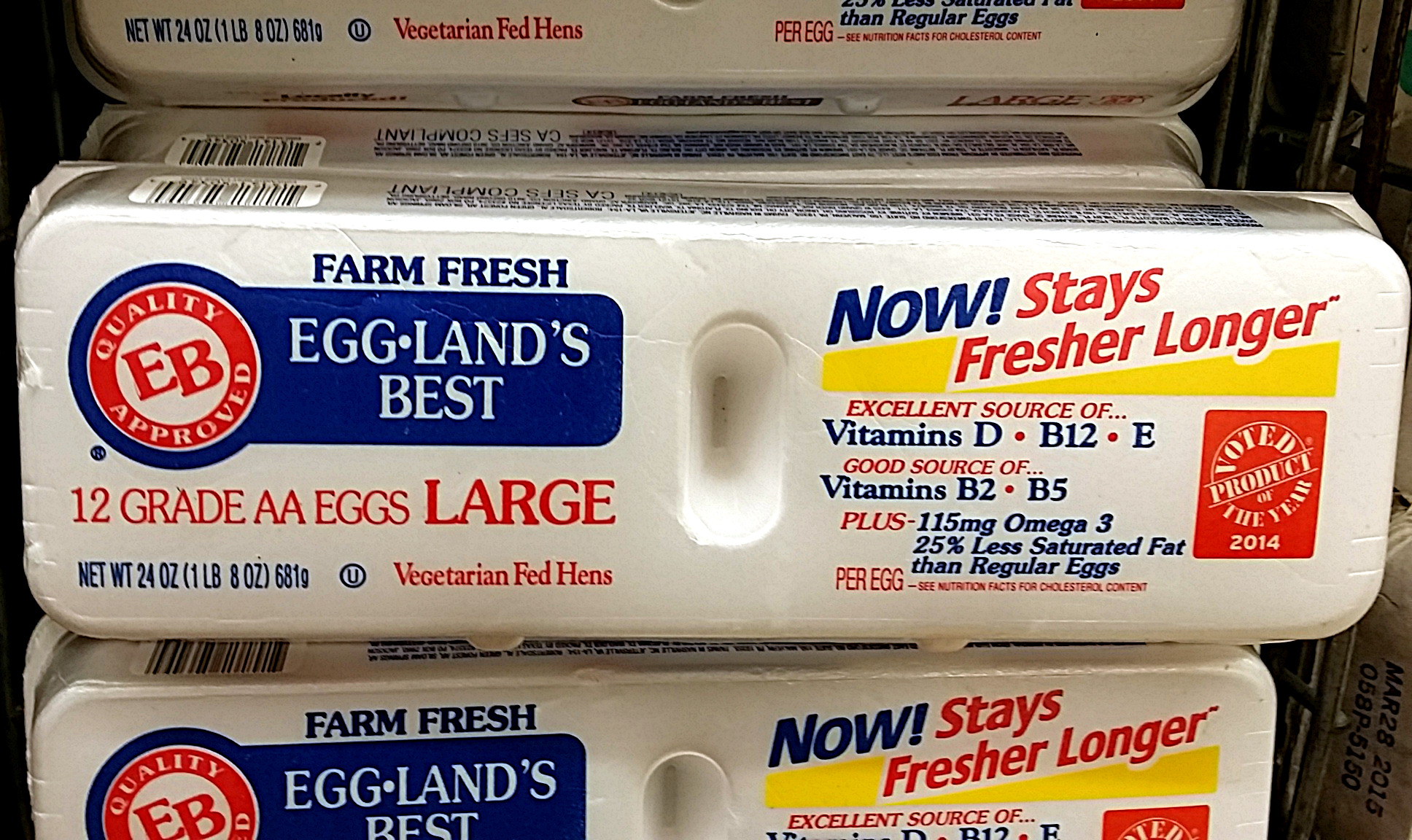
Wait, what? Chickens eat bugs, worms, maggots and so on, which they dig around for in the dirt. In other words, they don’t naturally eat a vegetarian diet. So, while you can feel good about supporting a farm that does not feed its hens animal by-products, you do have to question how the egg producers prevented them from eating bugs, worms, maggots and so on. Literally cooping them up indoors would achieve this end. And don’t let language such as “cage-free” fool you! That means nearly as little as “all-natural.” Cage-free hens live indoors for most of their lives, with access to a patch of grass near the end of their lives, by which time they have been conditioned not to go out there.* I buy my eggs from the CSA that my intentional community runs. These chickens spend their days outside eating what chickens like to eat (things that move).
2. Best-before dates
Does Diet Pepsi actually ever go bad? Probably about as much as aging Round Up does. Best-before dates encourage people to waste food and thus buy more. Generally unregulated, these dates do not indicate food safety. These suggested dates from the manufacturer indicate the food company’s opinion of peak quality. Most real food has no best-before date stamped on its package because it has no package. Follow the best-to-keep-it-on-the-store-shelf rule.
3. Health claims

This company certainly understands its target market! You can give it a gold star for that at least. I think it missed an opportunity for another health claim in the space between the American flag and “Blueberry.” Imagine the health claims of the blueberries alone if the fruit grew with slogans printed on it (maybe Monsanto is working on that):
- Packed with antioxidants
- Rich in vitamins C, E and K
- One cup contains 3.6 grams of fiber
4. Egregious greenwashing

Back when my kids were little, before I eliminated plastic from our lives, I admit I bought cereal like this (and other junk). Of course we all want to save the pandas and the apes and the chimpanzees and the lemurs. The marketers, knowing this, play on our desire to do the right thing (that and our kids’ love of cute furry animals). Consuming sugary, overpackaged cereal probably isn’t the best way to help wildlife. Cutting disposable plastics will help however.
5. Sugar by any other name would taste as sweet

Agave nectar. Barley malt. Beet sugar. Blackstrap molasses. They all have such benign-sounding names. Sugar is sugar and processed food has 56 names for the stuff. Your liver can’t tell the difference between vilified high fructose corn syrup and organic brown rice syrup.
6. Down-on-the-farm-all-American wholesomeness

A few years ago, when my kids returned from their great uncle’s canola farm in Saskatchewan, they told me about the giant barrels of pesticides they saw with skulls plastered all over them. Their great uncle owns a family farm just like the farmers who make the ingredients for this junky stuff.
7. Pasture-raised™
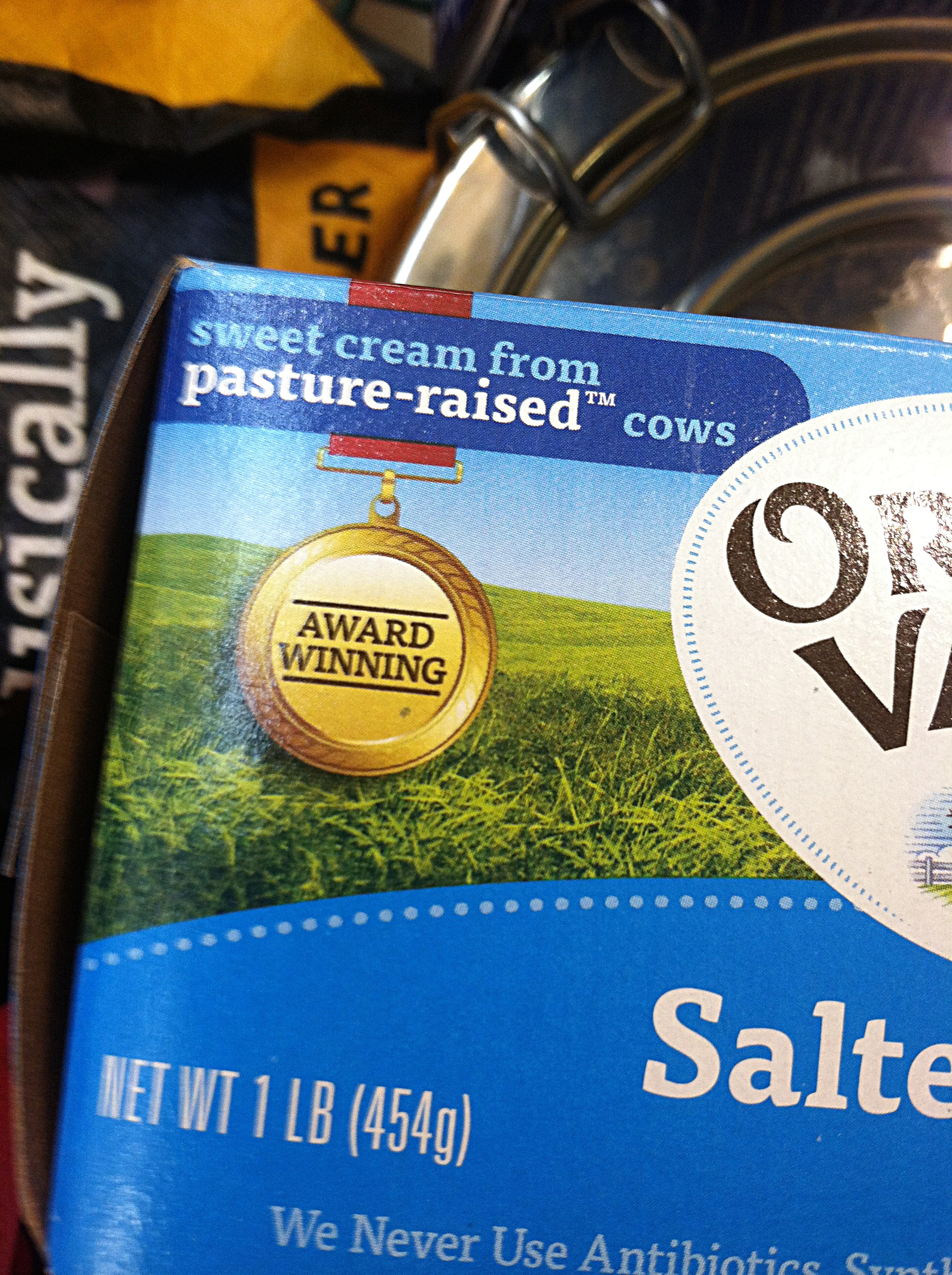
God help us all. Pasture-raised has been trademarked? Are we this far removed from knowing where our food comes from—where it should come from—that consumers, or at least people who work at the US Patent and Trademark Office, think pasture-raised dairy cows represent some new-fangled technological breakthrough that requires intellectual property protection?! This one just depresses me. Someone please leave a good joke in the comments to cheer me up…
*Read The Omnivore’s Dilemma for the full story on cage-free.