

At a holiday office lunch last week, some of my coworkers complained about women they have blocked on Facebook. Their crime? Posting too many new baby pics. While I understand not wanting to see every minute of a newborn’s life documented in one’s feed, I’m just like these new mothers, except I post pictures of bread not babies. And today I’m subjecting you to my latest loaves—my best ones yet!
I follow (mostly) Michael Pollan’s sourdough bread recipe in his brilliant book Cooked: A Natural History of Transformation, which I highly recommend. Pollan outlines not only the history of cooking, but also what we gain by performing what today constitutes an act of rebellion: better-tasting, healthier food; improved relationships with our families; decreased dependency on Big Food; stronger communities; more engagement with the natural world; and more.
I couldn’t find Pollan’s sourdough recipe online, but he bases it on Chad Robertson’s, which I did find here. You can read about my sourdough starter, Eleanor, here.
I produce zero trash when baking this bread. I buy the ingredients in bulk, either filling glass jars or homemade cloth produce/bulk bags, which I always carry with me to the store.
And now for the baby bread pictures.
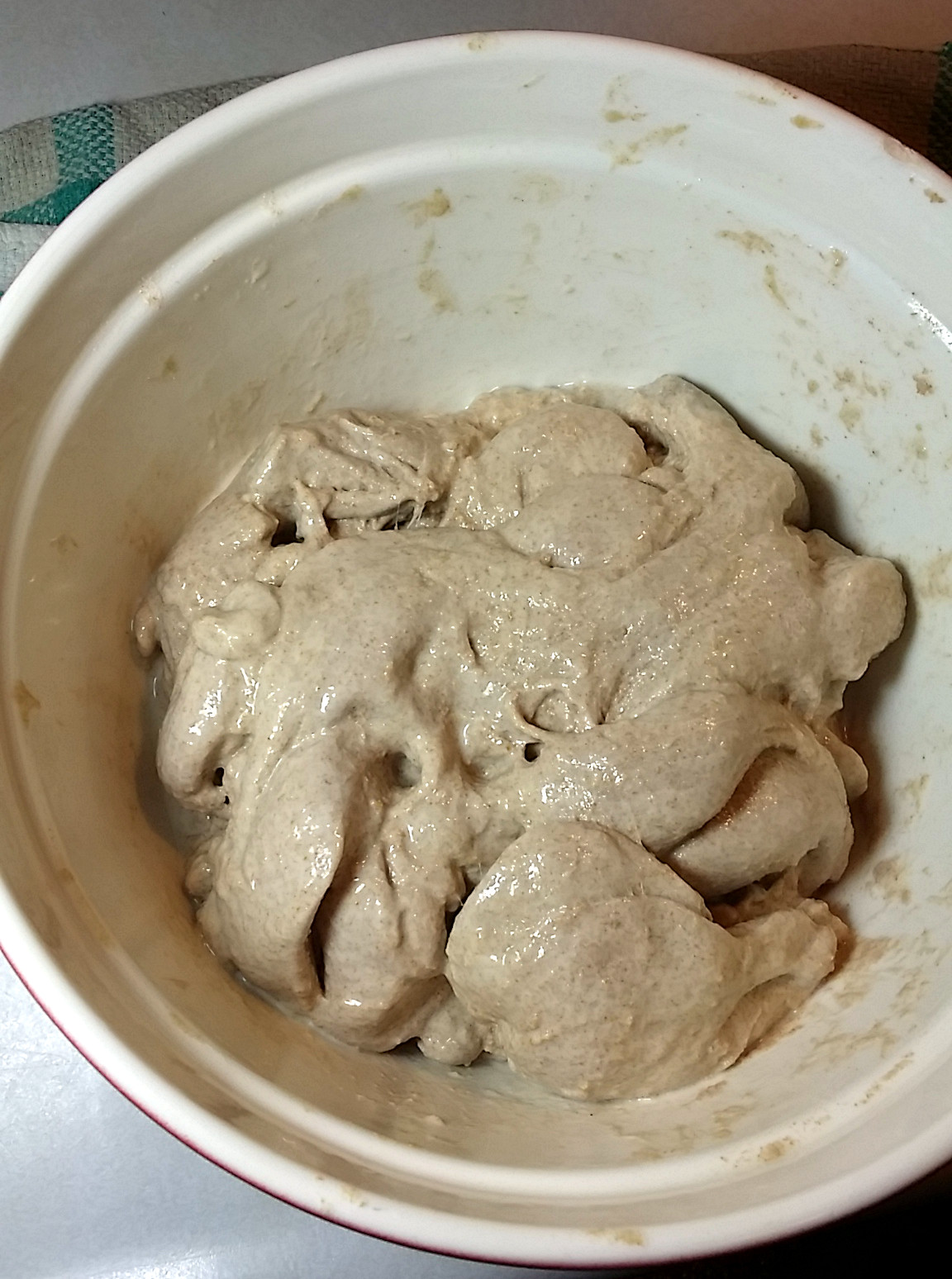
My bread was first conceived as a leaven (a larger starter), late one night in my kitchen. Below you see it the morning after.

I added half the leaven to flour (600 grams whole wheat, 150 grams rye, 250 grams white) I had soaked the night before in 700 grams of warm water. After letting this rest for about 20 minutes, I added 25 grams of coarse salt mixed with 50 grams of warm water, resulting in the formless sticky blob below.
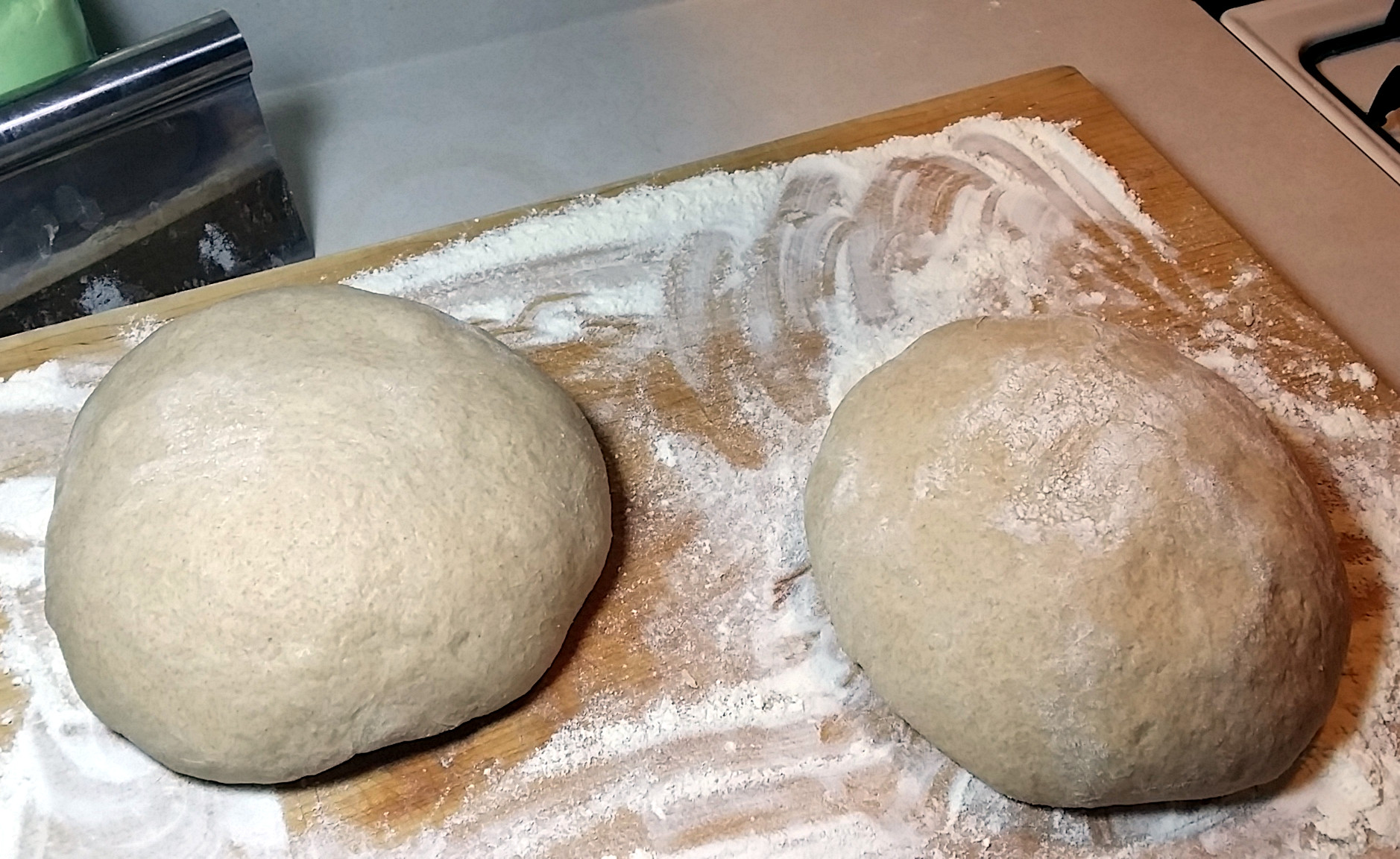
As the bread fermented, I turned it every 45 minutes or so over a period of four to five hours. I took the pictures below after the third (or fourth?) and the last turns. Over these hours, the dough gained elasticity and air and felt, well, downright sensual.




Just before baking in my Dutch oven, I scored the loaf tops with a razor blade. The blade works so well for this purpose. I can’t manage to score dough well with a kitchen knife.

Each loaf came out at about 1 pound (at least). The one of the left is a bit bigger (see below).

Only one more bread picture, I promise…
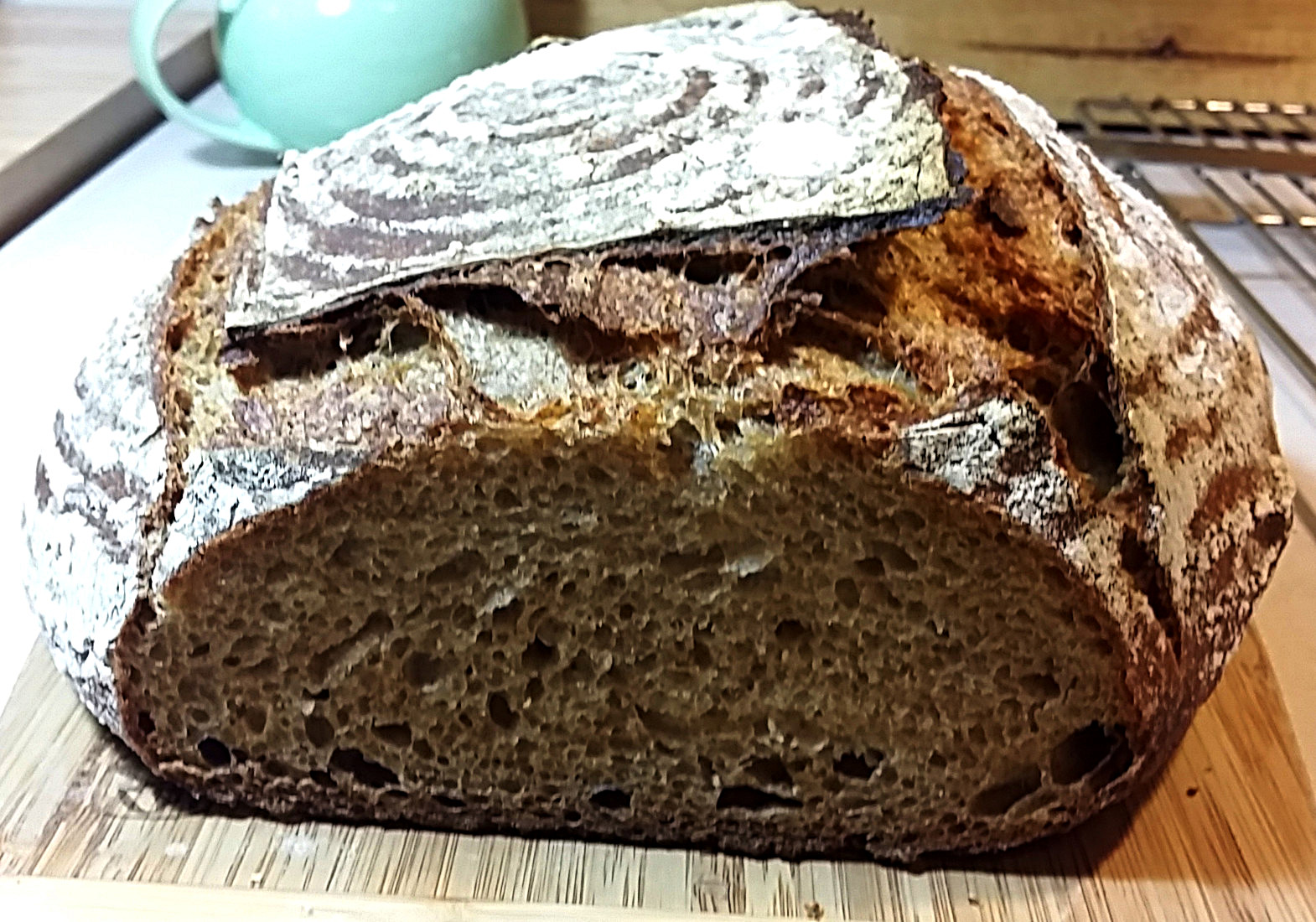
When people hear I live (nearly) plastic-free and zero-waste, they may imagine I live a dreary, monkish life of self-deprivation and self-flagellation. It’s just not true. I’m not a huge consumer, so the biggest lifestyle changes have come from the kitchen. Giving up processed “food” isn’t a sacrifice, it’s a blessing. It simply cannot compare with the real food I make myself. And what a pleasure it is to bake, share and eat this bread.
I’m making another leaven tonight, as we polished these loaves off in a few days. I hope tomorrow’s turn out as well. I promise I won’t post pics 🙂