


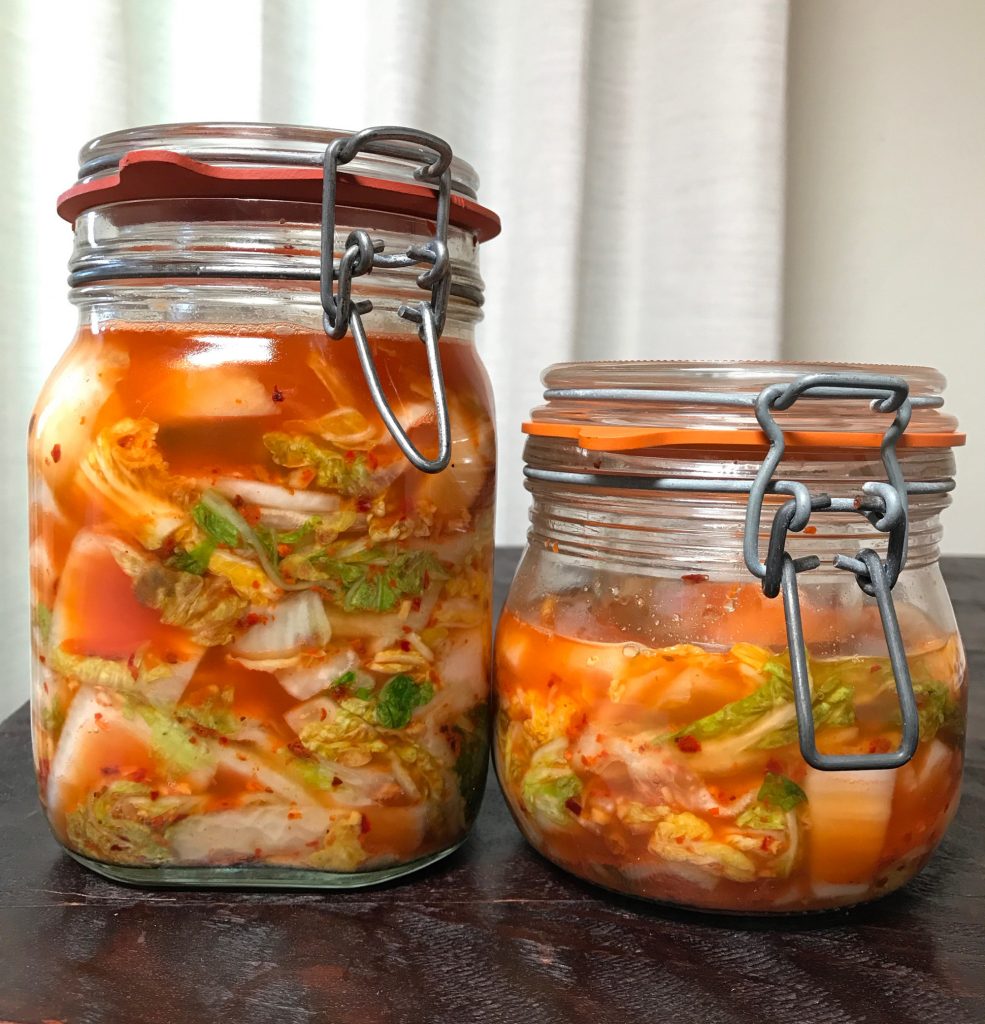
How important is kimchi to Korean cuisine? Well, Koreans eat 1.5 million pounds of it every year, the Korean stock market’s “kimchi index” tracks the prices of kimchi ingredients and when Korea sent its first astronaut to the International Space Station, it sent kimchi along with him too—after spending millions researching and developing a recipe suitable for space.
If you’ve tasted kimchi, you understand why Koreans love it. If you haven’t, you’re in for a treat. Although recipes and ingredients vary wildly, this staple consists of fermented vegetables—cabbage and radish and possibly others, salt and spices—hot pepper, ginger, garlic—and fish sauce. Spicy, salty and sour, kimchi tastes delicious on its own and goes well on the side of savory dishes—both east and west. You can cook with it also but heat will kill off the beneficial microbes teeming in the jar.
Thanks to the microbes that ferment this, kimchi both thrills your taste buds and benefits your health:
- The process of fermentation predigests food, making it easier for us to digest. Think of fermentation as an exterior stomach (or not if that sounds gross).
- Fermented vegetables contain higher levels of B vitamins, such as thiamin, riboflavin and niacin. Because fermentation slows down vitamin C loss in foods, Captain James Cook stocked barrels of sauerkraut on his ships to stave off scurvy in his crew.
- Eating fermented food helps maintain a healthy gut. Good microbes improve your gut flora and boost your immunity. Your gut health is responsible for, well, everything, it turns out. Get your hands on the copy of the book The Good Gut by researchers Erica and Justin Sonnenburg for a fascinating read on the importance of gut health. You can read my review of the book here.
- Fermented foods like kimchi can increase your vitamin B-12 intake, a vitamin lacking in a vegetarian or vegan diet.
A simple version
When I posted a picture of my kimchi on Instagram earlier this week, someone commented that most of the recipes she had seen look very complicated. Many are. But I specialize in easy. The kimchi I make requires one more step than easy-to-make sauerkraut. And that step—soaking the vegetables in a brine for at least a couple of hours—gives you a little break. You finish your kimchi up when you get to it.
But I have to admit you will face one challenge, tracking down the gochugaru spice—a smoky blend of red pepper flakes. If you can’t find it, use MUCH LESS crushed red pepper—about one sixth as much as the recipe calls for. It won’t taste exactly the same but you’ll have the heat.
My simple, possibly heretical version also omits fermented fish sauce, a traditional kimchi ingredient. But I am feeding a strict vegetarian. And when I hand out samples in workshops, I’d rather just keep everything vegan for simplicity. So far, no one has said to me, “I can’t eat this. It contains no animal products.” If you want a fishy flavor without the fish sauce, try adding some dried kelp powder.


Simple Kimchi
Ingredients
- 1 two-pound Napa cabbage cut into 2-inch pieces
- 1 daikon radish peeled and cut into 2-inch matchsticks about 1/8-inch thick
- 4 green onions cut into 1-inch pieces
- 1/4 cup salt
- Water to cover vegetables
- 6 cloves garlic minced
- 1 inch piece of ginger peeled and minced or grated
- 1/4 cup gochugaru or 2 teaspoons crushed red pepper
- 1 teaspoon dried kelp granules optional but recommended
Instructions
- In a large bowl, toss the vegetables. Sprinkle on the salt and combine everything with your hands. Pour water over the vegetables until almost covered. Place a plate over the vegetables and place a weight on the plate (I use a jug filled with water). If the vegetables and not completely submerged in water, add more. Cover the bowl with a towel and let the vegetables sit for a couple of hours or overnight to allow them to soften. (I started this batch at night, was tired and went to bed and continued the recipe in the morning.)
- In a separate bowl, combine the garlic, ginger, gochugaru and kelp powder if using.
- Drain the salt water brine and reserve it. Taste the vegetables. If they taste too salty, rinse them. If they don’t taste salty enough, sprinkle on more salt, mix and taste. Add more salt if necessary.
- Sprinkle the spice mixture onto the vegetables and mix together until combined.
- Pack the vegetables into a clean quart-size jar. I use my bare hands for this but, depending on the spices and how much you put in, you may want to use a large wooden spoon, pestle or, if you have one, a wooden pounder.
- To ensure the vegetables remain submerged in liquid—they will not ferment properly if exposed to the air—weigh them down. I do this by placing a small jar within the quart jar and closing the lid. The small jar will push down the vegetables in the larger jar, submerging them in liquid. If you need to add more liquid, pour some of the reserved brine over the vegetables.
- Place the jar on a plate on the counter to catch liquid that will soon begin to bubble and escape from the jar. Taste daily. Depending on your kitchen, your kimchi will be ready in about three days. Kimchi tastes best when young, unlike sauerkraut, which can ferment for many weeks or even months.
- Refrigerate and eat your kimchi within a couple of weeks.