Having trouble establishing your sourdough starter? Go here for solutions to the most common starter dilemmas.
I work in publishing and with non-fiction books, after you have compiled enough revisions, you put out a new edition. With a blog, you write a new post. But you can’t delete the old post because you’ve linked to it all over the place, people may have bookmarked it and you have noticed how that post attracts steady daily traffic so you just add more posts until your blog grows unwieldy, just like a sourdough starter if you’re not careful!

How I’ve changed as a sourdough starter mom
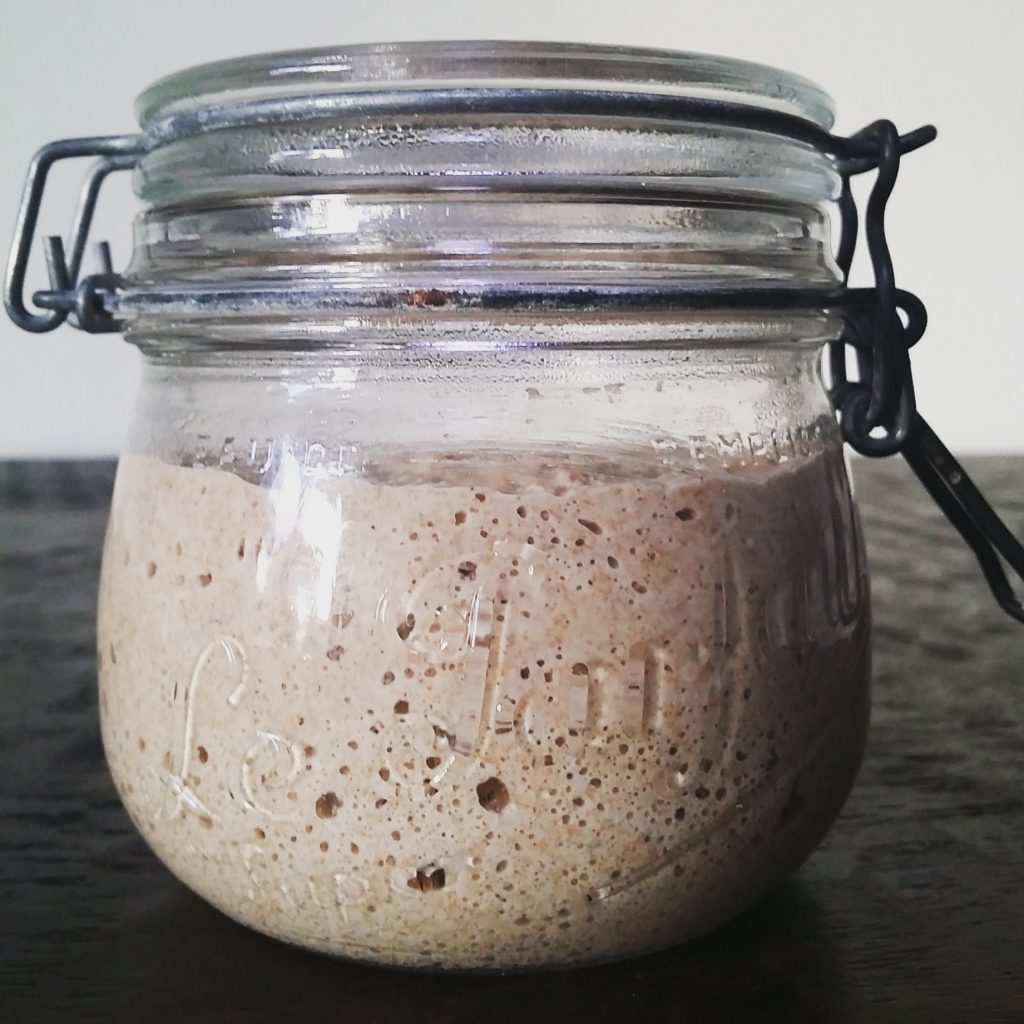
My sourdough starter Eleanor turned three years old this year. I meant to throw her a party but I was awfully busy that week. Since her birth (February 10th, 2014), I’ve changed my technique slightly. As with parenting, you learn as you go.
To make a starter, you mix flour and water, stir it several times a day until it bubbles to life, feed it fresh flour and water and when it has finally reached maturity, use it to bake bread. You can read about starting a starter here and here, however I have some revisions for those posts:
- I feed my starter room temperature water. I used to heat up water to about 80ºF to feed my starter. But visiting my daughter recently, I noticed she skips this step when feeding her starter (Eleanor’s offspring). I’ve made this small change too. The less energy I consume, the happier I am. I always have a jug of water out on the counter to use in ferments so I now feed that to Eleanor.
- I maintain a much smaller starter. My previous posts called for feedings of 100 grams each of water and flour for every 2 to 3 tablespoons of existing starter, following Michael Pollan’s recipe in his book Cooked. Today I mix 40 grams of water and 40 grams of flour with about 1 tablespoon of starter. When I feed my starter, I have just enough discard to make a couple of pancakes, which I eat several mornings a week. These smaller proportions prevent my pile of discarded starter from growing into the blob that ate my kitchen. If you need more starter for something like pizza dough, just increase the proportions of the feedings.
- I feed my starter quite a bit of rye. I used to feed Eleanor equal parts whole wheat flour and white flour. She prefers rye over whole wheat (picky toddlers…) so I feed her about 25 grams rye and 15 grams white. I don’t get too hung up on the rye-to-white ratio of my 40 grams of flour. I just add more rye than white.
- I make only as much leaven as I need. In the past when I baked two loaves of bread, I first made a large leaven consisting of 200 grams flour, 200 grams water and 35 grams starter. After the leaven rose and began to fall over a period of about 10 hours, I would add half the leaven to my dough and use the other half as my new starter. But that takes me back up to the larger starter (100 grams each of flour and water) that I want to avoid making. So these days, I make a leaven half as large. The entire thing goes into my bread dough. In the background, I have my smaller starter and I continue to feed that.


How to use up all that starter
If you feed your starter daily, you will accumulate a pile of discarded starter. Don’t discard it! I use it up with these recipes:
- Sourdough crackers. Old starter makes for a tangy cracker. These taste cheesy but contain only discarded starter, flour, oil, salt and baking powder. You can find the recipe here.
- Sourdough waffles. These too work well with older starter as you add fresh flour and let the sponge sit overnight. That feeding perks up the old starter. Find that recipe here.
- Sourdough pancakes. The easiest recipe of them all. They work best with discarded starter that’s a bit younger, let’s say a couple of weeks old at the most. Get the recipe here. And here is the vegan version.
- Soft sourdough pretzels. These work well with discard that is only a couple of days old at the most. Cheat and add a little commercial yeast. Here’s the recipe for these.
- Sourdough discard vegan chocolate cake. My daughter MK used to make depression-era chocolate cake when she cooked at our intentional community. It’s an easy dessert for a crowd. I sourdough-ized it and use olive oil and brown sugar for more flavor. Find the recipe here. For a carrot cake version, go here.
- Sourdough discard pizza. This recipe uses a cup of discard and makes two, personal-size pizzas. Make the dough ahead of time and refrigerate to use later if desired. Find the recipe here.
If you don’t want to feed your mature starter daily, keep it in the refrigerator between feedings. Take it out about once a week to feed it.
How I’ve changed as a sourdough teacher
In workshops, when I show people how to start and feed a sourdough starter, they often say things like “It sounds like ‘Who’s on First.’ Which is the discard and which is the starter I’ll use next time and why do I have to remove so much to feed it and why do you make it all so confusing?” I hope people find the instructions below more straightforward.
Remember to take notes as you embark on your sourdough adventure. You will feel terrible later if you forget the details of those early milestones, like what type of flour you used in the first loaf your starter made.
They grow up so quickly.

In the video above, I demonstrate how to make a sourdough starter and how to feed it.

Sourdough Starter
Ingredients
To start your starter—and for each subsequent feeding—you will need:
- 25 grams rye flour (2¾ tablespoons)
- 15 grams white flour (2 tablespoons)
- 40 grams room temperature water (scant 3 tablespoons)
Instructions
- Combine flour and water in a glass jar or bowl. Use a utensil or your fingers. The starter will have the consistency of thick pancake batter. Cover with a cloth, a plate or lid. Set in a warm but not hot spot.
- Stir daily several times when you think of it.
- After a few days to a week, you will likely see bubbling. The starter will also develop an aroma that may range from sour, to vinegary, to dirty socks. When you observe both bubbles and an aroma, begin to feed your starter daily. Transfer about 80 percent of your starter to a clean glass jar or dish. Put this aside. Put it out of your mind. This is the discarded starter. Store it in the refrigerator and bake something with it later, such as pancakes. Do not feed this starter…let it go…
- In the dish that you started your sourdough in, you now have a tablespoon of starter remaining. Add to this fresh flour and water—40 grams of each. Stir, cover with a cloth or lid and set aside.
- Continue to feed your starter daily and described in the previous two steps—remove most of the starter, add that to the discard pile in the refrigerator and feed the remaining tablespoon of starter fresh flour and water—40 grams of each.
- After about five days to a week of feeding your starter regularly (daily or even twice a day), it should double in size within about four hours of feeding before slowly falling back down. Congratulations, your virile starter can now bake bread. Think of a cute name.
- If you want to take a break from daily feedings once your starter is established, store your mature starter in the refrigerator and remove it about once a week to feed it. Let it sit for a couple of hours after feeding before returning it the refrigerator.