
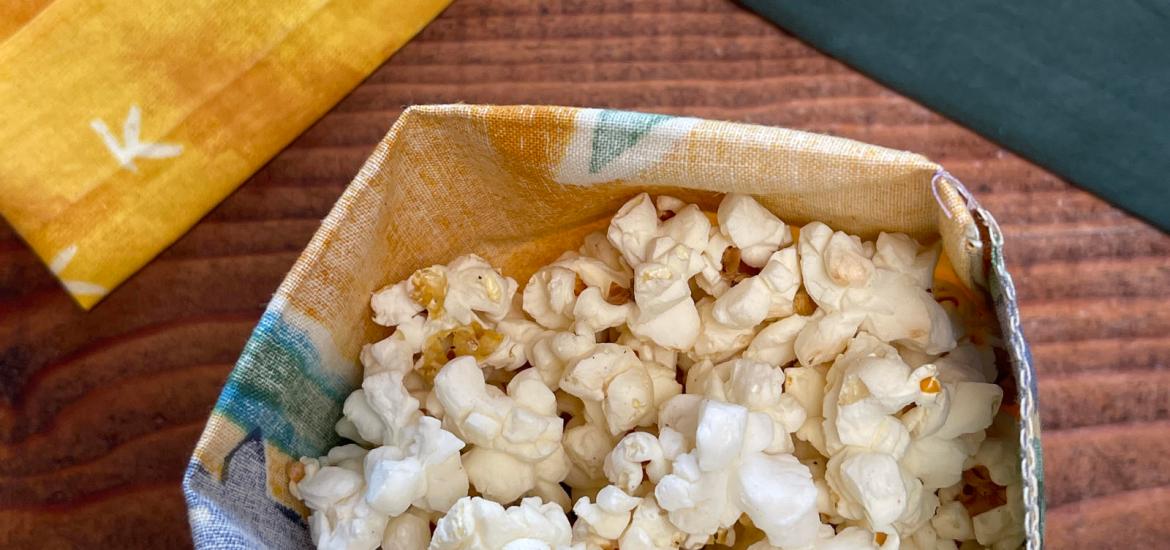
Homemade reusable, washable, cloth snack bags cost basically nothing—you can sew them out of fabric scraps. They make snacks look appetizing. They take up little space in your bag after you’ve finished eating. And they can keep thousands of polluting plastic baggies out of the waste stream.
Americans go through hundreds of millions of single-use plastic baggies every single week. And as study after study after study reveals, making every damn thing out of plastic turns out to have been a bad idea. We desperately need regulation to curb plastic pollution. Unfortunately, the Global Plastics Treaty talks have not gone well this week. As a big player in both plastic production and fossil fuel production (plastic comes from petrochemicals), the US could throw its weight behind the talks but lobbyists have squelched that. Go here to urge the US government to take a stronger stance on the Global Plastics Treaty.
Meanwhile, I’ll continue to cut plastic, including when packing food to go. And when handing out food samples at demos! I did many induction cooking demos this Earth Month and at one, Alejandra Warren of Plastic Free Future gave me some reusable cloth snack bags to fill with popcorn for kids (I had been plopping scoops of it into their hands). Thank you for the bags and the idea, Alejandra!
Cloth bags for dry snacks
While you wouldn’t want to pack these cloth bags with, say, hummus, you could pack them with the sourdough crackers to go with that hummus. Other delicious contenders include:
- Popcorn
- Soft pretzels
- Roasted chickpeas
- Cookies
- Nuts
- Dried fruit
- Trail mix
- Granola
- Granola bars
- Quick bread slices and more!
The fabric
Synthetic fabric is plastic by another name. Choose natural fabric such as cotton or linen or, if you have any, hemp (lucky you!). Your food will come into less contact with plastic and, at the end of the snack bag’s life, you can toss it into a backyard compost bin. (If you stitched with polyester thread, first rip that out.) If you don’t have a bin but your city picks up green waste, ask if it accepts natural fibers.
These snack bags will help you make a dent in your stash of fabric scraps. Our sewing group has handed out over 3,700 reusable cloth produce bags and as you can imagine, we accumulate lots of scraps!
Instructions for sewing reusable cloth snack bags
The pictures (I hope) explain how to sew these. I iron between steps in order to render tidier results but you don’t really need to. You’re making snack bags, not a prom dress.
Step 1: Cut the cloth


The size depends on the size of your scraps and perhaps the size of your eaters’ tummies. Small kids need only small snack bags. Teens and adults will want them larger. If you make a variety of sizes, you’ll likely find uses for them all. The 8-inch by 13-inch rectangle shown above yielded a medium-size bag with a finished size of 6 ¾ inches by 5 ¾ inches.
Step 2: Finish the top and bottom raw edges


My piece of fabric happened to have a selvedge edge which I chose as the top edge of my bag. You don’t need to finish this edge as it will not fray. I finished the bottom edge with a serger (aka overlock machine). On a standard sewing machine, you could zig-zag the top and bottom edges to finish them. Or you could go above and beyond by making a small hem.
Step 3: Fold the fabric


Begin with the wrong side facing up, fold up the bottom, leave 2 inches of fabric at the top and fold down the top. After folding, I like to iron the fabric but you can skip that if you prefer.
Step 4: Sew the snack bag sides


I used my serger. A standard machine also works. You could stop here. The snack bag will do the job. But if you’d like a neater looking bag, turn the bag inside out and sew a French seam along the sides.
This sounds fancy but simply means you’ll sew a second seam a wee bit in from the first seam (see the top right image). That second seam will encase the first seam and its seam allowance. When you turn the bag right side out, the first seam will not show on the outside like it does in the first photo above on the left. (French people tell me they call this an English seam.)


Step 5: Fill!


Betcha can’t sew just one. Happy crafting!
Need more suggestions on getting rid of plastic baggies. I haven’t found a suitable alternative for freezer use. I portion pack meat for in the freezer but cringe each day when I take out that days meat needs. Storage containers waste too much space in the deep freeze
I don’t know what kind of meat you use, but my husband normally lays burgers, chicken pieces, lumps of beef etc on a tray in the freezer, then puts them into containers once they’re frozen and takes out as needed. I would also use cloth bags if I put meat in frozen, then give a boil wash after use. I hope this makes sense.
What a great Idea and smart way to reduce plastic use.
Thank you! Glad you like it!
I love it! I do wash and reuse (and reuse and reuse) my plastic bags, but they do wear out at some point. This is much better!
Thank you! They are fun to make. I can’t stop making them!
I have began to use cloth bags for bulk items when I go bulk bin shopping. I can keep empty clean bags in my shopping bag along with any jars I want to fill with bulk items, the bags are lighter than the jars. At home I transfer the food into jars for longer term storage.