


Notice I didn’t use the term “zero-waste” in the title. I would feel a little ridiculous writing about a road trip to Tahoe—an entire tank of fossil fuel away—and then saying, “Look at me! I brought my own fork!” I think twice before I travel these days and I haven’t flown this year, although I will fly to Canada in August to see my mother and take my daughter MK back to university.
When you do travel, you can take many steps to eliminate your trash pretty easily, especially if you travel by car.
1. Make ice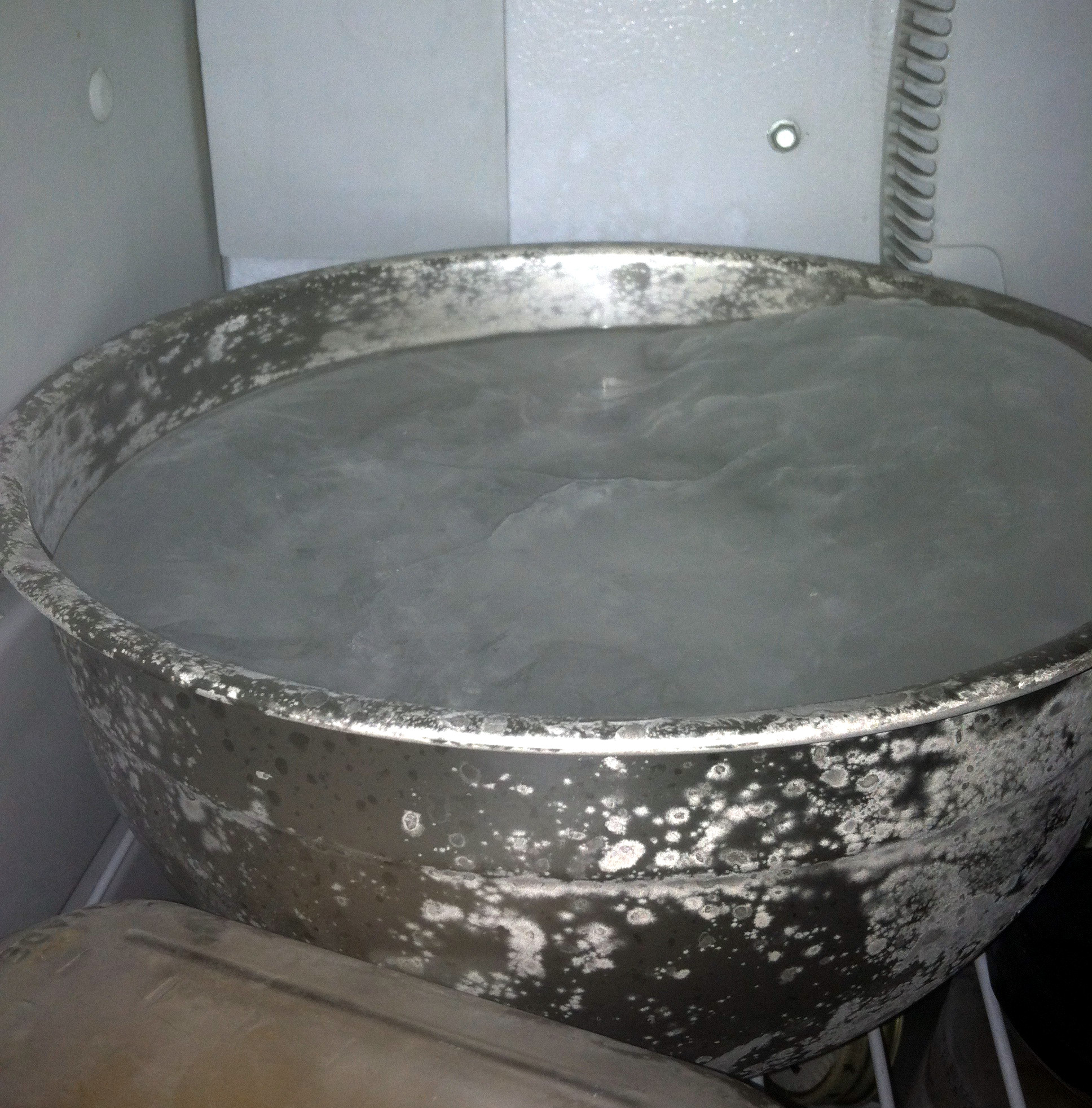

Whether you camp or Airbnb it, you’ll need ice. Avoid plastic bags of ice by making giant blocks in a stainless steel bowl. Let it sit at room temperature for a few minutes to melt a teeny bit before sliding it out. A large block takes longer to freeze—and longer to melt—so plan ahead and make your block early, perhaps when you book your lodgings. The block in this pic lasted an entire 4-day camping trip last year. We needed ice for the road only this past weekend, so I made ice cubes in advance and used those. Simple.
2. Bring your pantry with you and eat out less
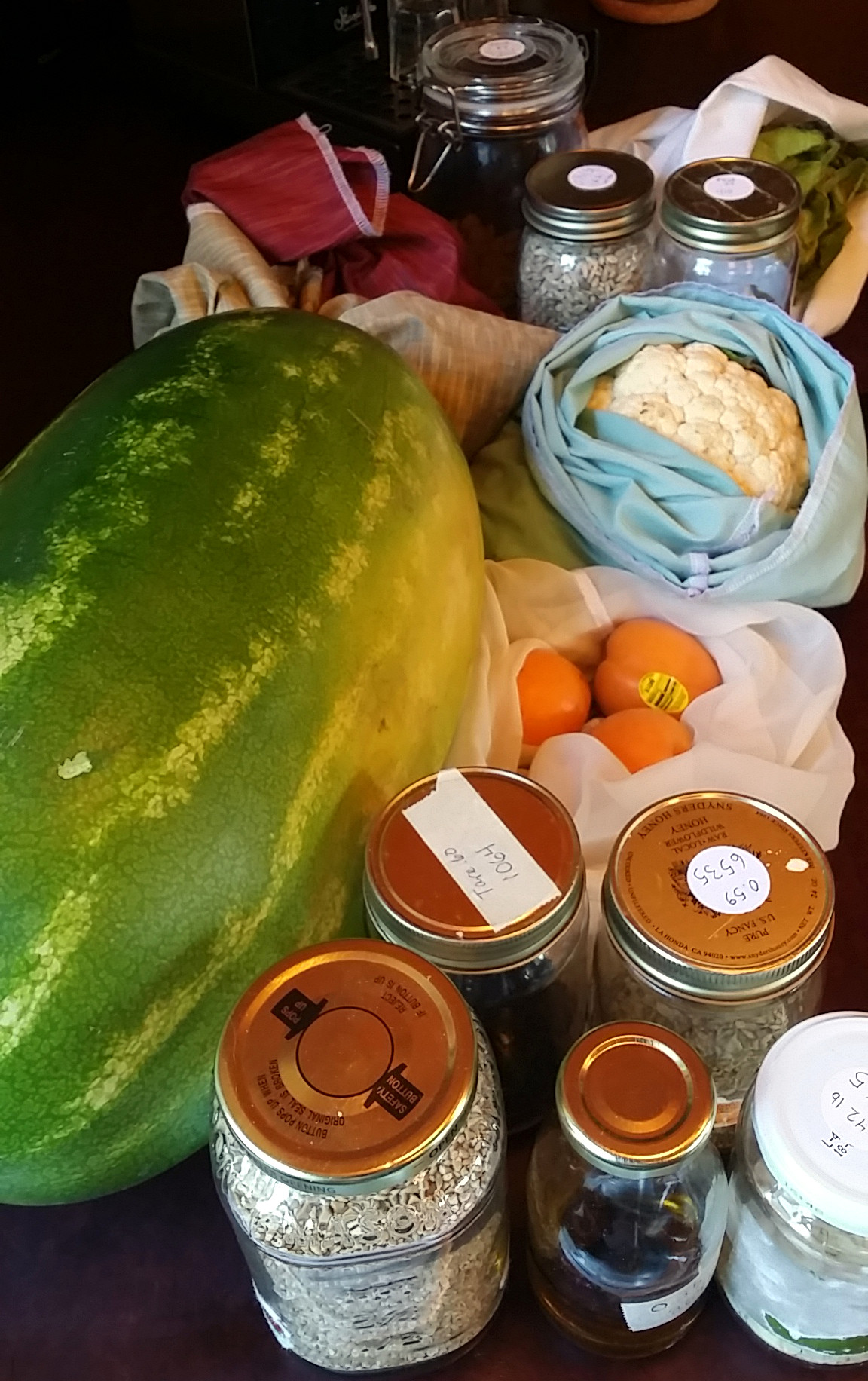
We cooked breakfast and dinner at the house we rented and ate lunch out. I brought a bunch of jars of food from home (steel-cut oats and toppings; loose-leaf tea; granola; olive oil); produce in my reusable cloth bags (I did buy some apricots at Whole Foods with stickers on them rather than at the farmer’s market, sans stickers); a way-too-large watermelon; prepped vegetables in glass; homemade hummus; sausages I bought in a container; a bottle of milk; and a few bottles of homemade kombucha. For more on zero-waste shopping, check out last week’s post.
3. Compost
Just because you’ve hit the road, doesn’t mean your compost pile’s resident critters should go hungry. If you brought a bunch of jars, once empty, they double as compost transporters home. I intended to take a pic of my compost jar before I dumped it but felt too bleary-eyed by the time we arrived back home Monday night.
4. Borrow stuff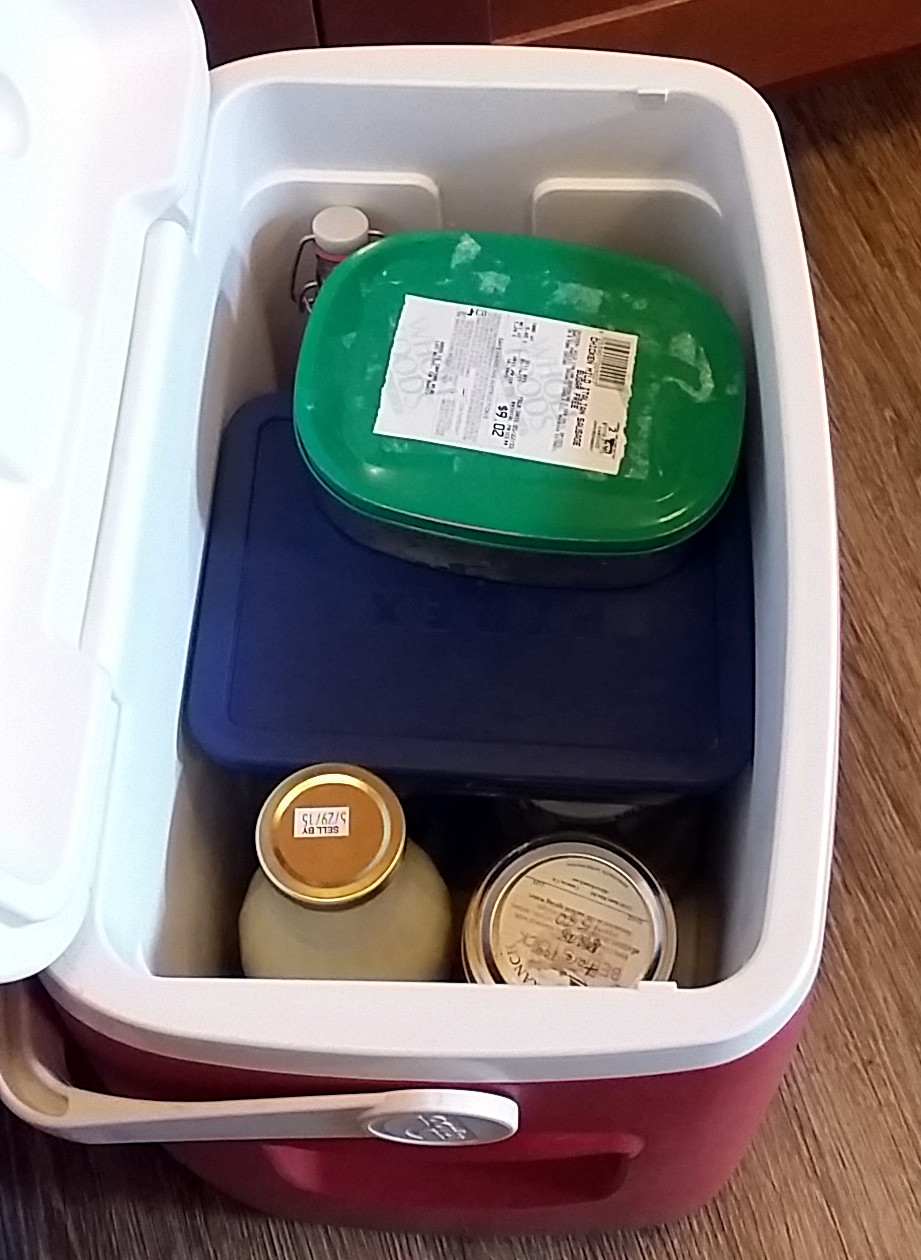
We don’t camp or travel that much and in our 960 square-foot home, I avoid wasting space storing a bunch of gear we rarely use. I borrowed this cooler for the trip. This past Christmas, I borrowed ski gear. You can rent just about anything you need—bikes, tents, roller blades, cars for that matter.
5. Bring reusable water bottles, utensils and napkins
The lack of water fountains just about everywhere makes you wonder if Nestlé, à la GM and streetcars, has paid retailers to tear out all fountains in order to force us to buy their bottled water. When restaurants and cafés do provide water, they also generally provide only disposable plastic or plastic-lined-paper cups to go with it. Reusable water bottles are a travel must. We didn’t run into any plastic utensils on this trip.
6. Go easy on the souvenirs

7. Plan ahead for bringing home what you don’t use

For some reason, I thought five of us would polish off a 20-pound watermelon in a weekend. I suppose I could have strapped the toddler-size, 16-pound remaining melon into the back seat, but I really would have needed a baby seat and with the baby now age 14, I haven’t owned one for years. So I wrapped it in a plastic bag my friend had brought and put it in the trunk. I think wasting a giant watermelon (and all the water consumed to grow it) trumps the plastic waste. I hate situations like this. When we go to Calaveras Big Trees State Park later in the summer, I’ll bring a very small watermelon!

