

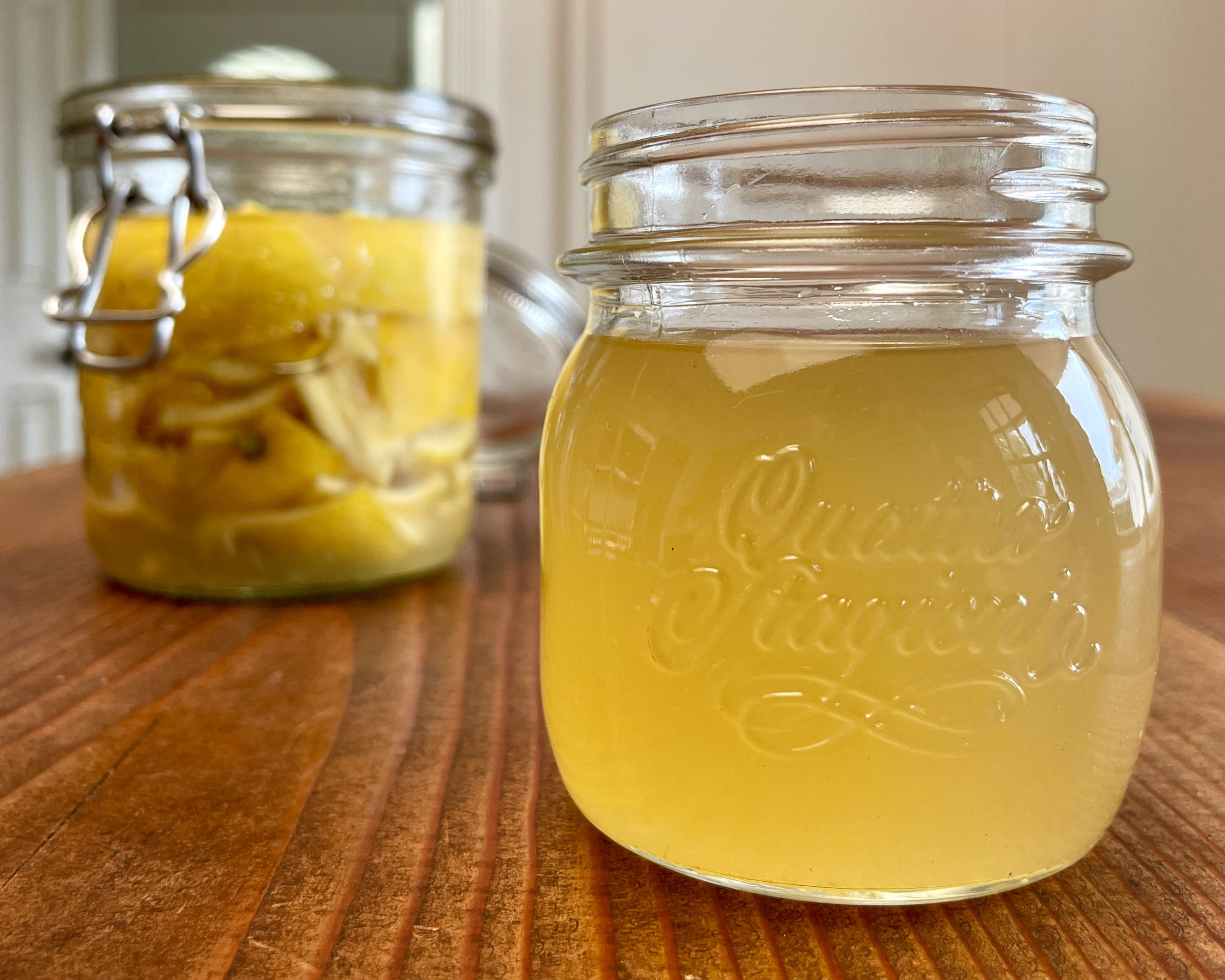
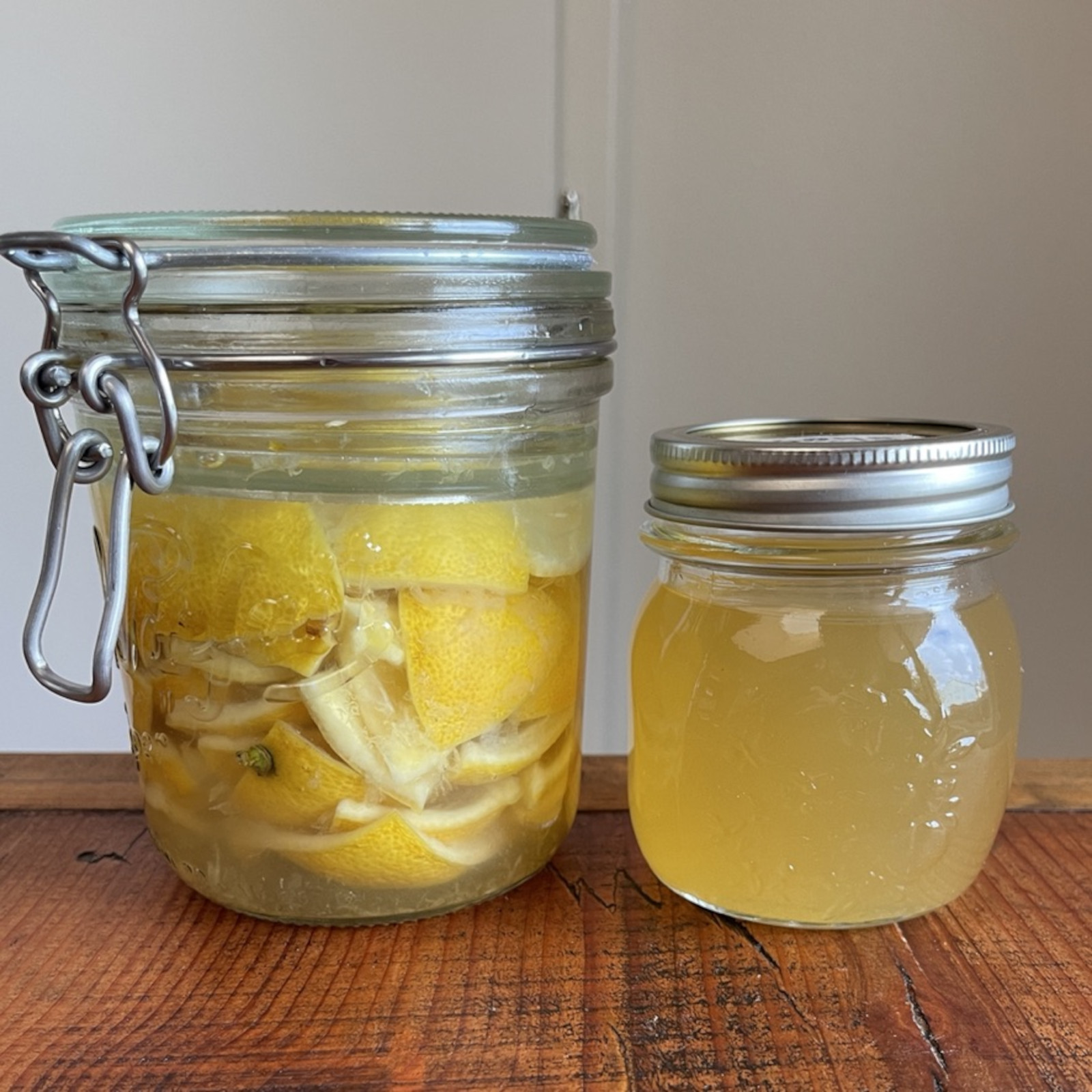
Most lemon syrup recipes call for lemon juice. This one calls for mere rinds left over from juicing lemons. Here’s the short version: Combine 2 parts lemon rinds with 1 part granulated sugar (by weight). Cover and let sit at room temperature overnight. Strain. Enjoy. Either compost the sugary rinds at that point or brew a small amount of bubbly lemon soda with them. (Jump to the soda instructions.)
Lemon syrup ingredients

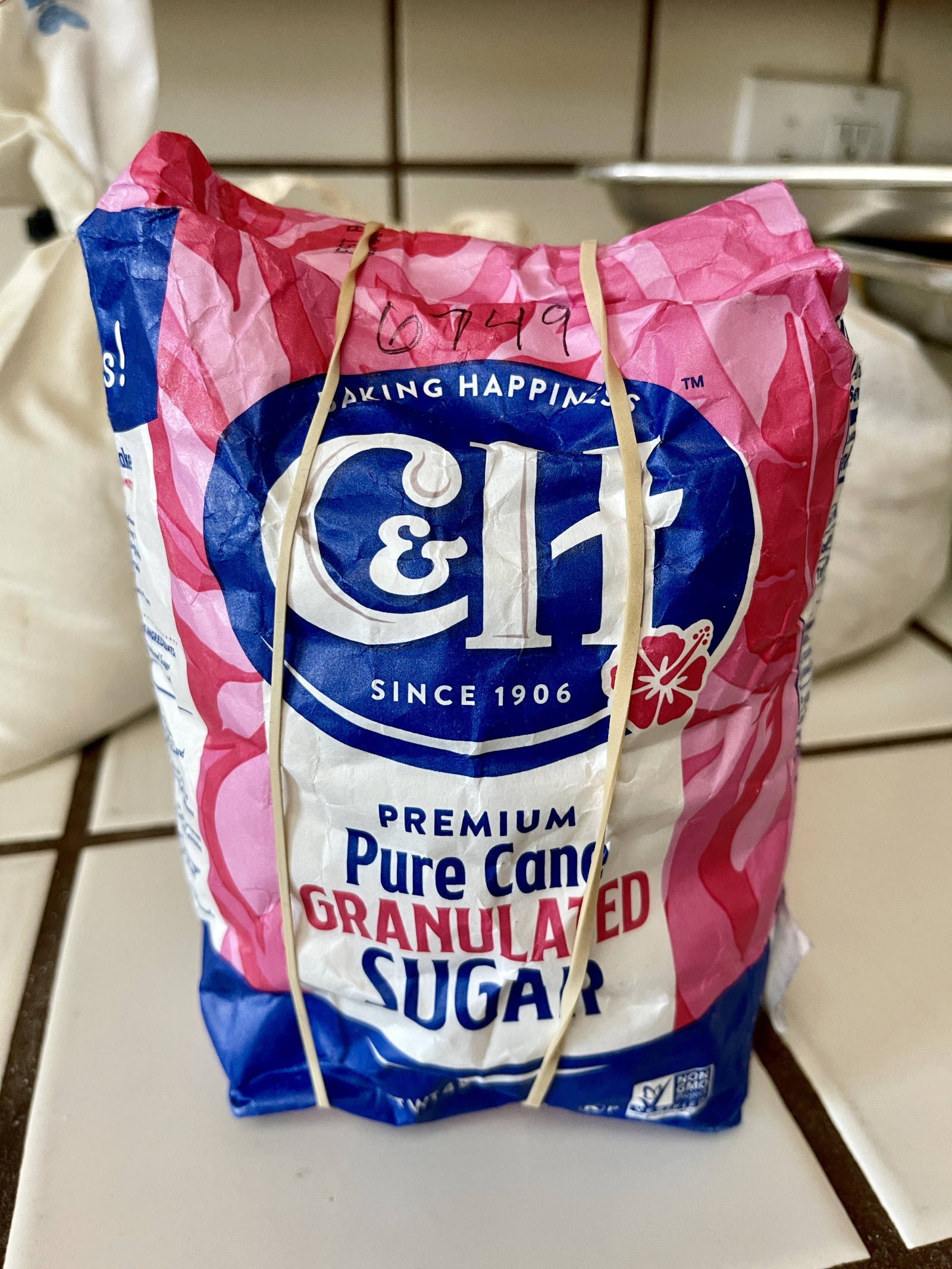
You need only two ingredients—lemons and sugar. If you don’t go through many lemons at a time, save the rinds in the freezer until you have at least four to six lemons’ worth to render a decent amount of syrup. As with other recipes calling for peels, to avoid consuming pesticide residues, choose organic if possible. As for the sugar, any granulated sugar will work.
The 2:1 rind-to-sugar ratio by weight
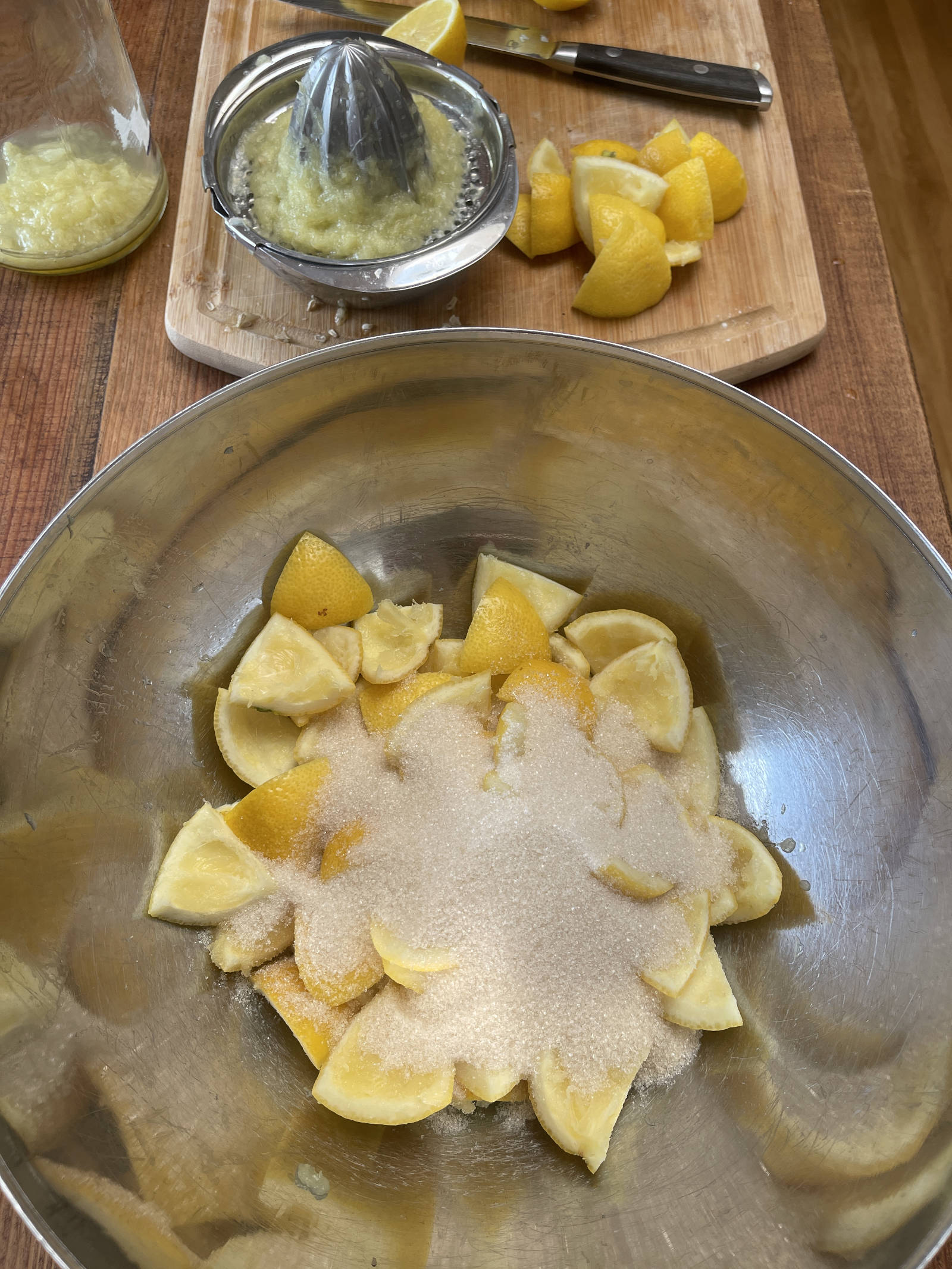
The pound of lemon rinds and half pound of sugar pictured in this post yields a generous cup of syrup. Scale the recipe down or up to make as little or as much syrup as you’d like.
Keep in mind that the 2-to-1 ratio applies to weight. If you don’t have a scale, one pound of juiced lemon halves, each cut into four pieces, amounts to about four cups. Half a pound of sugar is approximately one cup.
How to make lemon syrup from rinds


Syrup variations
Strawberry tops (remove the green parts) and scraps or mango peels and pits also make great syrup! Use the same 2-to-1 fruit-to-sugar ratio (by weight). My daughter Charlotte made the strawberry top syrup pictured below.

How to use your lemon syrup
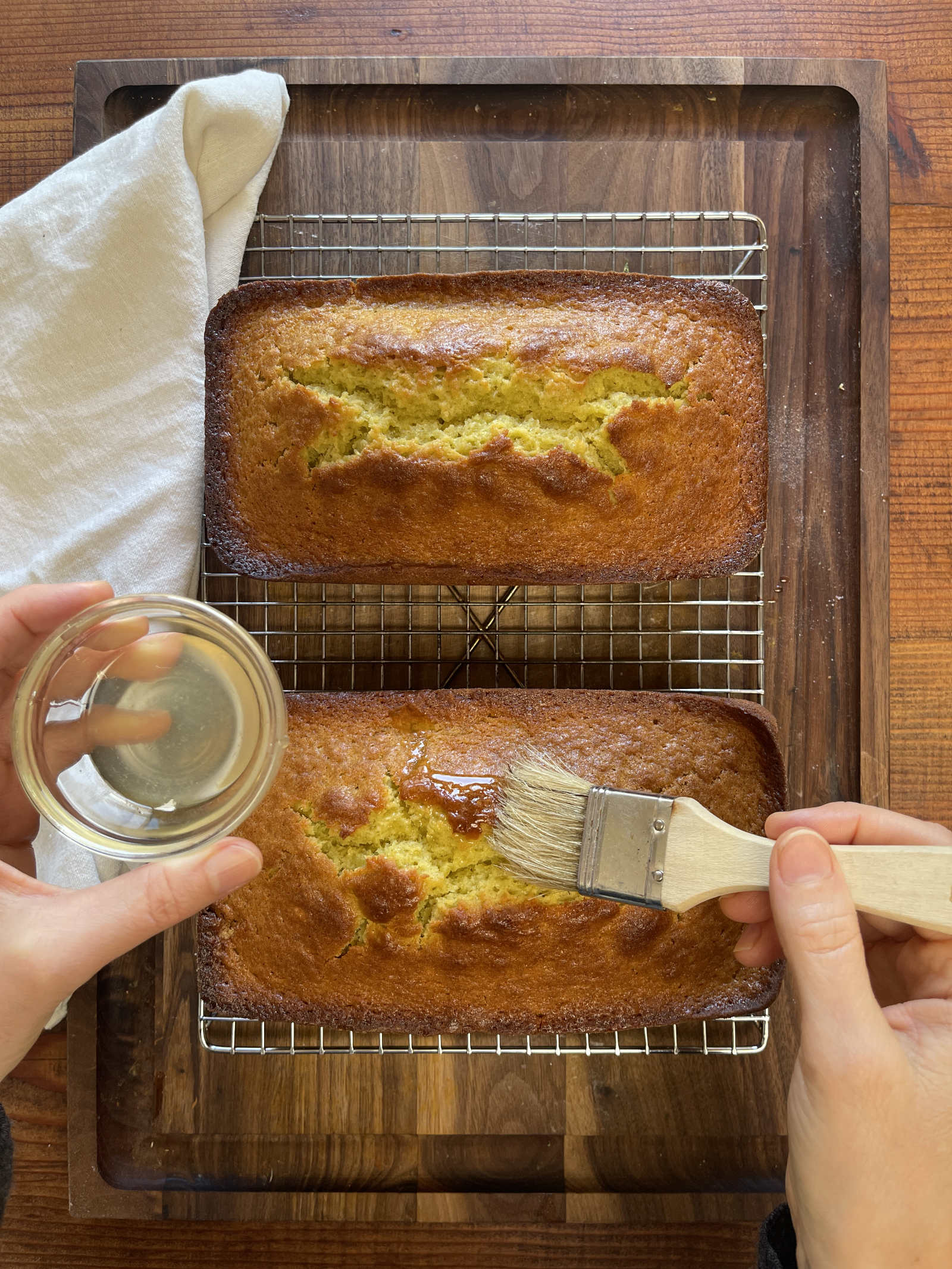
- Glaze lemon loaf with a generous tablespoon of lemon syrup per loaf.
- Drizzle it onto sourdough pancakes or waffles.
- Add lemony flavor to kombucha or water kefir. Use at most 1 tablespoon of lemon syrup per 16-ounce bottle. And remember: Always burp your bottles! The added sugar will increase the carbonation—and the pressure.
- Make mocktails and cocktails.
- Add a spoonful to a glass of iced tea.
- Drizzle a bit onto fruit salad.
Bonus: Lemon soda made with the spent sugary rinds
After straining out the lemon syrup, the rinds will contain both residual lemony goodness and a thin coating of sugary syrup. To extract both of these, make soda with the rinds through the magic of fermentation. (See my fruit scrap soda for a similar recipe.)
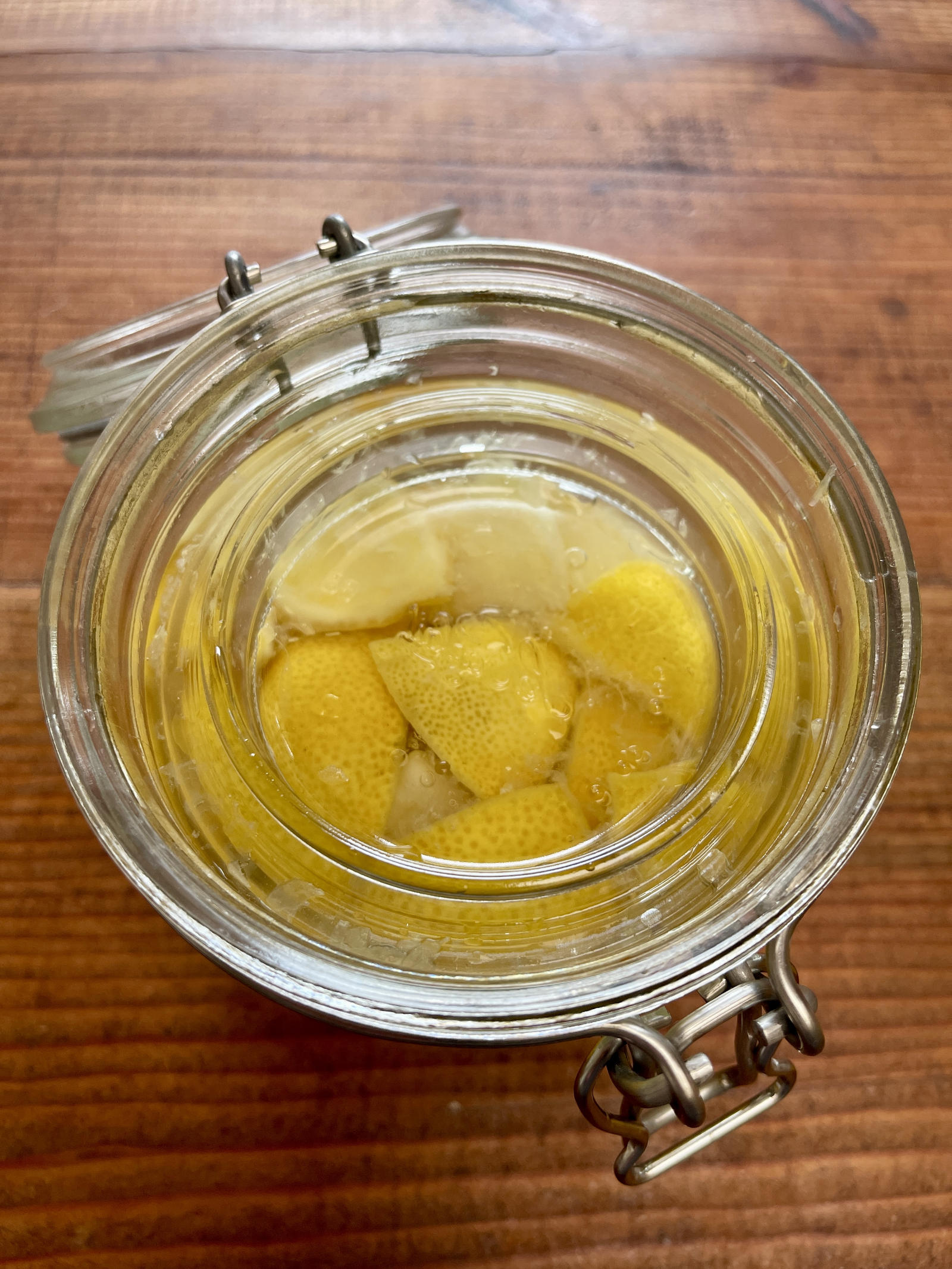
My spent lemon rinds made a scant cup of slightly alcoholic soda. Here’s how to make it:
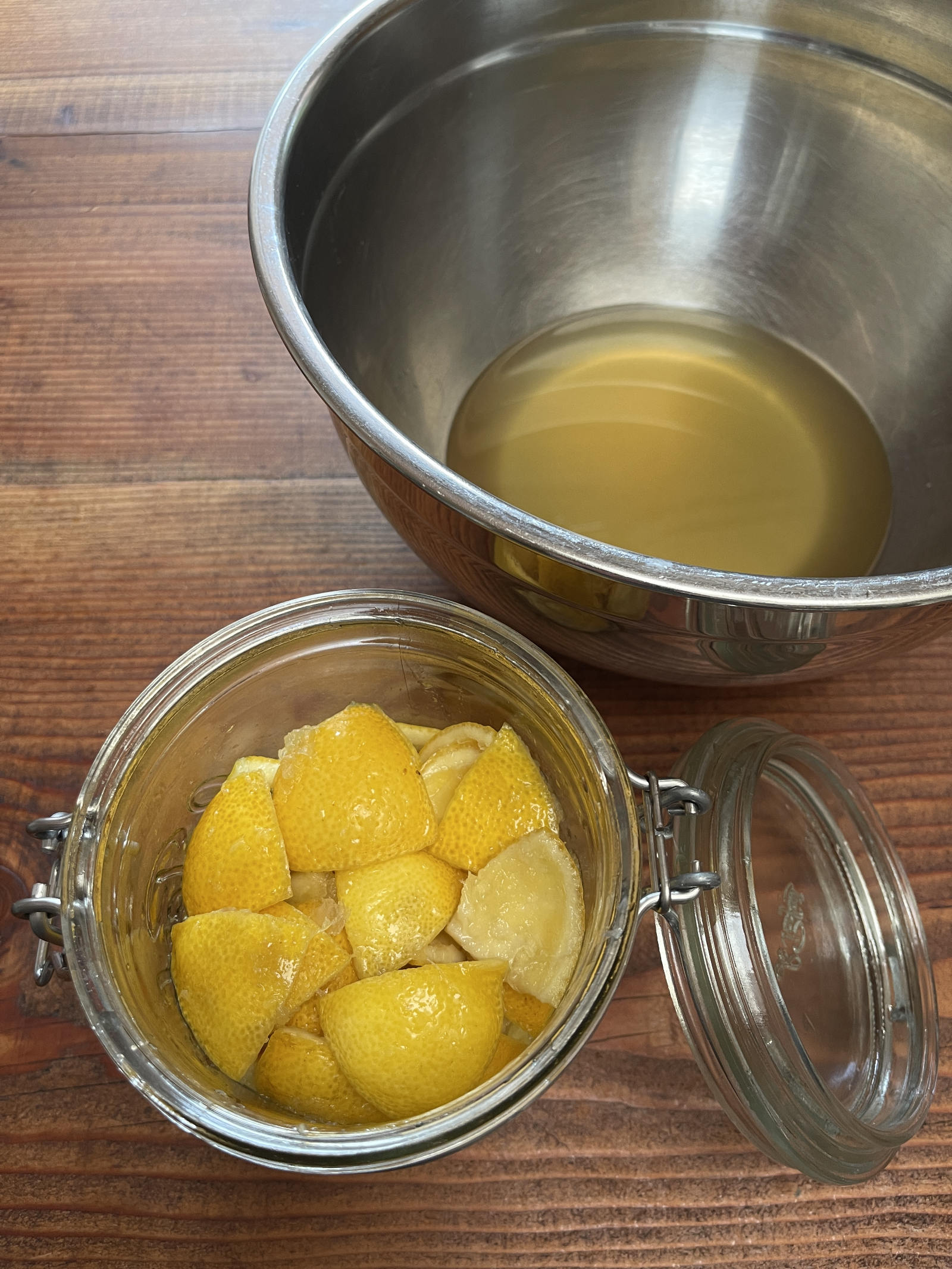
- Pack the strained rinds in a jar.
- Pour in enough water to cover the rinds and place a weight on top to keep them submerged. To weigh down my ferments, I use the glass top of a smaller flip-top jar after removing the metal bale.
- Soda brewed in an airtight vessel can explode! To prevent such disasters, close the jar loosely with a lid or cover it with a piece of cloth secured tightly to the mouth of the jar (a rubber band works well). I removed the orange rubber gasket from the lid of my jar to allow gases to escape during fermentation.
- Active fermentation may begin within a week. (It will take longer in a cold kitchen.) After the soda becomes bubbly, strain it and either drink it immediately or bottle it and store it in the refrigerator. Because this soda can be very bubbly, I don’t do a secondary fermentation once bottled. (A secondary fermentation increases the carbonation.)



No-Cook, Lazy Lemon Syrup Made From Rinds
Instructions
- Cut each juiced lemon half into four pieces. In a non-reactive bowl (stainless steel, glass or ceramic), toss the lemon rinds with the sugar. Cover with a plate or lid and let rest overnight.
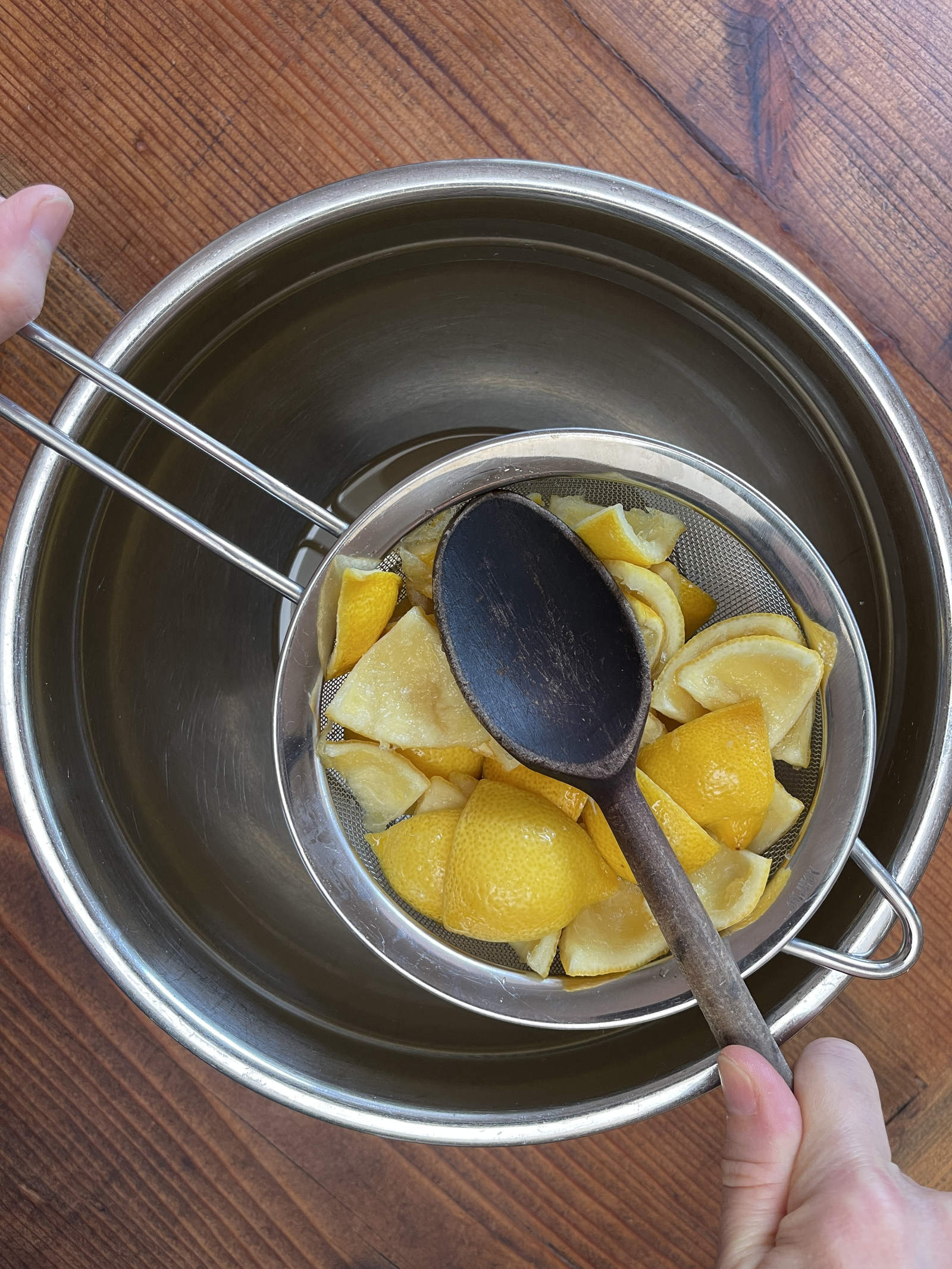
- Place a sieve over a bowl and strain the syrup. Bottle and store the syrup in the refrigerator, where it will keep for at least a month.
Notes
- If you don’t own a scale, a pound of cut lemon rinds amounts to approximately 4 cups. Half a pound of sugar equals about 1 cup.
- If you’d like to make a large batch of syrup but don’t have enough lemon rinds, as you juice lemons, store the rinds in the freezer until you have accumulated enough to make the amount of syrup you want. Allow the rinds thaw before prepping the syrup.
- This recipe also works with strawberry tops, mango pits and peels and scraps of other fruits with a high water content.
Love this idea to get just a little more out of those scraps!
I love this way to get 3 different things from once fruit!
I wish we could grow lemon trees in Virginia…