
I wash so many dishes that I sometimes dream I’m standing over the sink washing dishes. When I have this lucid nightmare, I tell myself, you wash enough dishes during the day, stop washing them in your sleep! The unconscious dishwashing immediately stops. But the conscious dishwashing never does.
Our dishes tend to pile up because I prepare staples from scratch—pasta, sourdough bread, the yeast for the bread. I don’t buy disposable items—plastic wrap, plastic baggies, tinfoil. And I use jars for all the things (fermenting, shopping, freezing, storing) and wash lots of them (wide-mouth jars you can fit your hand into clean up more easily). I consider the dishes a small price to pay for the scrumptious food.
The following tips will help reduce the number of dishes you wash while conserving precious resources—water, energy and your time.
Dishes and accoutrements to reduce washing dishes
1. Own fewer dishes
If we had 100 cups in our cupboard, at some point, I would find 100 dirty cups scattered throughout my home. With fewer cups available to dirty, we (I) never come across a daunting number of cups to wash. Owning fewer cups also increases the likelihood that family members will reuse a “dirty” cup they drank water out of earlier in the day.

2. Banish (most) specialty tools
If you have your heart set on this $24 pancake batter dispenser to make uniform sized-pancakes, for example, try reusing the measuring cup you poured liquid ingredients into when mixing the batter. Tools designed for only one task create more work because now you have this extra thing you have to wash. And it also requires precious storage space.
3. Use your hands as tools
When forming pizza dough for example, I first shape the dough ball into a disk on a floured surface using my palm. With my knuckles, I push the ball down and out, adding a bit more flour as I continue to stretch and move the dough around until it forms a flat round. Although my tapered rolling pin does a nice job, I’d rather not wash it and my hands are already covered in flour so…
4. If you have a scale, use it
You won’t need to dirty a cup to measure sourdough discard to make these chocolate chip cookies, for example. Everything goes straight into the bowl and the scale renders more accurate measurements.
5. Keep the platters in the cupboard
You may want to haul out the platters to serve Thanksgiving dinner and other special meals but for everyday cooking, place the pots or pans of food on the kitchen table (on trivets). When you do use platters, place multiple main or side dishes on it.
6. Cook in cast iron
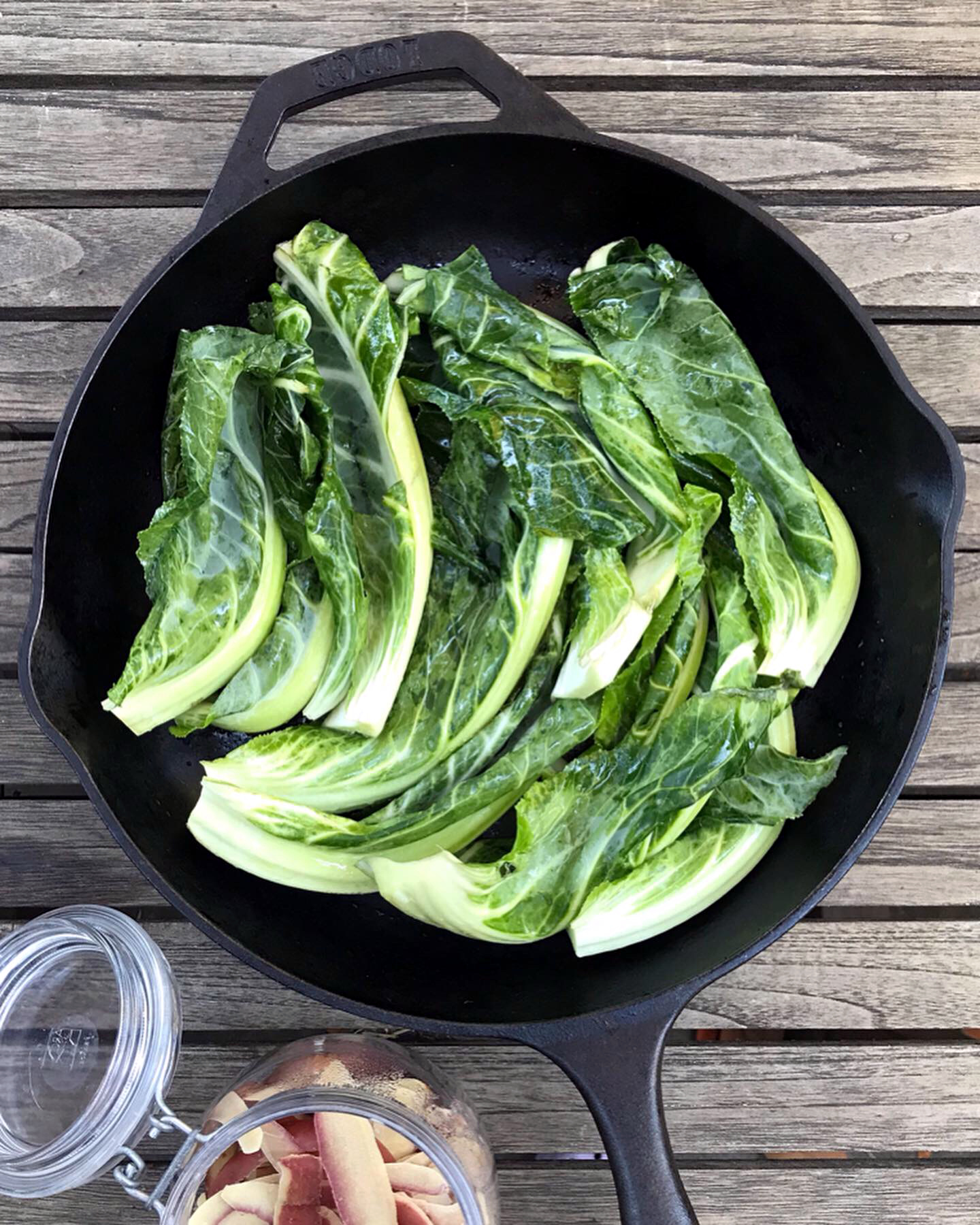
I almost always bake galettes in cast-iron pans. Cast iron cleans up with just a bit of water and a loofah or brush to scrub away stuck-on bits of food. Roasting and baking fatty foods also adds a layer of seasoning to your pan.
7. Switch to induction when you buy your next cooktop or range
Okay, this may not actually reduce the number of dishes you wash, but you will spend less time cleaning. Gas stoves are a pain to clean (and they pollute our homes).
If you’re in the market for a new cooktop or range, consider induction not only because it emits no methane and heats water lightning fast and lowers your energy bill but also because it cleans up so easily—usually with the mere wipe of a wet cloth.
Go here and here to read more about induction.


Cooking methods to reduce washing dishes
8. Cook one-pot (or one-pan) dishes
Cook one-pot dishes such as chili or chowder or curry and wash, well, one pot instead of two or three. Or cook a meal such as frittata or shakshuka or shepherd’s pie in a cast-iron skillet.
9. Cook hand-held foods
Utensil- and plate-free foods will cut down on loads of dishes when you entertain. Lately I’ve been making calzone with a sourdough discard crust. Essentially, shape the dough into a round, fill half the crust with various toppings, fold the dough across the filling and seal the edges by pressing them together with wet fingers. Bake, slice, eat—no utensils needed.

10. Increase the food-to-dirty-dish ratio
If you’re about to mess up the kitchen, make it worth your while and triple a recipe. You’ll yield three times the food for the same number of dishes—a three-to-one ratio. Freeze some of the food to enjoy later.
11. Plan your cooking strategy
Let’s say you crave pastry—always a good idea! I prefer to make pastry quickly in a food processor but dislike washing the food processor bowl. So I’ll use it at least a couple of times before washing it. While the pastry chills, I might switch out the blade for the slicer disk to cut uniform apple slices for an apple galette. If I made lots of pastry, in the now-empty bowl, I could make a lemony filling for a tart. Three uses, one wash, two desserts. Or more if I made extra pastry to bake later.
12. Eyeball it
If you feel comfortable, eyeball measurements such as two tablespoons of olive oil when cooking (but not so much for baking because chemistry). You’ll wash fewer oily measuring spoons.
Attitudes and methods to reduce washing dishes
13. Don’t wash clean stuff
A dry scoop doling out flour likely only needs a wipe afterward. Or, keep a one-cup scoop in your flour jar and use it over and over. Similarly, after emptying a jar of dried beans, if it looks clean, refill it with more dried beans without washing it.
14. Be less picky
I’m not suggesting you serve food on dirty plates but you can drink tea or coffee from the same cup all day and you won’t die.
My sourdough starter Eleanor lives in her jar for months and months. If I get to the bottom of the jar, only then do I wash it. Fermented foods are very safe. The acidic environment they create kill harmful bacteria that may find their way in there. My jar may be crusty but it’s not contaminated. Same with my discard jar. I add and remove discard over many months, using the same jar. (Go here for more on maintaining sourdough discard.)

15. Clean as you go
Wiping up spills as they happen, returning ingredients to the pantry after cooking and emptying the compost bucket regularly so the new food scraps occupying your cutting board have a place to go will all make cleaning up more efficient. You also won’t have to search for certain tools or dishes when you need them because your kitchen will remain fairly organized while you cook.
16. Scrape dishes immediately after eating
To quickly remove bits of food from dishes, grab a (dirty) fork or knife and scrape the bits into a compost bucket. No water required.
17. Soak dishes in captured water before washing
Place dishes in the basin of a double sink (stopper closed) or in a dishpan or in a large bowl placed in the sink. As you wash an apple or rinse your hands or fill a glass of water, do it over the basin/dishpan/bowl to capture the overflow and soak the dishes (you’ll conserve water this way). Washing soaked dishes requires less time and effort.

18. Rinse a bunch of dishes at once
After washing the dishes, fill that basin/dishpan/bowl with clean water and submerge the soapy dishes in it to rinse them.
19. Run a (full) dishwasher
A dishwasher will buy you many hours of time. I’m not sure non-efficient models exist today but perhaps my drought-colored Californian lenses have biased my thinking. I did recently see a Cascade ad that urged consumers to wash small loads of dishes (and subsequently consume more product). The ad argued that because today’s dishwashers require much less water than hand washing dishes, running the dishwasher filled with only a few dishes conserves water—assuming hand washing is the only other option. We have a third option: wash full loads and buy less Cascade.
Better yet, buy no Cascade. And you won’t want to after reading ProPublica’s in-depth piece, The Dirty Secret of America’s Clean Dishes.
Our reporting offers a rare look at how the production of a single consumer good — Cascade dishwasher detergent — contributes to elevated cancer risk for an estimated nearly 1 million people in multiple communities across the South.
ProPublica
Your probably now wondering which dishwasher detergent you should use. Check Environmental Working Group’s rankings from least toxic to most toxic. To arrive at these rankings, EWG scientists analyze the ingredients in cleaning products, worker safety documents, governmental and academic information on toxicity and more.
20. Train your family
Unless you want to do all the dishes yourself. As any good salesperson will tell you, to convince your family to do things they don’t want to do, like chores, sell them on the benefits. Tell them they’ll save time; they’ll be able to find their favorite mug whenever they need it; your kitchen and home will look tidier when their friends visit… you’ll make it work. And you’ll work less!

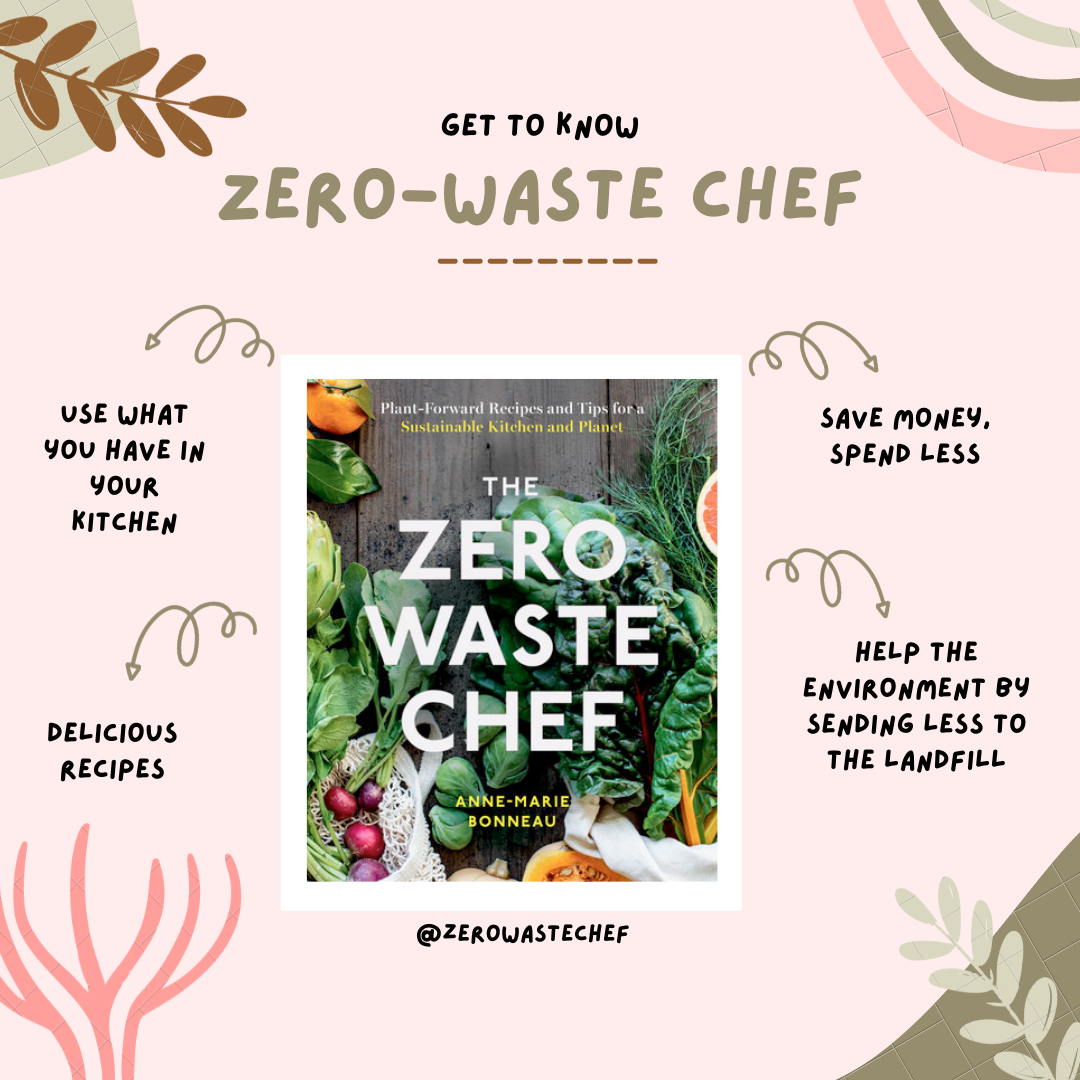
Buy my award-winning cookbook!
- Taste Canada silver for single-subject cookbooks
- Second-place Gourmand cookbook award in the category of food waste
- Shortlisted for an award from the International Association of Culinary Professionals
I’m always delighted to see a Zero Waste chef newsletter in my in box. All of your ideas are good, but some gooder than others. My personal favorite is the compost pail liners from
newspapers, but I enjoy them all.
I love this. As I say to my husband (a lot), the dark side of cooking at home is all of the clean up.
I have one more strategy: eat out of the pot or pan you cooked in! This was not something I was inclined to do until I saw a lot of k-dramas and decided that ramen out of the pot really was going to make the food more delicious. Now my husband and I frequently eat shared dishes out of the same (cast iron) pan. Romantic — and cleaner!
My best thing ever was to get a energy efficient dishwasher that works like it’s suppose to: no rinsing. This is also a big water saver over hand washing. I scoured Craigslist till I found the exact make/model I wanted that was lightly used. This was an 89% savings over buying it new. Having grown up with a highly inefficient dishwasher when it comes to actual cleaning, I’m still amazed. Every time I open the dishwasher to find sparkling, clean dishes after I have not rinsed them at all before putting them in, it’s like magic. I’ve even let them sit for days without washing before running it. Even dishes with eggs! Buying used helps the environment and my pocketbook.
When it comes to pans, every one becomes an easy clean if you put some water and a little soap in it while the pan is still hot. If you have something, especially sticky, boil that water, and use a spatula to scrape the bottom of the pan the same way you would if you were making a reduction sauce. By the time you are done with your meal the pan would have sufficiently soaked and clean up is easy peasy. I keep a kettle on the stove with water at all times, this means I have water within reach as soon as I take my food out of the pan.
When holiday baking rolls around I’ve changed up my routine to include dough day. I make all the cookie, etc doughs the same day. This allows you to make light color/flavored to dark color/strong flavored ones, one after the other without cleaning the mixer or bowl in between.
We have a “don’t wash this” spot on the counter to put glassware given it can be reused several times before washing. I often do this for plates used only for toast or a sandwiches too, but I don’t have a full household.
I have created plastic scrapers (small plastic squares I cut out of little plastic containers) and scrape all surfaces with them – amazingly efficient to pre clean plates, pans etc! You only need 2 scrapers and they last more or less indefinitely!
Thank you for that tip!
I just hopped over to one of the linked recipes and to my horror found the cups / spoons measurement – and then discovered the little swith button to METRICS! Thanks so much for this!
Soaking the dishes is the best tip, they almost wash themselves.
I do use platters for serving dinner, it makes everything more inviting, and I don’t mind washing them because I have a dishwasher – my husband.
The biggest headache/bottleneck I notice with dishes is the putting away of the clean ones. It doesn’t matter whether you have a dishwasher or not- the whole thing grinds to a halt if nobody puts it all away. To that end, I siggest the genius thing I saw all over Ukraine and Georgia, it’s also popular in Spain and Scandinavia: the cupboard above the sink that is really a dish drainer. As you wash dishes, they go into the eye-level cupboard that either has no bottom, or else a metal or plastic tray to catch the drain water. In any case, the dishes that are washed can be stored as they drain, out of sight. For people without such a favulous cupboard, even a towel on the counter next to the sink can work well as long as it all gets put away ASAP.
A little late to comment, but… We moved to a house without a dishwasher and I absolutely hate doing the dishes. Ended up buying one of those mini ones (Loch). I cook a lot of meals from scratch so dishes really add up. The little dishwasher helps a whole lot. One other change that may not work for everyone was to get a single basin copper sink; we love it. If you need a “double basin”, you can place a bowl in the sink. Copper is also antimicrobial and looks fantastic. I find that with other sinks, the divider is in the way and it’s hard to get the larger items in the sink. Finally, this is more so for zero waste section, I bought a very fine chainmail type scrubber (much finer than the ones marketed for cast iron pans) for $28 or so. This was 7 years ago. I haven’t bought a dish sponge since. It is fine enough to wash crystal (gently) so not as rough as you would imagine.
Loved the mention of using cast iron since it needs less soap and water—saves time and plumbing wear. I’d also add using sink strainers to catch food bits before they go down the drain—makes cleanup easier and helps prevent clogs.