

Conserve water directly in your home and indirectly through the food you choose to buy
Last week, the drought emergency in California expanded to include 41 of 58 counties, with further expansion likely. The parched state of our state does not bode well for this year’s fire season. The following tips will help conserve water—both directly in our homes and indirectly in the fields.
Practical tips to reduce the amount of water flowing out of your kitchen tap
Although California’s urban population consumes only 10 percent of our water—agriculture consumes 80 percent—conserving water in our homes really has no downside. Using water wisely makes sense whether you live in a drought-prone state or not and the following practices can lower your water bill.
1. Skip the sink’s garbage disposal and compost your food scraps
Garbage disposals require lots of running water in order to grind up the food you put down them. Compost your food scraps instead. You’ll not only conserve water at the tap, you’ll also improve the water retention of soil if you add a layer of finished compost to it.
If you live in an apartment or don’t have access to the outdoors for composting, look into vermicomposting (composting with worms) indoors, search for community or school gardens that accept food scraps or check the Share Waste map for compost drop-offs. If your municipality doesn’t collect food scraps, ask them to.
Go here for lazy backyard composting.

2. Install a grey water system
A grey water system captures water from the laundry, shower and bathroom sinks and diverts it to landscapes. This helpful site lists all kinds of good information on grey water systems such as a handbook, a manual outlining installation, video tutorials and more.
A brute-force grey water system could comprise of a bucket set in your shower to capture water, which you then use in your garden. Is it elegant? No. But it works and costs nothing (unless you need to buy a bucket).
Go here for info on our laundry-to-landscape gray water system.
3. Keep a tub in your sink to collect water and soak your dishes in it
If you have a dishwasher that blasts off food, you don’t need to soak dishes before running the dishwasher. If you don’t have a dishwasher, put your dishes in a tub that collects water every time you turn on the tap. Soak your dishes in it until you wash them and you’ll use less water—and exert less elbow grease.
4. Use an efficient dishwasher
Today’s water-conserving dishwashers use between four and six gallons of water per load. (In addition, less water to wash consumes less energy to heat.) You might possibly use less water washing dishes by hand if you wash extremely quickly and efficiently. This water footprint calculator estimates that hand washing a load of dishes requires about 20 gallons of water.
5. Wash things only when they need it
You don’t likely need a clean glass every time you have a sip of water. I use the same mug all day long for enjoying my tea. At the end of the day (ideally), or the next morning (usually), I wash it. If you live with others, you may regularly face the 17-glasses-and-mugs-scattered-everywhere phenomenon. These all require washing, they clutter tables and when you need a clean glass or mug, you can’t find one. Giving extra glasses away to someone who can use them helps solve this but-I-want-a-clean-glass-every-time problem.
This tip applies to clothes as well but because I’ve written a kitchen post, I’ll stick to kitchen items.
6. Wear an apron
An apron will keep your clothes cleaner longer, protect them from stains that can be difficult to remove and thus, conserve water. (This provides the added bonus of using fewer products that may or may not remove those stubborn stains.) I don’t feel the need to wash my apron after every use. An apron smeared with some flour is socially acceptable, perhaps even quaint and homey. A shirt in the same state, not so much.
7. Fill a jug or two for drinking
Running the tap a bit before filling a glass, measuring cup or pot wastes water. Fill a large jug or two and pour from those to conserve water. I keep one filled jug on the counter and one in the refrigerator.
8. Thaw food in the refrigerator overnight
Thawing out food under running water also wastes water. (Even a low-flow tap releases up to 2.2 gallons of water per minute.) Thawing it in the refrigerator overnight does requires some planning ahead but if you’ve been on the zero-waste path for even just a short time, you probably have become accustomed to planning ahead.
9. Cook pasta in less water
Conventional wisdom dictates that you must cook pasta in a large amount of boiling water. Actually, you can cook it in a small amount of water at a simmer. You conserve water and energy with this trick.
10. Save that pasta cooking water (or gnocchi cooking water)
Conserve the pasta cooking water for making soup or cooking grains such as rice. Similarly, when I make gnocchi—divine, small, potato dumplings—I cook my formed gnocchi in the water in which I had cooked the whole potatoes I transformed into gnocchi. The cloudy water adds nutrients and flavor.
11. Save other cooking liquid
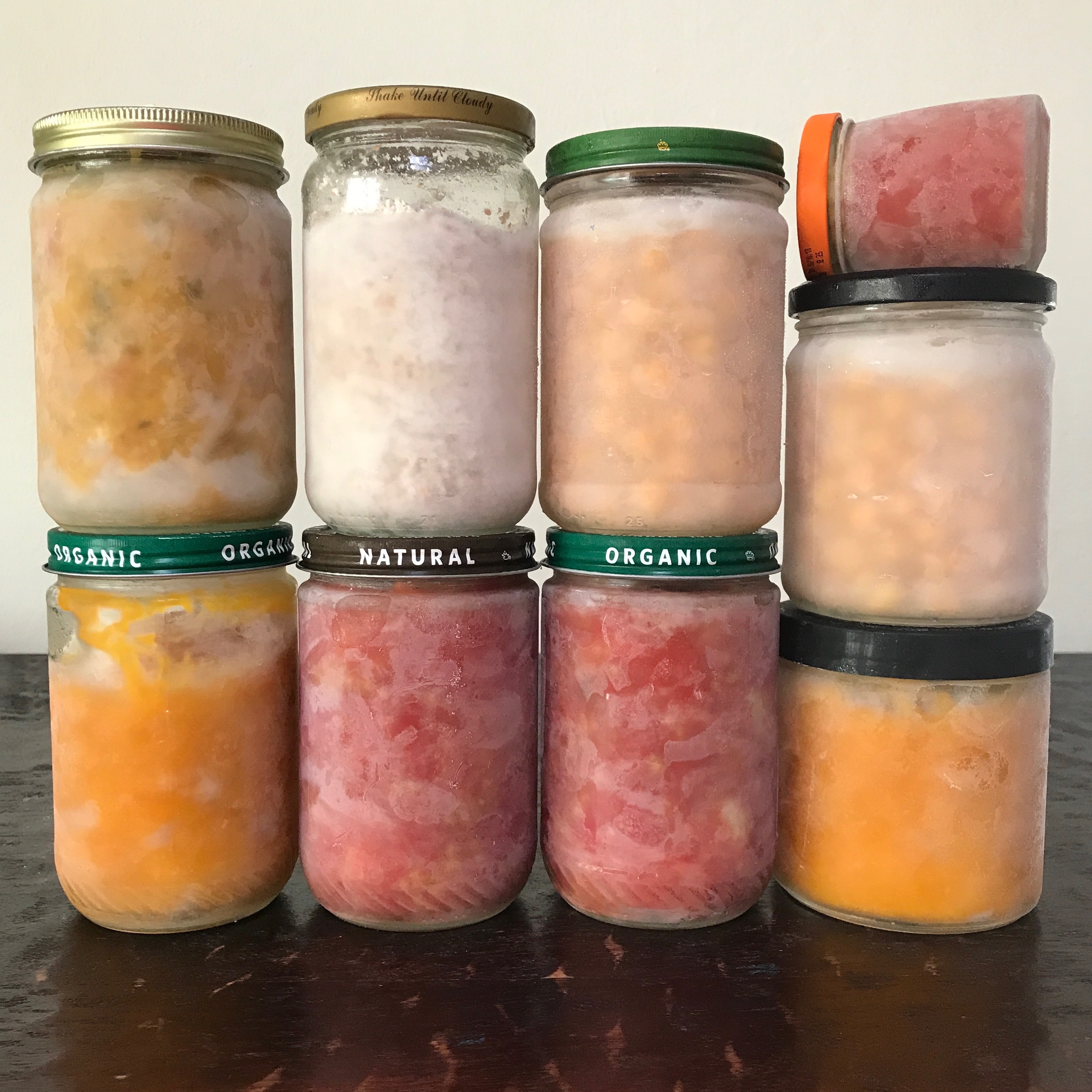
When you steam vegetables, save that water—now more like broth—to use in anything that calls for broth. Or add it to your next pot of scrap vegetables simmering to make broth. When I squeeze the liquid from shredded zucchini or potatoes—I have a recipe in my cookbook for shredded vegetable pancakes, for example—I save that liquid too. If you won’t use the liquid immediately, freeze it.
And remember, you can also always water your plants with cooking water if you’ve omitted salt.
12. Ferment your vegetables
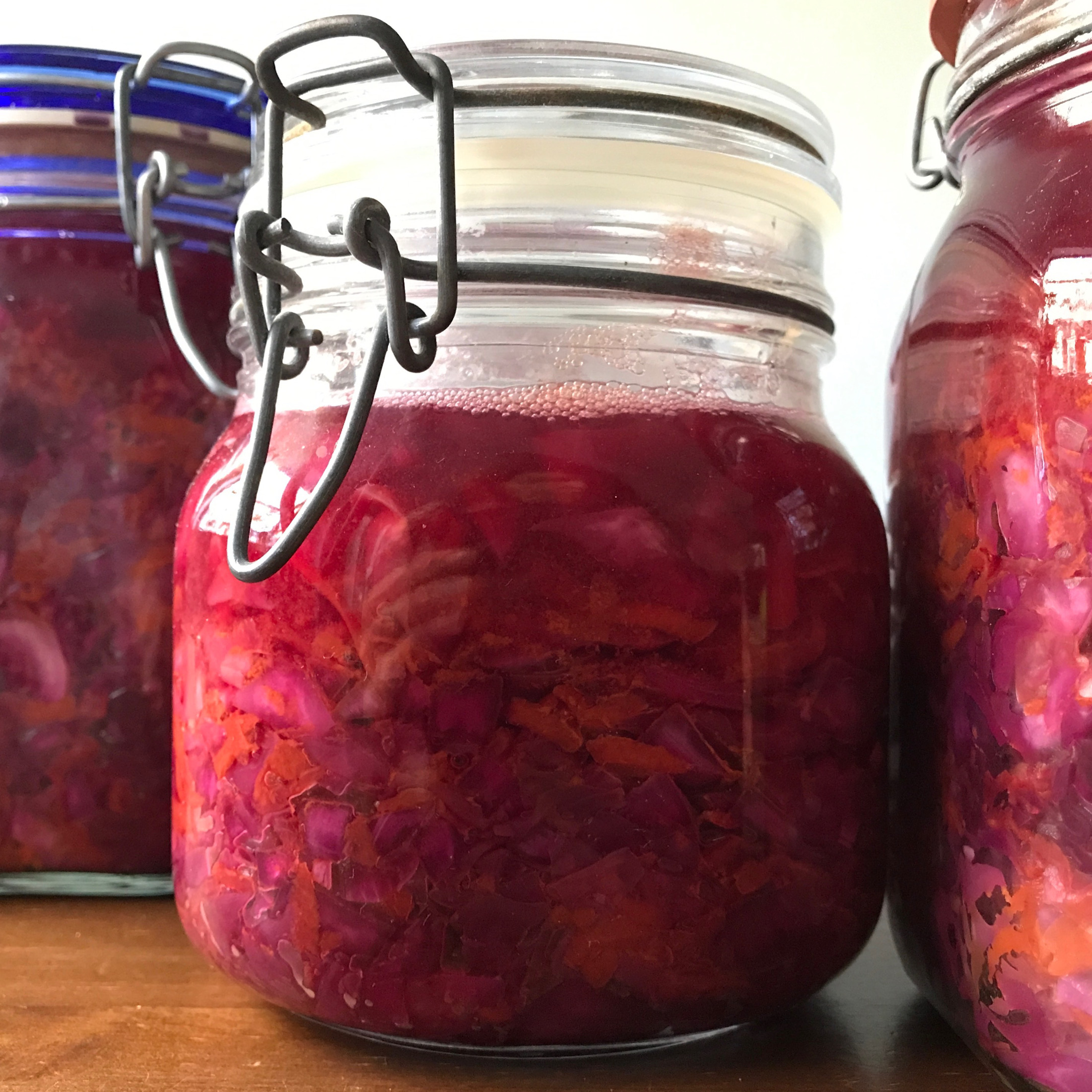
If you eat some fermented vegetables every day, not only will your gut love you but you will use very little water—if any—to prepare your vegetables. To prep sauerkraut for example, chop, salt and crush the cabbage and other vegetables with your hands before packing them into clean jars. These processes draw the water out of the vegetables, which enables the good bacteria in the vegetables to “cook” the kraut in the jar, all without an outside heat source, such as steaming water.
How to conserve water on the farm
These tips won’t reduce your water bill but they will conserve water indirectly. What we eat—or don’t eat—impacts water consumption on the farms that grow our food.
13. Eat the food you buy
When we waste food, we waste water. According to ReFed, a non-profit working toward ending food waste and food loss, uneaten food in the US accounts for 14 percent of all freshwater use.
My favorite strategy to reduce wasted food at home will ensure you eat more of the food you buy: Shop the refrigerator, freezer and pantry before you buy more food at the store. Rather than look for a dinner recipe and then shop for the list of ingredients it calls for, make a list of ingredients on hand and figure out what you can make with those ingredients. Start a simple meal plan from there. Then go shopping to fill in missing ingredients.
Go here for other simple ideas to reduce food waste at home.
14. Consider the water footprint of food
This website lists the global average water footprint of various commonly eaten foods. Potatoes have a lower water footprint (287 liters of water per kilogram) than vegetables such as cucumbers and pumpkin (350 liters/kg) and corn (760 liters/kg in the US and 1,220 liters/kg worldwide). Looks like I will continue to eat loads of potatoes after Covid ends (I’ve eaten so many potatoes…my favorite comfort food). Other foods require more water, such as dates (2,280 liters/kg), beef (15,415 liters/kg) and chocolate (17,196 liters/kg).
15. Eat small and local
Single crops grown over hundreds or even thousands of acres of land, year after year—monocropping, or continuous monoculture—eliminate ground cover, erode topsoil and decimate biodiversity, all of which reduce the water retention of soil. Hence monocropping requires more water than smaller, diverse farms that build up healthy, water-retaining soil.
California grows two thirds of the country’s fruit and nuts and over a third of our vegetables, many in monocultures. Much of this bounty is also exported to other parts of the world—even during summer months when those other parts of the world can grow their own bounty. If you live outside of California, buying food grown closer to your home will help conserve water here. When we export our food from California, we export our water. We don’t have any to spare.

Check out my award-winning cookbook!
- Taste Canada silver for single-subject cookbooks
- Second-place Gourmand cookbook award in the category of food waste
- Shortlisted for an award from the International Association of Culinary Professionals
Learn more about my book here.
Once again, a treasure of information! People forget about their “grey water.” When I was growing up, our water came from a small spring and three families shared it. We all had to be really careful. I remember my mom carrying her dishwater out to water the flowers.
Thank you very much, Dorothy 🙂
~ Anne-Marie
I catch some shower and rinse water to use outdoors for watering garden plants. But I’ve never used dishwasher or clothes washer discharge, for fear of the detergent in the water. Do you know if it’s okay to use that dirty detergent water on plants?
I would worry about that too. I think it depends on what kind of detergent you use, the types of plants you’ll water, whether you use water softener (some kinds appear to be okay and some are not). There might be other factors. That site I mentioned lists some questions to ask yourself before you install a gray water system: https://www.valleywater.org/saving-water/outdoor-conservation/saving-water/outdoor-conservation/about-graywater. I hope that helps.
~ Anne-Marie
All good ideas, thank you. I remember when we had chickens they loved kitchen scraps.
Hi Ms Jade,
Thank you. I’m glad you like the ideas. Chickens are great for eating up those scraps. Nothing goes to waste!
~ Anne-Marie
You’re welcome.
Great ideas. What a wonderful idea the ShareWaste system is! I think the more people hear about it the more popular it will become and I plan on telling as many people about it as I can. One caveat about greywater: If you have a traditional water-softening system your grey water will have too much salt to use on plants. I’m currently looking into other types of systems and/or other ways to reuse the grey water as we have super hard water here. Thanks for the great ideas. 🙂
Hi Gayle,
Thank you very much. I’m glad you find the ideas useful. I agree about ShareWaste. It’s a fantastic idea! I hope it spreads all over the planet, like the layer of compost we need in our soil. Thank you for the information on water softeners in gray-water systems. I hope your research goes well and you are able to set up a great system for your plants.
~ Anne-Marie
Great ideas! These are really so creative ideas, best ideas. Thanks a lot for sharing.
Valuable tips for conserving water!! However, one additional suggestion to consider for future updates is addressing the issue of a dripping faucet, as it can be a significant source of water waste. A dripping faucet is a common plumbing problem. To fix it, first, turn off the water supply. Then, you’ll then need to disassemble the faucet using the appropriate plumbing tools. Replace the worn-out components (usually the washer or the cartridge), then reassemble.
Right, and also installing a faucet aerator is a simple and cost-effective way to reduce water flow from your tap without compromising water pressure. It mixes air with the water, making it seem like you’re using the same amount of water while using less. A faucet aerator can help you save even more water in your daily kitchen activities.
Excellent tips for water conservation! To add to this, high-efficiency water heaters and low-flow plumbing fixtures can significantly reduce water usage and heating costs. It’s all about creating a more sustainable and efficient home environment.
Thank you very much for those additions!
Thanks for sharing these ideas!
When it comes to the tips for conserving water, the first thing every homeowner should do to reduce water consumption is to check for plumbing leaks. Unfortunately, some leaks may be difficult to detect. Look for signs like wall and ceiling discoloration, listen for unusual sounds of running water when no faucets are on, and regularly check your water meter for any movement, as these could indicate a hidden water leak.
One more tip to conserve water in the kitchen is to use a basin for rinsing fruits and vegetables instead of running water continuously. After rinsing, you can repurpose the collected water for watering plants.
Homeowners should also install a faucet aerator. A faucet aerator mixes air with water, which reduces the flow of water from the tap without compromising water pressure, allowing you to use less water for the same tasks. This small and inexpensive addition can make a significant impact on your water conservation efforts.
Adding a faucet aerator is indeed a great step towards water conservation. Additionally, homeowners can consider installing a dual-flush toilet. This allows for different water volumes to be used depending on the waste, significantly reducing water usage for flushing. Also, using a rain barrel to collect rainwater for watering plants and cleaning can help conserve potable water. By incorporating these methods, you can enhance your water-saving efforts even further, making a substantial difference in overall water consumption.