


I recently gave a workshop at the Menlo Park library on fermentation. I love facilitating workshops. The audience is so enthusiastic to learn about zero-waste cooking, fermenting, sourdough baking, produce bag sewing and so on. I thought homemade cleaners might make another great workshop but quickly realized it would last only a few minutes. It would go something like this:
Use baking soda and vinegar.
The consumer products industry has convinced us that we need all sorts of products to clean our homes: kitchen cleaner, surface degreaser, bathroom cleaner, disinfecting bathroom cleaner, tub and tile cleaner, glass cleaner, toilet cleaner, those blue disinfecting toilet disks… Does it really matter if your toilet water contains germs? You don’t drink out of the thing.
We actually need very few items to keep our homes clean and in fact, we have rendered our homes too clean. The use of bleach, antimicrobial cleaners and alcohol-based sanitizers has dramatically reduced the contact with harmless bacteria that we need in order to build up our immune systems. In The Good Gut, microbiota researchers Justin and Erica Sonnenburg offer some cleaning alternatives:
A more microbe-friendly approach to cleaning is to use less-toxic cleaners such as vinegar, castile soap, and lemon juice, which will allow increased exposure to microbes and may lessen the risk of the misfiring of the immune system that is plaguing the Western world (p. 215).
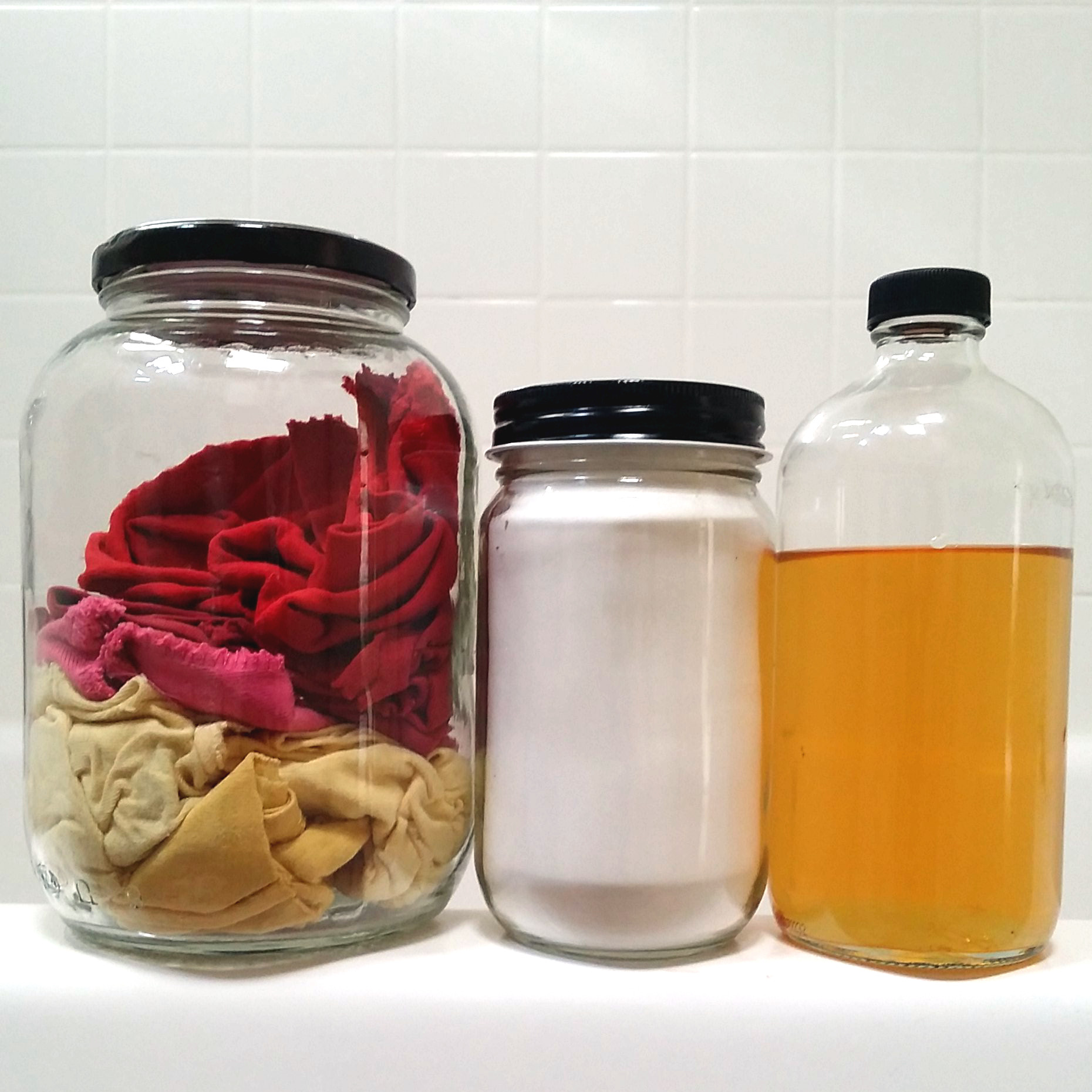
I clean my bathroom with vinegar that I make, baking soda that I buy in bulk and rags that I cut out of old t-shirts. In the bathroom cupboard next to the baking soda and vinegar, I store a jar of these rags, hoping to inspire someone other than myself to clean the following (this tactic may work better in your home…):
- Toilet. Pour 1/4 cup or so of vinegar into the toilet. Let it sit 5 minutes. Swirl a toilet brush around. Flush.
- Sink, tub and tile. Make a paste of baking soda and vinegar. Scrub surfaces. Rinse with water.
- Floor. Spray with vinegar. Wipe with a dry cloth.
- Mirror. I usually just use a wet rag to wipe this off and a dry one to dry it but diluted vinegar will also do the trick.
Of course, baking soda and vinegar work well in the kitchen also.
Homemade Vinegar—Two Methods
1. Scrap vinegar
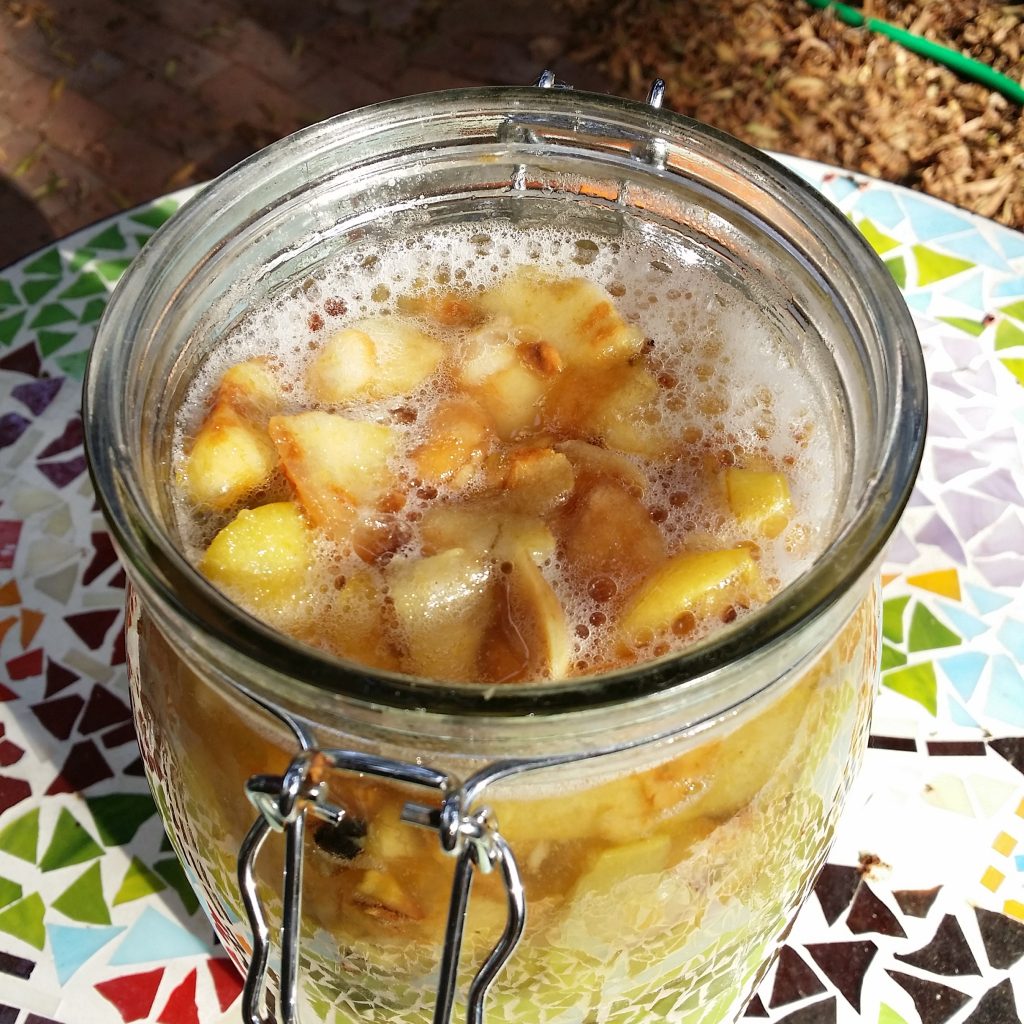
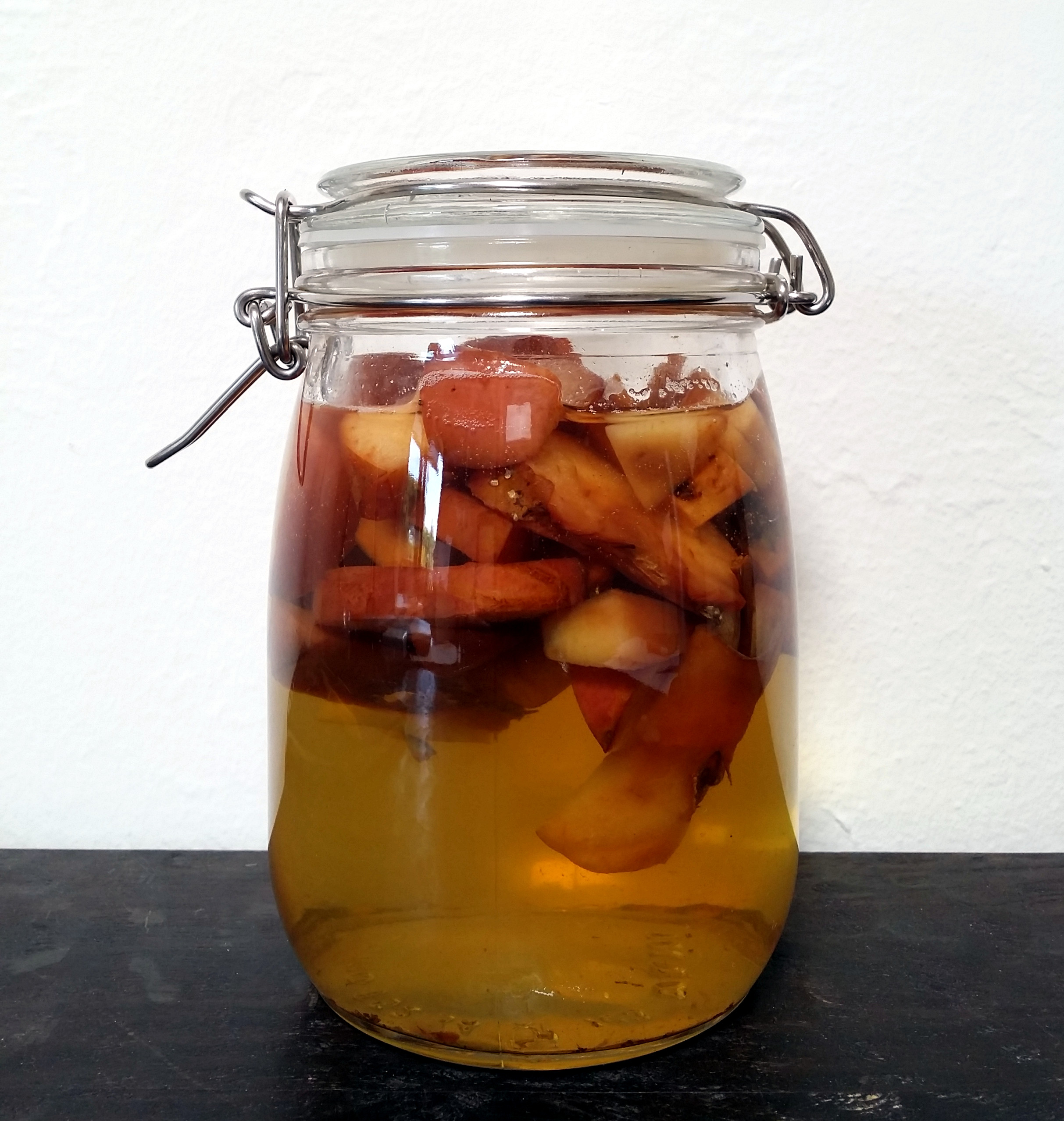
For the scrap vinegar fermenting in the pic below, I saved apple scraps in the freezer until I had accumulated enough for a small batch. Basically, you put the fruit scraps in a jar, along with a teaspoon of sugar and cover everything with water. Stir daily to prevent mold from forming. After about 10 days or so, you’ll have mild vinegar. Strain and bottle it. The acidity will increase slowly over time. I occasionally use pears. Pineapples also work but I never buy them because I don’t live in Hawaii. Here’s my post with detailed instructions on making scrap vinegar.
2. Mature fermented tea (kombucha)
Make kombucha and let it brew for six weeks or so. The SCOBY will eat all the sugar in the tea, transforming it into very strong vinegar. Here’s my post with detailed instructions on brewing kombucha. The only trick to making kombucha is tracking down a SCOBY (symbiotic culture of bacteria and yeast) to ferment your tea, which leads me to…
