



If you have tried to lose weight to no avail, you may want to cut down on your waste rather than counting your calories.
1. To quote my friends at Plastic Free Tuesday, plastic makes you fat. Many plastics contains BPA, a synthetic estrogen. According to Dr. Robert Lustig, the UCSF pediatric endocrinologist made famous by his viral YouTube video, “Sugar: The Bitter Truth,” chemicals like BPA “make the estrogen receptor go wild and lose all it inhibitions, promoting breast development and inducing fat cell differentiation, which means weight gain as well.” BPA “is leached out every time an acid touches a polycarbonate plastic bottle. In other words, every consumable liquid in America.” (Robert Lustig, Fat Chance, Penguin, 2013, p. 161.)
Phthalates, another group of chemicals, make plastics more flexible. If you have a vinyl shower curtain, it likely contains phthalates. Although you will never eat your shower curtain, you may ingest pills and vitamins made with coatings that contain phthalates. Many personal care products such as soaps, shampoos and lotions also contain phthalates (but not my homemade deodorant!), exposing you to this compound. According to Lustig, “In adults, urine phthalate levels correlate with adiposity [obesity], waist circumference and insulin resistance…Again, while this is correlation and not causation, it is still highly worrisome.” (Robert Lustig, Fat Chance, Penguin, 2013, p. 162.)
The Environmental Working Group lists both BPA and phthalates on its “Dirty Dozen List of Endocrine Disruptors.” Reduce the plastic packaging of food and personal care products and you reduce your exposure to these chemicals.
2. If you cut packaging waste, you cut all processed food. I have always cooked but I also used to buy all sorts of processed food: canned tomato sauce, canned beans, the odd frozen pizza, broth in Tetra Paks, cereal, crackers, cookies. When MK and I decided we would try to live plastic free, our diet changed (and MK lost weight). We stopped eating canned food. We stopped eating cereal for breakfast. We stopped snacking because we didn’t have anything to snack on.
Processed food contains tons of sugar, which makes insulin levels spike, which leads to weight gain. (Read Fat Chance for the low-down on sugar’s role in the obesity epidemic.)

3. You drink less junk. When I first visited California, I tried an Odwalla juice and loved it. After I moved here, I bought it fairly regularly. But when I kicked the plastic, I stopped drinking juice altogether. And thank goodness! Do you know how much sugar an Odwalla contains?! Forty-seven grams in a 15.2-ounce bottle of Superfood! Was I unable to locate food labels back then? To give you an idea of how much sugar that is, a 12-ounce can of Coke contains 39 grams of sugar. Today I stick with water, tea I brew from loose-leaf that I buy in bulk and fermented drinks I make myself. Cut the unnecessary drinks and you cut the sugar.

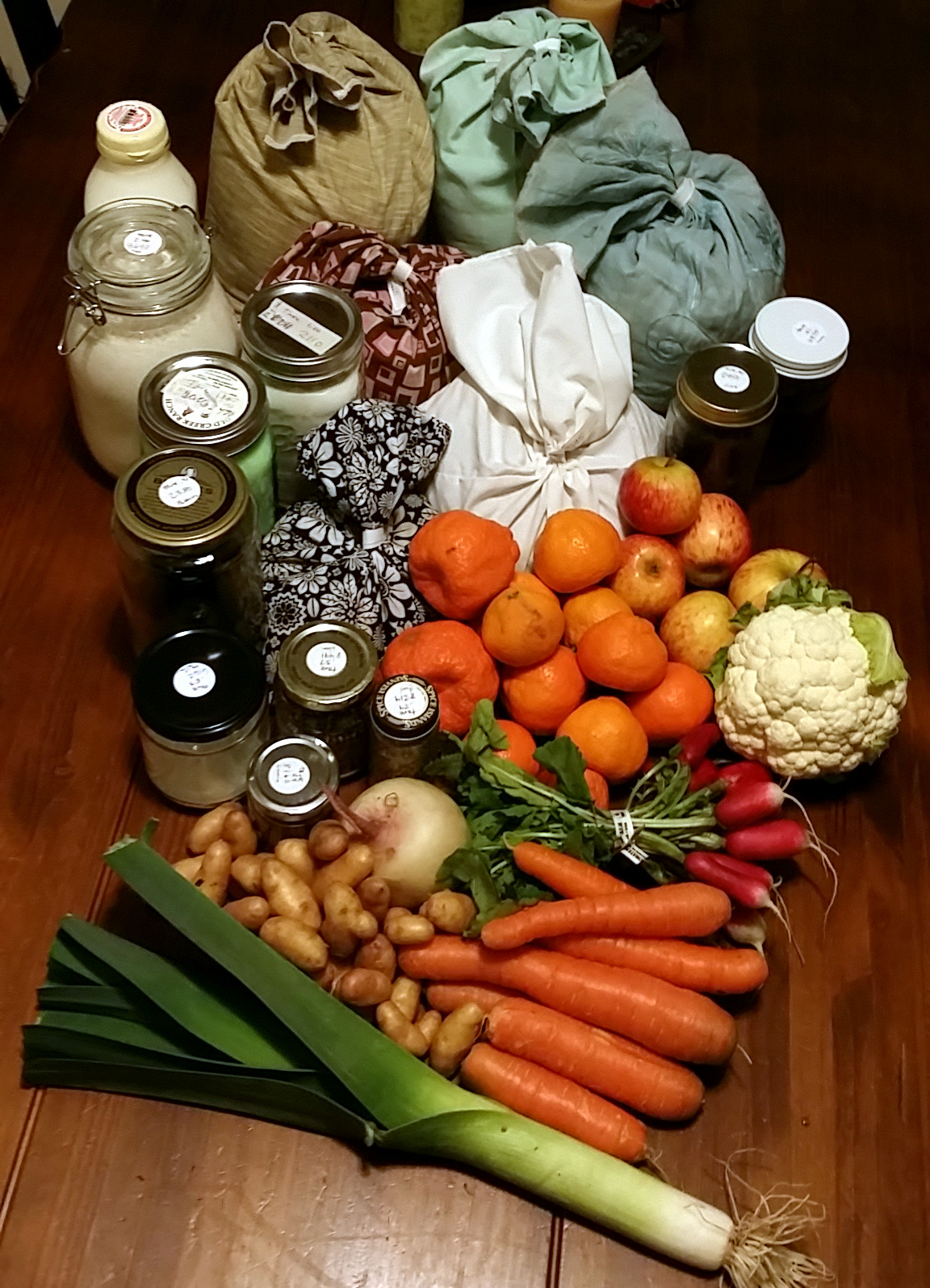
4. You’ll shop more at farmer’s markets. When I cut my plastic waste, I started shopping religiously at the market. Fresh, organic, healthy farmer’s market food tastes better than anything I can get at the grocery store. Most food there even lacks those annoying little plastic produce ID stickers. And how can you gain weight if you stick with foods like those pictured above? (I guess if you ate them all in one sitting…)
5. If you cut processed food, you must cook from scratch. Big Food has rendered a large number of North Americans utterly helpless in the kitchen and dependent on their processed, sugar-laden crud. People don’t feel they have time to cook. Parents don’t teach their kids to cook. How strange that as people have cooked less, kitchens have become larger and more elaborate. I’m pretty proud of the delicious, healthy food I can crank out of my tiny, yet well-implemented kitchen. When you cook your own food, you eat better. As a bonus, you thumb your nose at the big food corporations.
“Food made by hand is an act of defiance and runs contrary to everything in modernity.” — Bill Buford, Heat