


The marketing industry has trained us well to buy products that will supposedly solve all of life’s problems. But with a little creativity and resourcefulness, you may find more sustainable and less expensive solutions to your predicaments than shoddy consumer goods designed to break quickly and languish in landfill for an eternity.
Nothing is sometimes an excellent choice
A major appliance has broken? Maybe it’s an opportunity. For example:
Your microwave dies
You really crave popcorn. You open a box of microwave popcorn, pull out a bag, tear off the plastic, throw that in the trash, place the bag in the microwave, press a few buttons and… nothing. You try again but cannot revive your appliance.
On first impulse, you may find yourself searching for a replacement on Amazon. Of course, you’ll want it delivered the next day to your front door. How about this Alexa-enabled model? It
simplifies cooking by letting you microwave using your voice and an Echo device. Just say, ‘Alexa, reheat one cup of coffee,’ and Alexa will start reheating with the appropriate power and time settings.”
But don’t you have to open the door of the microwave to put the cup in there? Couldn’t you just press the button on the panel next to the door handle? Really? This is a thing?
If your microwave breaks, you have no moral obligation buy a new one. You could instead:
- Repair the microwave.
- Look for a secondhand microwave.
- Stop using a microwave.
But what about that popcorn?! Use the stovetop. Enjoy both your new status as the neighborhood rebel and your incredibly delicious, inexpensive popcorn without the chemical-laden, single-use throwaway packaging.
Your dryer dies
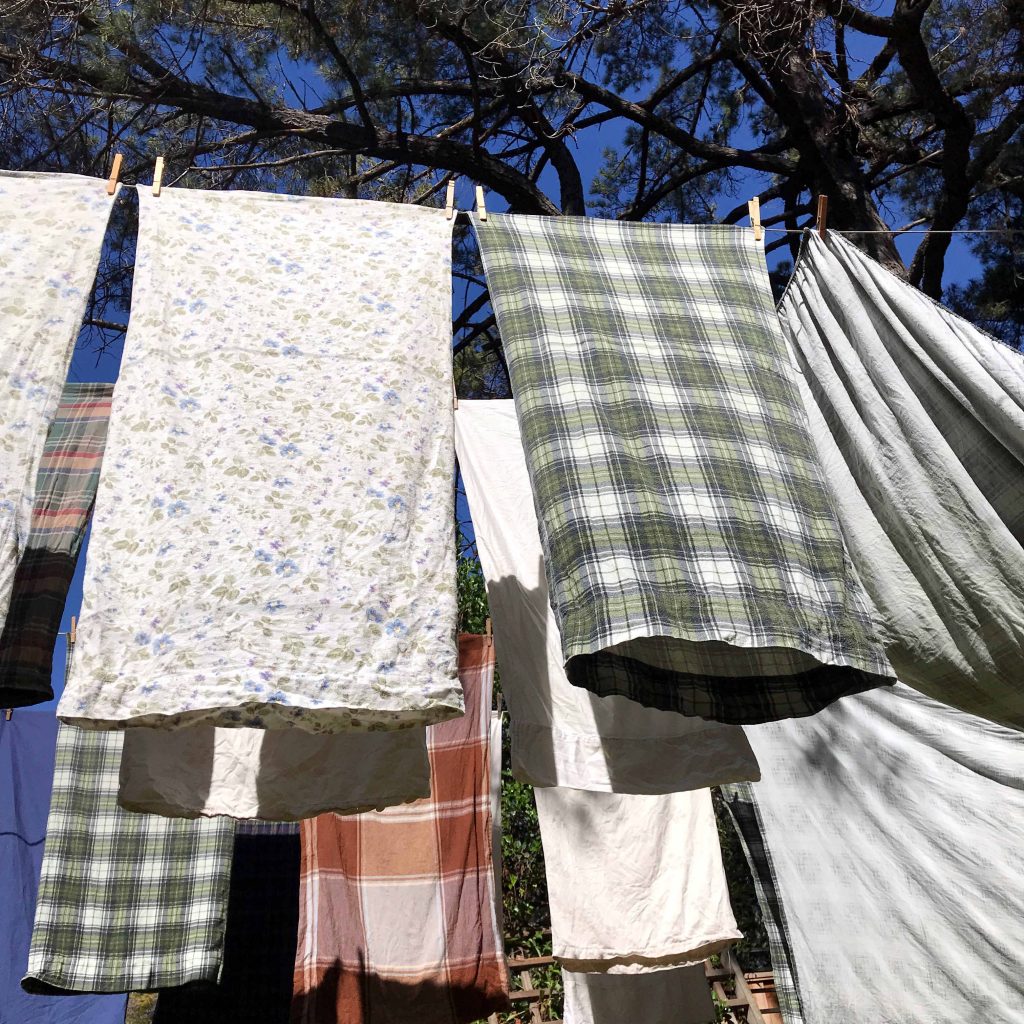
Every time I post pictures on Instagram of my laundry hanging outside to dry, the images enrage and horrify many Europeans and Australians, who tell me they rarely own dryers. They regularly ask in the comments, “Why are you posting this? Isn’t this normal where you live?” No, it is not. The vast majority of people living here in sunny Northern California use an electric dryer. Even on hot days.
Eschewing the dryer and hanging your clothes to dry:
- Saves money.
- Extends the life of clothing.
- Liberates you from owning one more large appliance in need of space and infrastructure to accommodate it and money to maintain it.
In the winter, you can hang the clothes up around your home in the basement, in the garage, on a rack in the laundry room or wherever. If your clothes take too long to dry hanging up, buy enough extra clothes so you don’t have to go naked. Unless you’re into that.
Your car dies
When my car dies, I don’t plan on replacing it. Because I own a Toyota and drive little, it won’t die for a while. But when it does die, I’m done. No new-to-me used car. No electric car. No new-to-me used electric car.
Unlike someone who lives in a rural town, I can pretty easily go car-free. I dwell in a densely populated area with decent bike infrastructure and so I ride my bike all over. I buy most of my food by bike, I ride to the library and to meet my boss to work together (however right now, I’m mostly working on my cookbook at home).
After that inevitable day—the end of my car—I’ll continue to ride my zero-emissions bike. If I want a car for a trip, I can rent a car. If I need to get somewhere quickly, such as urgent care, I can always order a Lyft. (In other cities, cabs still exist but not here in Silicon Valley.)
Think of the money I’ll save on car payments, insurance, gas and repairs for a horrible investment that has ruined our cities.
[A]fter a certain point, more cars make the city a less congenial place for strollers, bicyclists and people who take public transit to their destinations. The cars push out frolicking kids, quiet afternoons reading on a bench and sidewalk cafes. So we give up our public space, our neighbor-to-neighbor conversations and ultimately our personal mobility for the next car, and the next one.
Patience pays off
Often, if you think you need something and wait, you can find what you want inexpensively or secondhand (or you might just forget about it and save some money). When I go to thrift shops, I hit the aisles with the pots and pans first, in search of cast iron. I love the stuff. It cleans so easily. Its nonstick properties result from proper seasoning (i.e., cooking in it with fat) rather than from nasty Teflon chemicals. And it’s practically indestructible.
But I have found cast iron only once. Then a few weeks ago, my partner Chandra snapped up two cast iron pans for me at an estate sale for a mere $2 a piece! Patience finally paid off. The larger pan is a Griswold, a brand people collect and sell on eBay or build displays for in their spare rooms and take videos of to post on YouTube.


In the old days, before I set out on the zero-waste path, I wouldn’t have wanted these, with their rusty bottoms and stained interiors. (Actually, I wouldn’t have bought secondhand anything in the old days.) But I revived these easily by scrubbing the rust off with a potato and coarse salt, followed by three seasonings in the oven. (Go here for more on cast iron care).
Change our mindset
Many Americans would consider going without a microwave—let alone a car—as radical. For those not wanting to draw suspicion from their neighbors for such subversive behavior, small changes might be easier to tackle.
If you fall into this category, here is my challenge: The next time a kitchen gadget breaks or your jeans tear or you run out of the goop you like to put in your hair, before pulling out your smartphone to find another product to buy online, come up with a different solution, using the resources you already own.
On the weekend, a friend of mine told me that once when he was a student, he stayed with friends for a night in a hotel in Las Vegas on his way home from a camping trip. After promptly losing his last $20 in the casino, he returned to the room hungry. He still had some food left from camping, including tortillas and cheese, so he (carefully) made a quesadilla in the hotel room with the iron and ironing board, using the iron’s steam setting to soften his tortillas. I aspire to that type of MacGyver-esque thinking.