Vegetable broth made with corncobs, husks and floss tastes absolutely delicious and contains only the minimal ingredients that you yourself put in the pot.

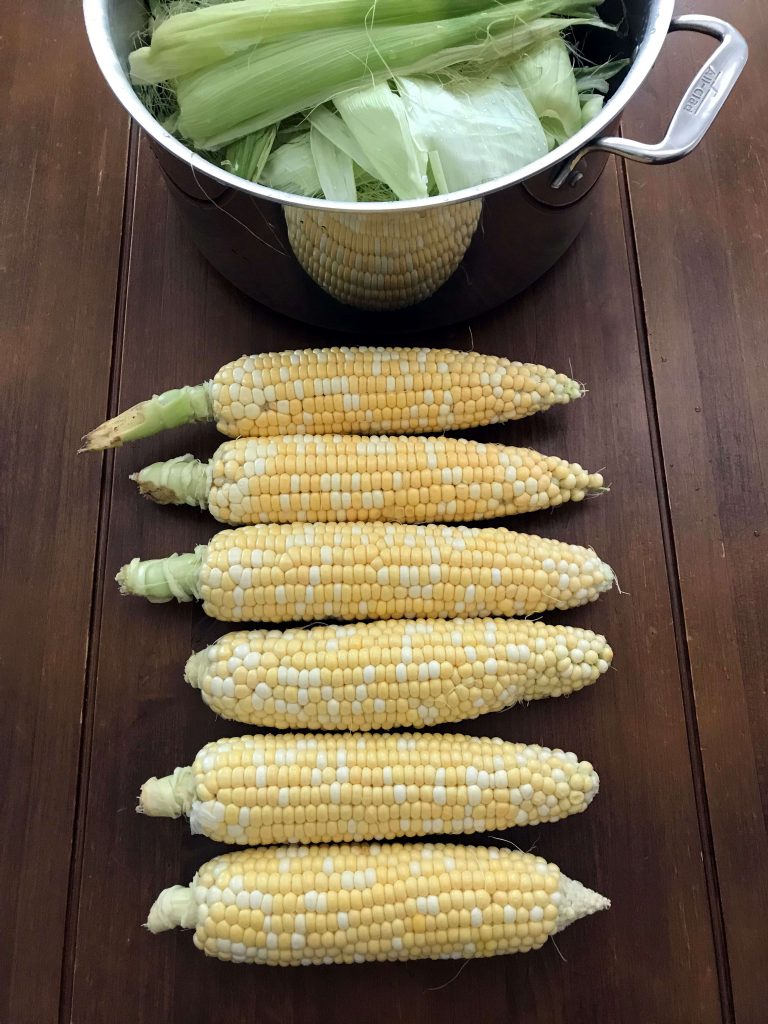
American corn: We shouldn’t need to investigate for hours before buying our food
Here we go…
Most American corn has been genetically modified to tolerate heavy doses of glyphosate, the world’s most popular weed killer which, depending on the study you read and who funded it, may or may not be carcinogenic.
Organic food cannot be labelled as such if it contains GMOs. But as it turns out, most non-organic corn on the cob does not come from genetically engineered seeds. So whether you eat organic corn on the cob or non-organic, you likely will not eat genetically modified corn.
According to Environmental Working Group (EWG), about “90 percent of the American field corn crop is genetically engineered to resist herbicides or to produce a protein derived from bacillus thringiensis bacteria that can kill certain insect pests.” Much of that corn feeds livestock, which cannot actually digest corn. Cows become sick as a result, hence the overuse of antibiotics, which leads to antibiotic resistance, which leads to more antibiotic use.
However sweet corn, otherwise known as corn on the cob, “a natural mutation that is believed to have emerged in Pennsylvania in the mid-18th century, represents less than 1 percent of American corn production” and has not been genetically modified.
Non-organic sweet corn also contains less pesticide residue than most other fruits and vegetables treated with pesticides. In fact, it comes in at second place on EWG’s Clean Fifteen List, a ranking of non-organic produce varieties containing the smallest amounts of pesticide residues.
Nevertheless, because the husks protect the corn kernels from pesticide, I would avoid putting husks of non-organic corn on the cob into this broth as those would no doubt contain these residues. Compost the husks along with the floss or make corn husk dolls. The broth will still taste delicious using only the cobs.

The bottom line: As with the scrap vegetable broth I make with the peels, skins and scraps of various types of produce, I buy organic corn for this broth. (In fact, I buy only organic food, but not industrially produced organic food.)
I truly planned to write only about my delicious tasting broth but once you start down the rabbit hole of American corn, well, you could write an entire book. If you are Michael Pollan, you write the brilliant book The Omnivore’s Dilemma.
Why bother making homemade vegetable broth?
Not only does homemade broth taste fantastic, it costs nothing and eliminates wasteful Tetra Paks and BPA- or BPS-infused cans. I posted a poll in my Instagram stories this week asking people if they knew that the lining of cans—including food, beer and soda cans—contains an epoxy resin (i.e., plastic). Sixty-two percent responded no.
This epoxy resin typically contains either the endocrine disruptor BPA or its lesser-known chemical twin, BPS. According to EWG, BPA “is a synthetic estrogen that scientists have linked to breast cancer, reproductive damage, developmental problems, heart disease and other illnesses.” By replacing badly reputed BPA with unfamiliar BPS, food manufacturers can honestly—yet unscrupulously—plaster the claim “Now BPA-Free!” on their packaged products.
The corncob broth recipe
You have reached the part of this post where you actually cook the broth after you have selected your corn.
For this post, I removed the corn kernels from six cobs of corn. I used the kernels and the broth I rendered from said cobs to cook delicious corn chowder. If you have only one or two corncobs, either make a small amount of broth or store the cobs in the freezer until you amass enough to make a larger amount of corncob broth.
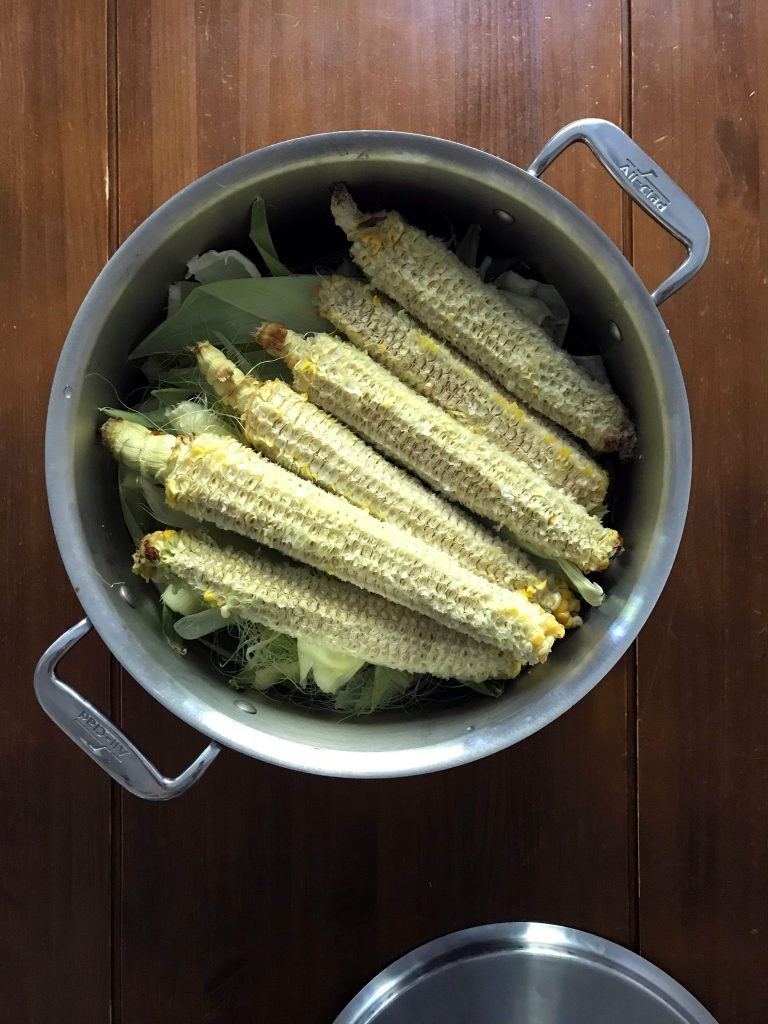
1. Place the husks and floss in a layer at the bottom of a large pot. Layer the corncobs across the husks and floss.
2. Add enough water just to cover the cobs, husks and floss, bring to a boil and reduce heat to a simmer.
3. Simmer for 30 to 45 minutes until golden, fragrant and sweet tasting.
4. Strain the broth through a sieve or a colander lined with a thin cloth.
5. Use the broth immediately, refrigerate it or freeze it in wide-mouth jars with flush sides, leaving an inch or two of headspace to allow for expansion in the freezer.
6. If desired, make those corn husk dolls. You’ll need damp husks. Allow the now wet husks to dry out a little bit first.
My cookbook includes a fabulous recipe for Kernel-to-Cob Corn Chowder that uses all the parts of the cob. Learn more about my award-winning book here.