

I finally made tomato paste and it tastes amazing. This has been on my to-do, to-cook, to-blog list since I started blogging. Like many things I now make from scratch, I will never be able to eat store-bought tomato paste again because homemade tastes incredible. Don’t say I didn’t warn you.

I followed the recipe from Rachael Mamane’s wonderful book Mastering Stocks and Broths: A Comprehensive Culinary Approach Using Traditional Techniques and No-Waste Methods. This thoroughly researched gem of a book covers not only stocks and broths, but also the history, culture and science of stocks and broths, the importance of sourcing quality ingredients and how to use up absolutely every scrap of food and waste nothing.
Published by Chelsea Green, the book is an exhaustive stock and broth encyclopedia, similar in format to The Art of Fermentation (also published by Chelsea Green), which I constantly recommend on here. In other words, if you have a question about stocks and broths, you’ll find the answer in this book.
However, you’ll find much more than recipes for stocks and broths—and answers to your questions about them. The book includes recipes for kelp stock and dashi, a vegetarian tagine with kabocha squash, homemade paneer, tahini, marshmallows, split yellow pea cakes—even dog food made with spent bones (and other ingredients)—just to name a handful of recipes.
The Tomato Paste
In Northern California at this time of year when the price of Early Girl dry farmed tomatoes drops, I buy at least a couple of 20-pound cases of them. This recipe calls for eight pounds.
I didn’t have an available baking sheet for this, so I used two glass pyrex dishes. They worked well. I burnt a very small bit of the paste around the edge and just scraped that off. If you want to make this vegan, try using brown rice syrup or barley malt syrup in place of the honey the recipe calls for. I haven’t tried those—I followed the recipe exactly—but they should work well.




This excerpt is adapted from Rachael Mamane’s book Mastering Stocks and Broths: A Comprehensive Culinary Approach Using Traditional Techniques and No-Waste Methods (Chelsea Green, 2017) and is printed with permission from the publisher.
ABOUT TOMATO PASTE
Tomato paste is tomato purée that has been cooked for several hours to produce a thick concentrate. The seeds and skins are removed to render a silky and glossy finish. Many brown stocks call for the addition of tomato paste, which deepens flavor and brightens hue.
Store-bought tomato paste often includes corn syrup or citric acid to increase its shelf life. This recipe offers a healthier homemade alternative, using honey as the sweetener. Packed and sealed in jars, this tomato paste will last indefinitely. If you don’t have time to make your own, look for a store-bought variety that lists tomatoes as the only ingredient.
HONEYED TOMATO PASTE
ACTIVE TIME: 1 hour | TOTAL TIME: 6 hours (including simmering and baking) | YIELD: Makes about 2 cups (480 ml)
8 pounds (3.6 kg) red tomatoes, ripe
2 tablespoons olive oil, plus more for packing
⅓ cup (115 g) honey
2 bay leaves
1 tablespoon sea salt
Core and halve the tomatoes. Remove the seeds with your fingers or a spoon. In a medium stockpot, add the tomatoes and the olive oil. Over medium heat, bring the tomatoes to a simmer and cook until softened and juices are released, about 40 minutes. Remove from the heat and cool slightly.
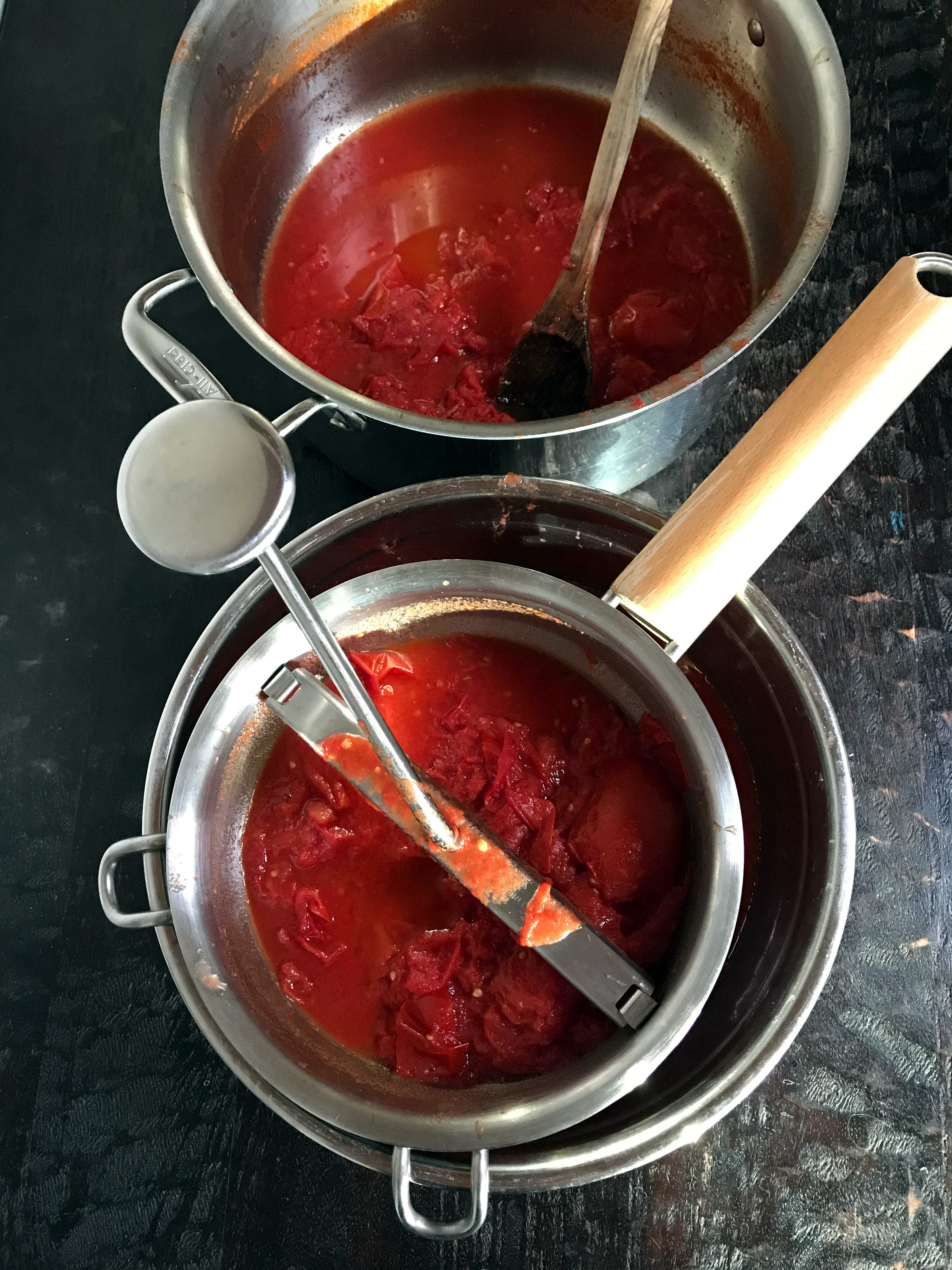
Outfit a food mill with a fine disk and place over a bowl. Pass the tomatoes through the mill. Return the tomatoes to a clean pot; add the honey, bay leaves, and sea salt. Bring to a gentle simmer over medium heat and reduce until thick, stirring often, about 1 hour. If the mixture sputters, place a splatter guard over the pot. Be careful not to scorch the sauce.
Heat the oven to 250°F (120°C). On an oiled baking sheet, spread the tomato purée into a thin, even layer. Bake until the purée becomes thick and tacky, stirring every 20 minutes, about 3 hours total. Remove from the oven and cool to room temperature. Transfer to jars and top with a thin layer of olive oil to prevent discoloration. Keep in the refrigerator, up to 1 month, or for long-term storage process in a water bath canner. Consult the manufacturer’s guide of your water bath canner for detailed operating instructions.