


Updated 10/29/18
Food waste is a huge—but edible—problem. These eight tips will help you reduce food waste at home and save money.
1. Buy less food more frequently
If you shop a couple of times a week and buy only what you need, you will enjoy fresher food and waste less of it.
Yes, I realize some people find buying two weeks’ worth of processed food at Costco convenient. But let’s put aside for a moment the wasteful over-packaging of processed food, its dubious ingredients and the insatiable corporate greed of, oh, I’ll pick on Nestlé again because it’s just so easy and I feel lazy tonight. Even if I could somehow magically make these unpalatable aspects of processed food disappear, one truth remains: the stuff tastes bad.
The most sustainable food—locally sourced ingredients from small organic family farms—also happens to taste the best. Now that’s what I call convenient!
adjective con·ve·nient \kən-ˈvēn-yənt\
: allowing you to do something easily or without trouble
: located in a place that is nearby and easy to get to
: giving you a reason to do something that you want to do
2. Ditch the recipes
This may sound like heresy to some. Although I do love my cookbooks, I do not choose a different recipe from them every night for dinner. My refrigerator would soon overflow with little bits of ingredients I didn’t use and all sorts of leftovers my diners may turn their noses up at. Instead, I get creative and use what I have on hand.
Here’s a quick example: For a presentation at the Sunnyvale Library on food waste, I looked in the refrigerator to see what I had on hand. I found cooked black beans we hadn’t eaten and some sweet potatoes in the cupboard. Those taste great together, so I quickly made some black bean and sweet potato soup to feed the audience after my demo. Even small children asked for a second helping.
Oh, and another example: I had a couple of tablespoons of lemon zest in the freezer and needed to bottle my kombucha. I tossed the zest into the bottles—delicious! I used to let my whims dictate dinner. Now my pantry does. I just love cooking this way.
3. Re-evaluate what you consider trash

So I just told you to throw out the recipes and will now list a pile of recipes. Consider most of these techniques rather than strict instructions. I make the following recipes out of what many people would throw out:
- Crackers, waffles, pancakes and tortillas from discarded sourdough starter
- Scrap vinegar from apple cores and peels
- Vegetable broth from scraps I store in the freezer until I have a pile
- Bread crumbs from stale bread (stale bread has so many uses)
- Watermelon rind pickles from, well, watermelon rids
- Fried potato skins from organic potatoes
- Pizza dough made with whey from cheese-making
- Candied citrus peels from oranges, lemons, limes and so on
- Chai with citrus peels from orange peels
4. Take care of produce as soon as you get it home
I mentioned some of this in a post last week about the drought here in California. This step makes my week much less chaotic and ensures that we’ll eat what I take. On Sunday, for example, I came home from the farmer’s market with the goodies pictured below, a slightly smaller haul than usual.
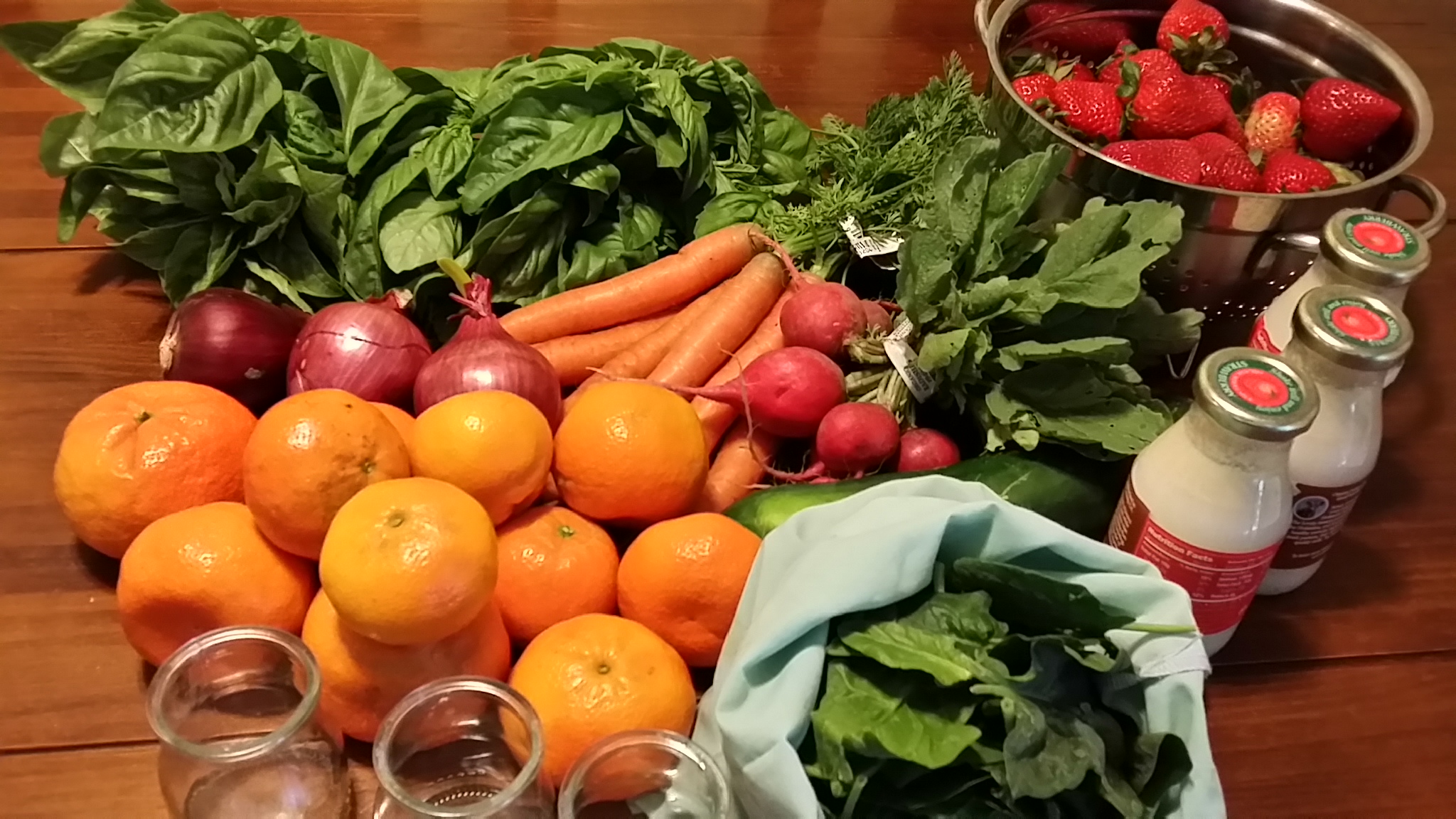
I filled a bowl with water, washed the cleanest produce first (strawberries), ended with the dirtiest (radishes) and watered a plant outside with the resulting dirty water. Next, I halved some of the strawberries and froze them on a cookie sheet in the freezer before transferring them to a jar. (These would have been great for smoothies had we not eaten them all.) I packed the spinach, basil, radishes and carrots into separate containers in the refrigerator for easy access. All of this makes preparing lunches and cooking more convenient.
5. Store food in clear glass jars and containers
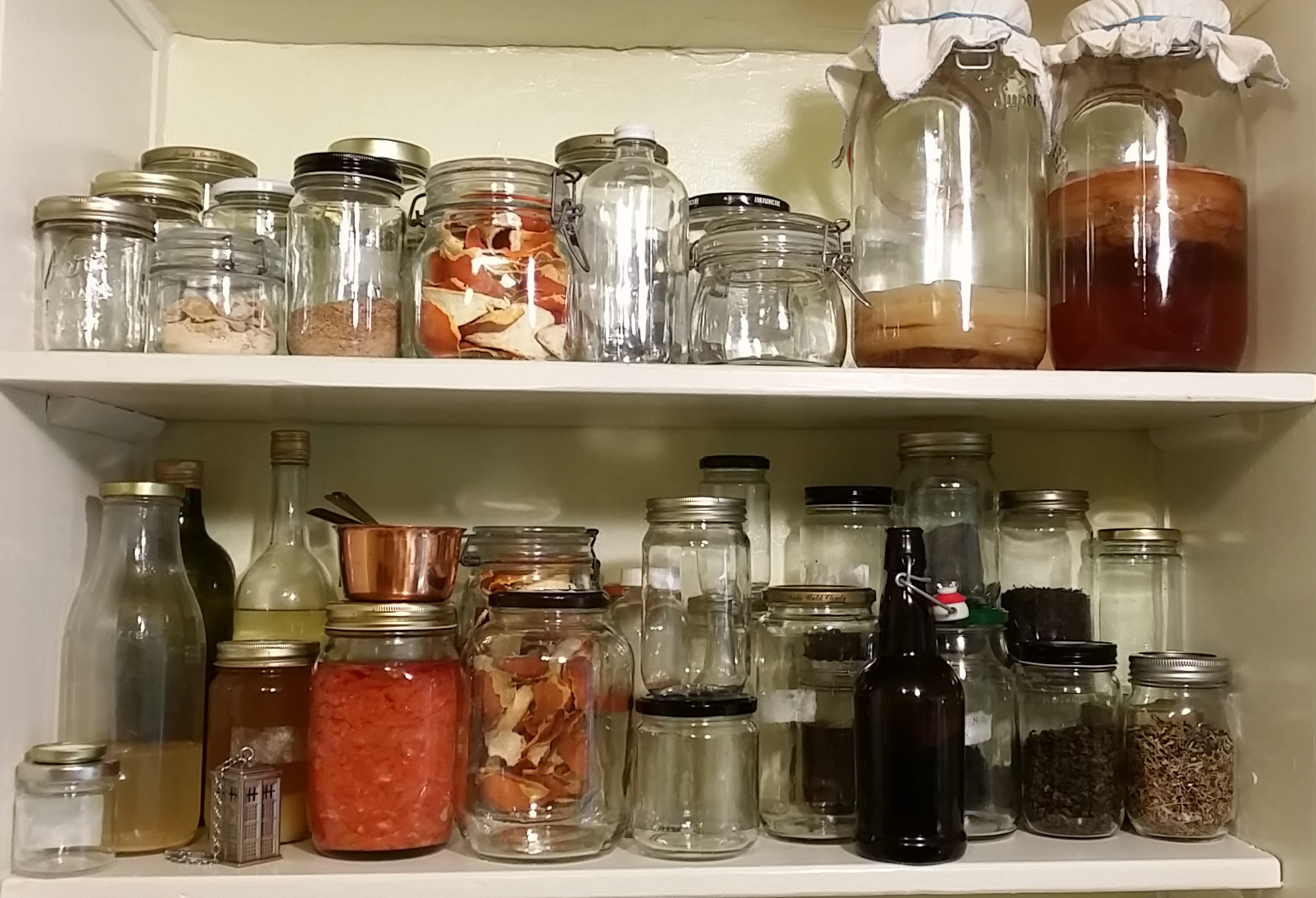
If you store leftover lasagna in an opaque container, you may forget about it until you stumble upon its slimy, decomposing remains a couple of months later. Store food in glass in your refrigerator, your freezer and your cupboards, and you can see what’s in there at a glance.
6. Don’t stash everything in the refrigerator
Keep tomatoes in the refrigerator only if you want to render them flavorless. Store potatoes and onions in a cool place other than the refrigerator and separate from each other as they don’t get along well in close quarters. Bread dries out in the refrigerator so keep it at room temperature. (If you make real sourdough bread, it stays fresh for a week!) Click here for more tips on storing produce without plastic.
7. Buy a smaller refrigerator
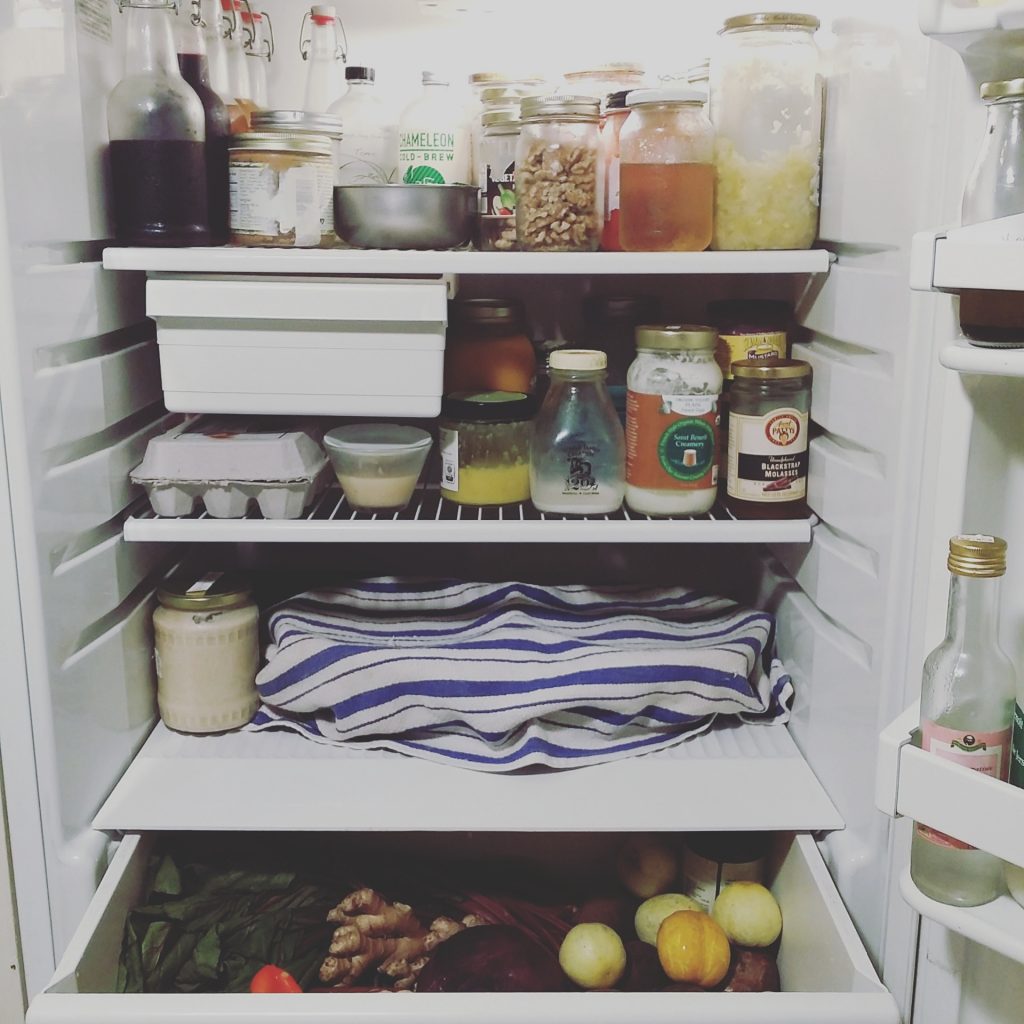
I have had this fantasy since my early twenties of abandoning my refrigerator (obviously I would starve if I wrote erotica). Maybe one day. I’m not suggesting you put your refrigerator out on the curb but when you do shop for a new one, consider downsizing. A small one may improve your health. It has less room, so you’ll buy less food and waste less. I certainly could live with a smaller one. Typically my refrigerator contains pastured eggs and dairy, ferments, leftovers and all those prepped vegetables I mentioned earlier. Unbathed eggs will keep at room temperature. I could leave my ferments out too—they would merely ferment faster and develop stronger flavors.
8. Learn to preserve food
The Western diet, consisting of pre-packaged, highly processed convenience foods, does not require cooking skills. For this reason—at least in part—you can practically fit an American-size car into an American-size fridge. People used to preserve food through fermentation, salting and smoking. They would put up food when it was plentiful to prepare for when it would not be. If you find you have extra food on your hands, you can preserve it before it goes bad. Today, we rely on our refrigerators to preserve food for us. I am completely obsessed with fermentation as some of you know and I teach online and in-person workshops on the topic. You can check out my latest schedule here.
What started out as tips to prevent food waste has morphed into a manifesto against refrigerators and I have by no means exhausted all food-waste-prevention tips. Of course you should also take inventory before you shop, make a shopping list, serve smaller portions and question those confusing expiration dates on packaged food before throwing out food. Better yet, avoid packaged food and cook whole foods.