


“The future belongs to people who care about food.” — Dan Barber, Mountain View, CA, March 9, 2015
On Monday night, after attending his brilliant lecture, I added Dan Barber’s book The Third Plate to my cookbook and food essay collection pictured above.
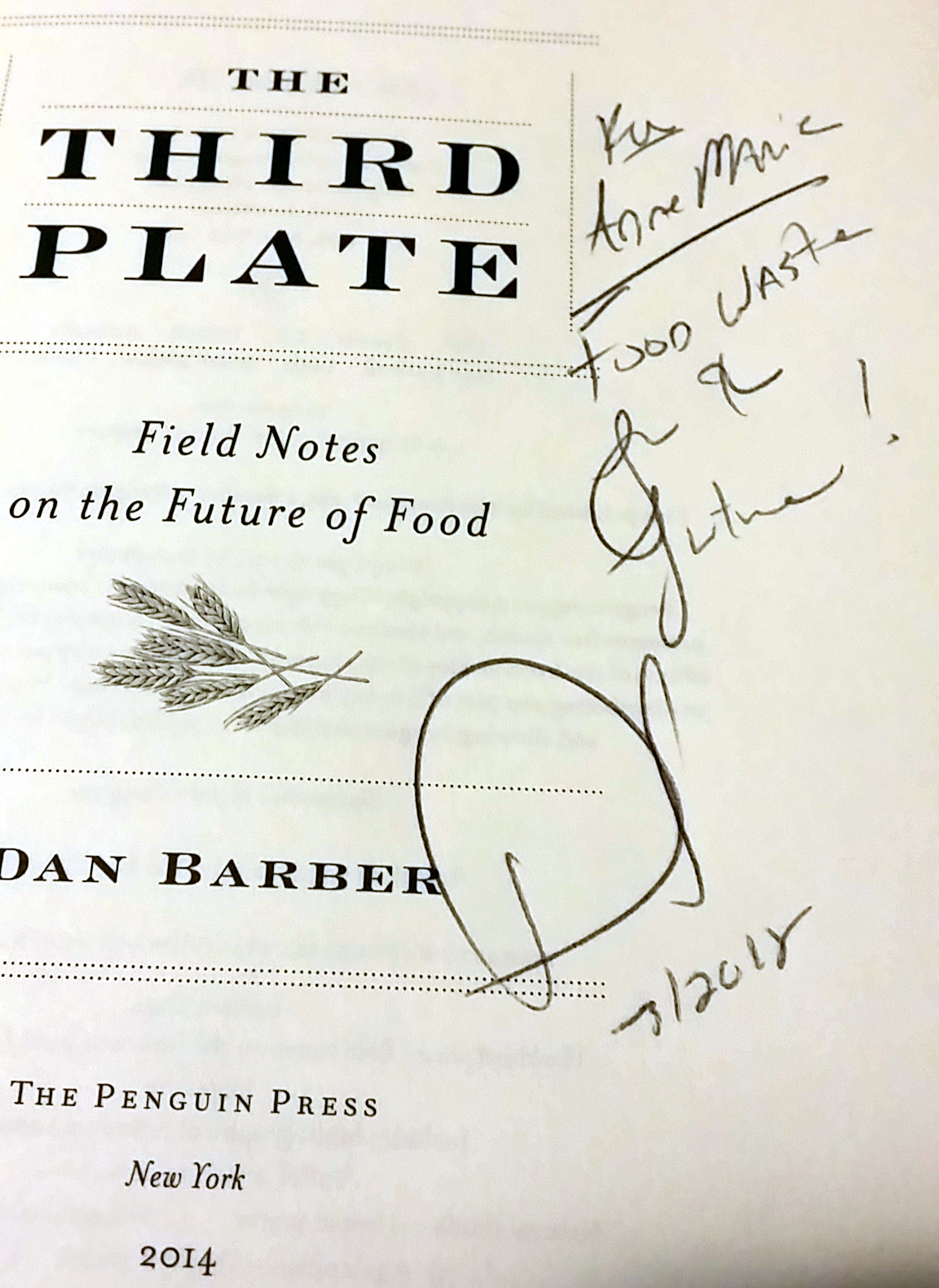
When I first came across Barber’s book last year and read the inside cover, I was a bit, well, miffed:
“At the heart of today’s optimistic farm-to-table food culture is a dark secret: the local food movement has failed to change how we eat. It has also offered a false promise for the future of food. Our concern over factory farms and chemically grown crops might have sparked a social movement but chef Dan Barber reveals that even the most enlightened eating of today is ultimately detrimental to the environment and to individual health. And it doesn’t involve truly delicious food.”
Huh? Aren’t we supposed to eat local and shop at the farmer’s market?
The fact is, today’s farm-to-table dinner plate looks an awful lot like yesterday’s dinner plate—protein centric and made with the cherry-picked ingredients we demand. Rather than dictate what the soil produces for our dinner, Barber recommends we let the soil dictate what we eat. This represents a complete mind-shift in the way most of us eat and cook (if we cook, which many do not).
Barber used the bread he serves in his New York City restaurant, Blue Hill, to explain his line of thinking. To bake his delicious bread, the kind of bread for which he said customers would sell their first-born to get another slice, he uses emmer wheat. To grow emmer wheat, his local farmer, Klaas, sows a lot of other rotational crops first in order to enrich and prepare the soil for the emmer wheat: clover, mustard seed, millet, barley, kidney beans, oats, rye and others, depending on conditions and what Klaas divines the soil needs.
On most farms, these rotational crops either go back into the soil or into animal feed. Barber asked, why eat only the final emmer wheat? Why cherry pick our ingredients and waste the others? He offered a more sustainable method of growing, preparing and eating food, represented by a dish served at Blue Hill called “Rotational Risotto.” Barber creates this dish with the grains that support the emmer wheat that makes his bread possible.
I think you can apply this same logic to cooking at home. How often do you ask yourself in a panic around, say, four in the afternoon, “What’s for dinner?” Do you search online for a recipe before leaving the office, scribble out a list of ingredients, rush to the store, rush home, cook your dinner and eat late? (Just typing that stresses me out…)
How about this? On the weekend—or whatever day works for you—you decide on a few meals for the week. You buy the main ingredients you need for those, cook one or two of the meals, look at what’s leftover food- and ingredients-wise, cook something from that and so forth. Your pantry and refrigerator will tell you what’s for dinner rather than the other way around.
Forgo the recipes. Learn to master the basics—roasts; soups, stews and broths; braises; risotto; fermentations; sourdough bread. And of course, don’t waste a thing.
