

Updated 01/07/19
My younger daughter Charlotte returns to school this week. That means homework for her, chauffeur duty for me and what’s-for-lunch panic for both of us every morning. (Update: Charlotte now walks to school and makes her own lunches.)
1. Come up with a zero-waste lunch menu
Preparing a zero-waste lunch begins with the food—packaged and processed versus naked and homemade. But creating menus is not my strong suit. I have a bit of a head-in-the-sand-we’ll-find-something-to-eat mentality. This school year I hope that changes. (I’ll try to stick to my own tips.) Zero-waste options include:
- Sandwiches. When I buy bread rather than baking it, I can get it without packaging at the market near me and put it in my own cloth produce/bulk bag. Hummus and vegetables, nut butter and apple slices, cheddar and chutney…
- Wraps. When sandwiches get boring, wraps made with homemade tortillas add some variety. And almost everyone likes those bite-size spiral slices.
- Bagels with homemade yogurt cheese. I can buy bagels in my own bag at a couple of different bakeries. I haven’t had much success making bagels.
- Crackers and hummus. Unlike my bagels, my sourdough crackers taste delicious!
- Pasta with pesto. Homemade sourdough pasta is on my long to-cook list. Luckily I can buy pasta in bulk. (Update: Here is a sourdough pasta recipe.)
- Pasta salad with chopped vegetables. If I stash cooked pasta and chopped vegetables in the refrigerator, this takes no time to throw together.
- Green salad with chopped vegetables. Charlotte almost always eats salad.
- Celery with peanut butter. I use my own jar at the peanut grinding station at Whole Foods or buy bulk peanuts and just give them a whir in the food processor.
- Fruit chunks. Charlotte likes apples, mangoes, grapes, oranges and other seasonal fruit.
- Muffins. A reader told me yesterday that she bakes buttermilk muffins from the Nourishing Traditions cookbook, which I have. I’ll have to try these using my homemade buttermilk.
- Yogurt, chopped fruit and granola. I make yogurt with milk from returnable glass bottles and granola with bulk bin ingredients.

2. Go shopping
If you loosely plan the menu ahead of time, you can shop accordingly on the weekend and not have to resort to buying some unhealthy, packaged convenience food at the last minute.
3. Prepare what you can on Sunday night
Some vegetables and fruit must be chopped just before serving, but you can prep others early in the week: carrots, celery, cauliflower and peppers all work well. Pasta can be cooked a few days in advance (toss it with a bit of oil before storing though). Making salad dressing Sunday night also saves time on busy mornings. By doing the little bit of prep outlined here, I’ll be able to throw pasta or veggie salads together quickly.
4. Get a reusable water bottle and fill it with water
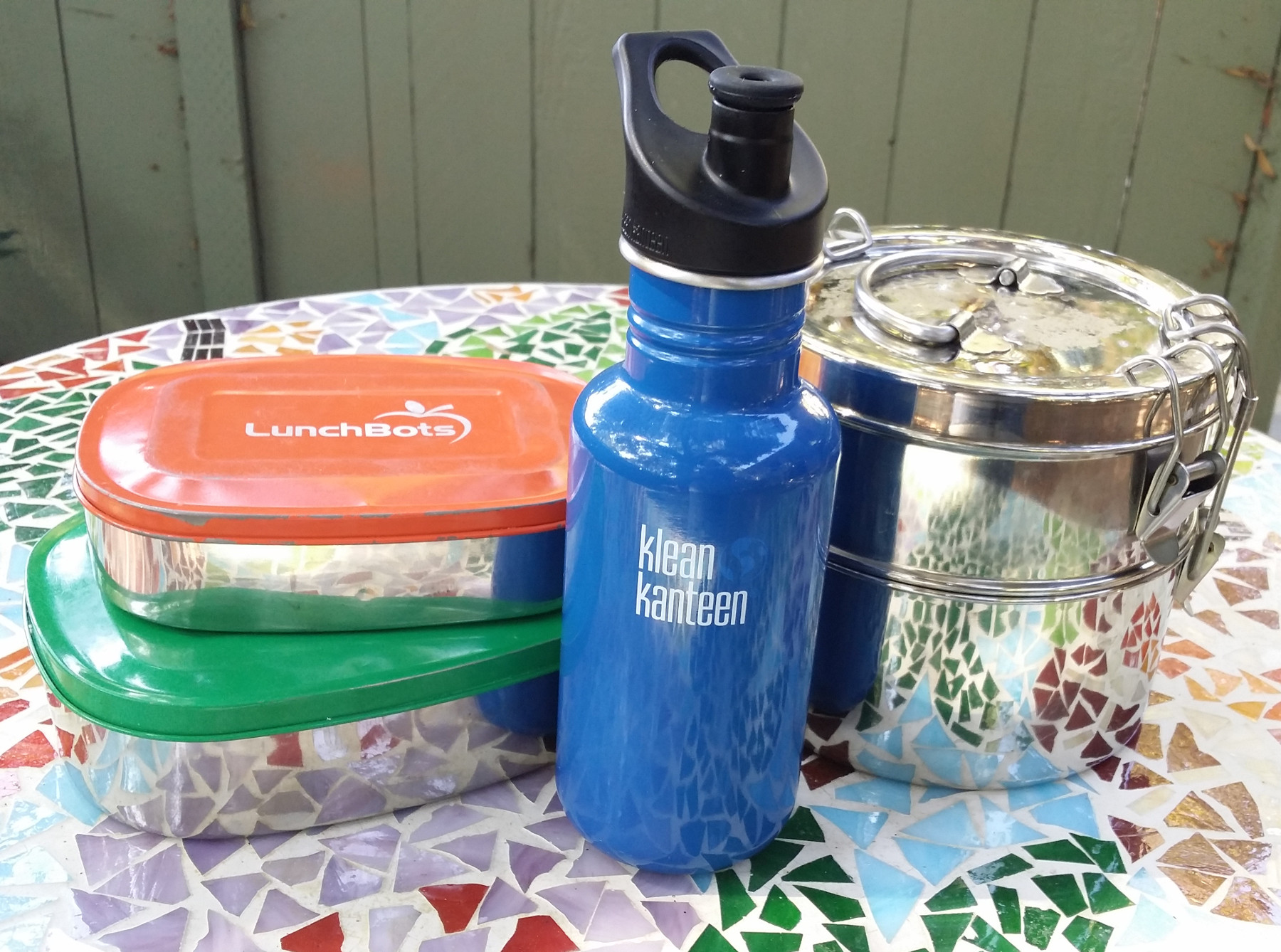
Charlotte has a Klean Kanteen, made of stainless steel. Plastic bottles can leach chemicals into beverages. If you buy juice in Tetra Paks, those rarely get recycled. And besides, juice—fruit devoid of fiber—has as much sugar as soda. You may as well pack a can of Coke. (Watch Dr. Robert Lustig’s TEDx Talk on sugar here if you haven’t seen it.)
For my water bottles, I use old glass kumboucha bottles and removed the labels (go here for how to remove labels from bottles and smells from lids).
5. Consider buying some stainless steel containers
Initially, these cost a lot more than plastic baggies, but in the long run, you’ll save money since, unlike single-use baggies, you buy these only once. We’ve had our Lunchbots for at least three seven years and they still look great and work well. You can buy various types of stainless steel containers at Life Without Plastic. I also take my stainless steel containers to restaurants for leftovers, and to deli counters and grocery store hot bars to cut down on packaging waste.
6. For older kids: Remember glass jars are your friends
With smaller kids, avoid these. But for teenagers or yourself, glass jars in all shapes and sizes come in handy. In fact, if you want to go zero-waste and plastic-free in the kitchen start collecting glass jars now. They look wonderful when filled with beans, nuts, rice and other grains.
You can store food in jars in the fridge or freezer (leave enough room at the top for the expansion of liquids as they freeze). And you can take them to some bulk grocery stores and fill them directly from the bulk bins (have them weighed first so the cashier can deduct the jar from the overall weight—you don’t want to pay for the additional weight of the jar).

I pack salads for Charlotte in wide-mouth glass jars. First, I add the salad dressing to the bottom, followed by slices of vegetables that the dressing won’t render soggy—carrots, celery, peppers. Cooked beans could go in this layer too. Over this, layer lettuce or spinach, where it will remain crispy until lunchtime. At school, your child can shake up the jar to distribute the dressing. I’ll try this same method this year for yogurt, fruit and granola.
7. Pack real cutlery
I have inexpensive cutlery from Ikea (I know, it’s not the most environmentally friendly store, but I bought it years ago). You may be able to find some inexpensive cutlery at a thrift shop, yard sale or freecycle.

8. Pack a cloth napkin
I cut the napkins pictured above from leftover fabric and then finished the edges with a rolled hem on my serger. Tied furoshiki style around bread or a bagel or sandwich, these double as plastic-free wrapping.
9. Find a reusable zero-waste lunch box or lunch bag
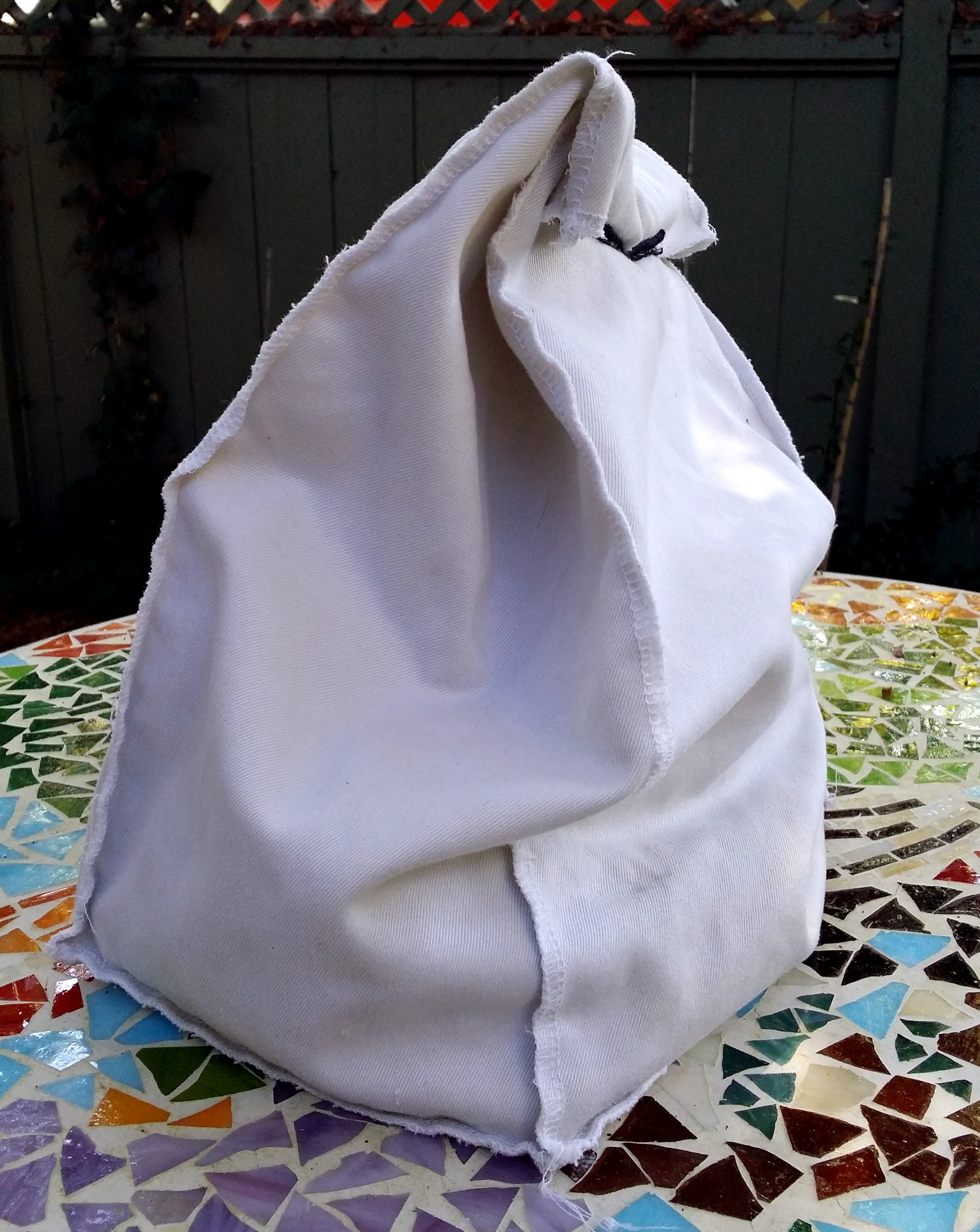
I sewed the crude cloth lunch bag above at least five nine years ago and it has held up extremely well (but now has stains). I copied the shape of a brown paper bag (four sides and a bottom), and I added velcro strips to the outside so I can roll the top down and secure the bag shut. I had all of these materials sitting in my scrap fabric pile. Total cost: $0.
10. Bring home the scraps for compost
Those reusable food containers, now empty, double as compost transporters. (Click here for lazy backyard composting.)
Happy back to school!