

Enough readers have asked me how to I store and keep bread fresh without plastic bags that I thought the question warranted its own post. Whether you bake bread or buy it from a bakery or grocery store in a reusable bag, these tips will help you keep it fresher longer and waste less of it.
Keep in mind: Sourdough bread keeps longer than its active dry yeast version
I have baked bread for most of my adult life. After going plastic-free, in a quest to buy as few ingredients as possible, I started to make sourdough with wild yeast I nurtured myself, rather than rely on store-bought active dry yeast to bake bread. Among its many benefits, wild yeast helps us foster some independence from Big Food.
Sourdough bread also keeps longer than homemade bread baked with active dry yeast and, in general, industrial bread, depending on the additives. (If it keeps forever, it’s not food. Real food rots.) As an added bonus, mold doesn’t develop on sourdough crust.
My sourdough stays fresh for about five days but we usually polish off a loaf in two days, maybe three. Sourdough—like all things fermented—helps preserve food and reduce food waste. Although delicious, the bread I used to bake with active dry yeast dried out the day after I baked it. I would make tasty croutons or breadcrumbs or bread pudding or french toast with it though.
Although I bake with wild yeast almost exclusively, my kids bake mostly with active dry yeast. These tips apply to those yeast breads also.
Store bread in the freezer
While I am the first to admit that bread and other foods freeze well in plastic, I’m the last person to use the stuff. I don’t want my food coming into contact with a plastic soup of toxins and I don’t want to contribute to the plastic soup in our oceans. Sure plastic makes life more convenient but at a huge cost to our very life support systems. I don’t mind going a bit out of my way to avoid the stuff.
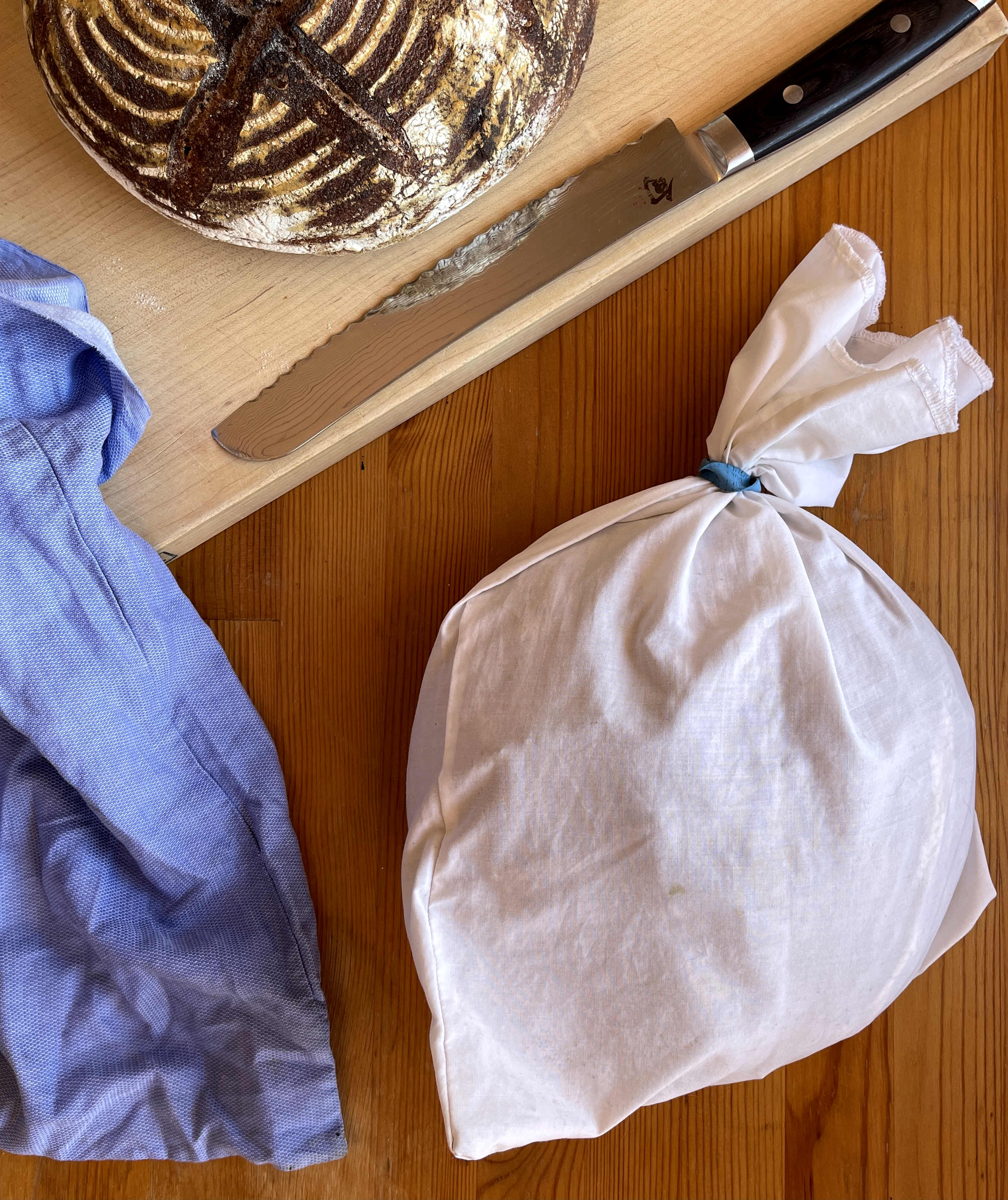
To avoid plastic bags, I freeze whole loaves in homemade cloth produce bags. Sliced bread—not, in fact, the greatest thing—develops freezer burn around the edges when frozen in cloth. (This doesn’t happen with plastic bags but there is that whole life support systems thing.) I have a lifetime supply of rubber bands I collected during the before times (not those before times, my before plastic-free times) and I use these to close the bags.
I usually bake two loaves and, unless my kids are home, freeze one loaf for a couple of weeks at the longest (or give a loaf away). If I want bread in the morning, I’ll either remove a loaf from the freezer and place it on the counter the night before, or more often, very early in the morning when I first wake up.
Store bread at room temperature
I usually store bread made with active dry yeast on the counter in a cloth produce bag. With sourdough, I almost always simply store it cut-side down on a cutting board set on the counter unless I need the space to work, in which case the bread goes into a cloth produce bag.
Storing the bread cut-side down helps prevent the cut edge from drying out. The sourdough’s crusty exterior keeps the rest of the sourdough fresh. Over a day or two, we carve away at the bread until only crumbs remain.
However you store your fresh bread, keep it out of the refrigerator, where it will dry out.

When your bread does dry out
Despite your best efforts, stale bread happens. You can either make some of the staples or dishes I mentioned earlier—croutons, breadcrumbs, bread pudding, french toast and so on—or you can revive the bread. I didn’t think the following trick would work the first time I tried it but it does.
- Put the crust directly under a running tap—yes, directly under!—to get it sopping wet, avoiding the cut edges
- Place the wet bread in a 300°F oven for about 7 minutes
- If you accidentally soaked the cut sides, leave the bread in the oven for a few more minutes
The water will turn to steam inside the oven, which transforms your bread from stale back to scrumptious.

