

Like many of the people who took my poll earlier this week on Instagram, you may be surprised to learn how easily you can make delicious tofu from scratch.

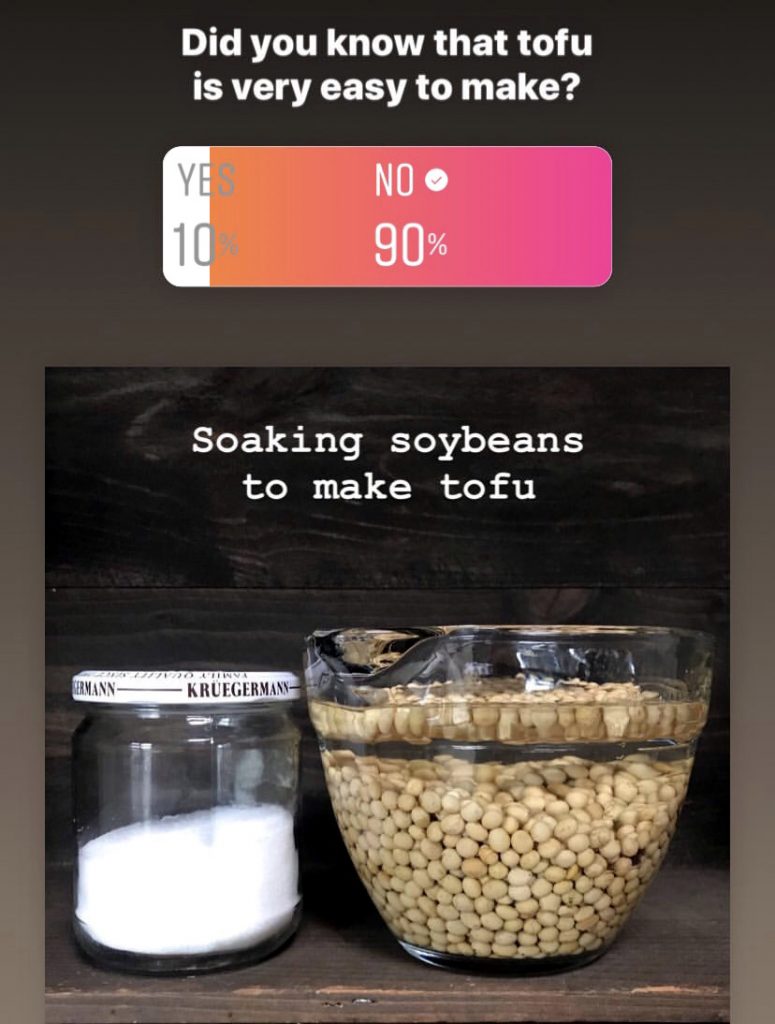
However, like many of the recipes I cook today, preparing tofu does require some planning ahead. If you want tofu for dinner, you’ll need to soak your soybeans in advance—the night before or very early in the morning.
To make tofu, you first make soy milk. So if you prefer, you can make the milk—and a bit extra to drink—a day or two in advance of making the tofu. This gets most of the prep out of the way. Once you have made the milk, you can finish making the tofu fairly quickly.
Only three ingredients
Delicious homemade tofu requires only soybeans, a coagulant and water.
- I buy non-GMO, organic soybeans. GM soybeans can withstand large doses of glyphosate, the active ingredient in Monsanto’s herbicide Roundup. Why avoid this? Research suggests that glyphosate causes non-Hodgkin’s lymphoma and glyphosate may increase cancer risk for children and at “safe levels,” glyphosate harms your gut bacteria.
- I have used Epsom salt (magnesium sulfate) as the coagulant in the past. It makes tasty tofu but renders it softer than nigari (magnesium chloride) does, which I used for the tofu in this post. I can buy powdered nigari in bulk at Rainbow. I haven’t tried making tofu with vinegar or lemon juice but have read that it works fairly well. Apparently it makes quite a soft tofu.
- For the water, I use tap that I filter with naked charcoal. You can buy these from Life Without Plastic or Miyabi Charcoal.
Think ahead of what you’ll do with the SHOCKINGLY LARGE amount of okara (soybean pulp) that homemade tofu renders. This is the only thing I find difficult to deal with when making tofu. I’ve added okara to soup—it makes a nice thickener—and I’ve made really delicious biscotti with it. It also adds flavor and texture to homemade granola. You can use it like you would pulp from nut and seed milks.
When you see the large amount of okara left over from making tofu, I think it makes you respect the food more. So many resources go into producing what we eat. That awareness makes you want to cook with care and not waste a single morsel.
And now for the recipe.
Homemade Soy Milk and Tofu
Ingredients
- 2 cups non-GMO, organic soybeans
- 1 ½ teaspoons nigari powder
- water


Directions
First, make soy milk
1. Soak soybeans overnight.

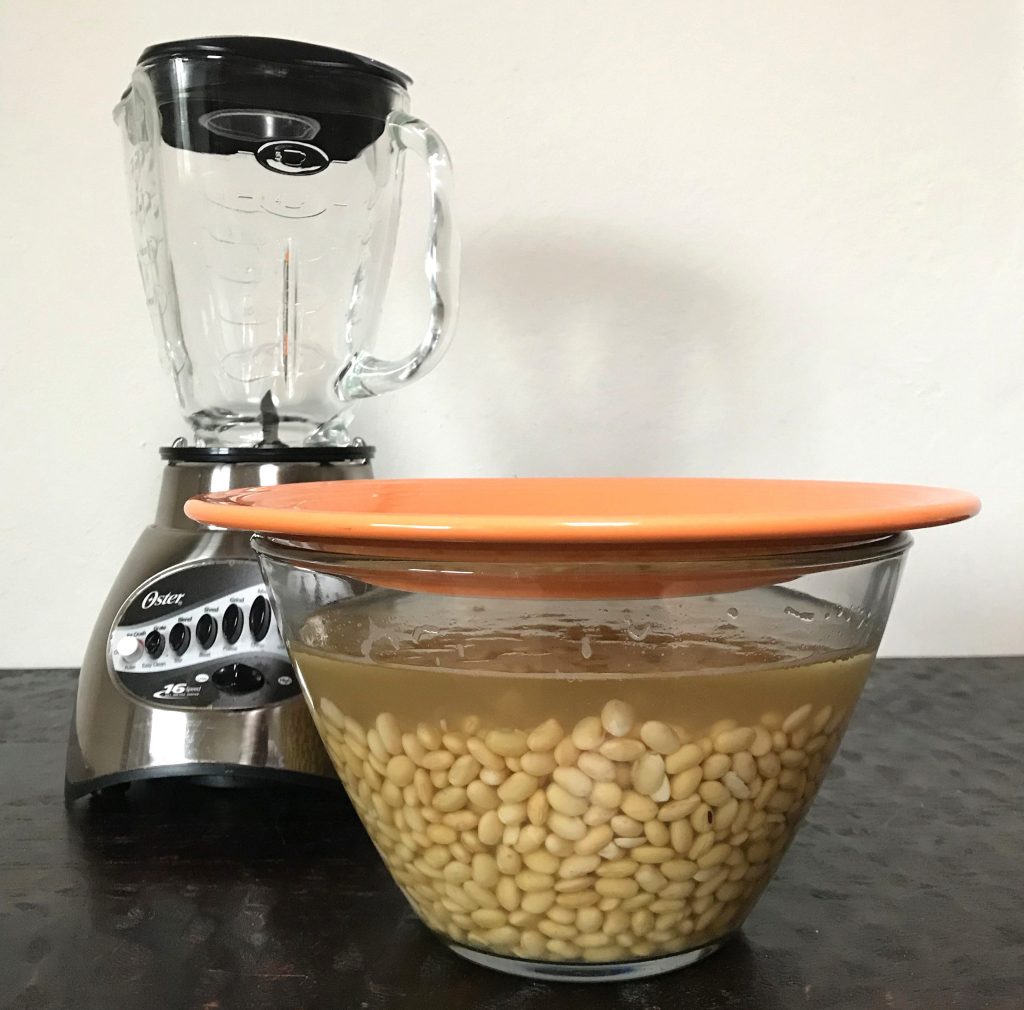
2. Drain, rinse and place beans in a blender with just enough fresh water to cover. Purée in two batches.


3. Add the puréed beans to a large pot.

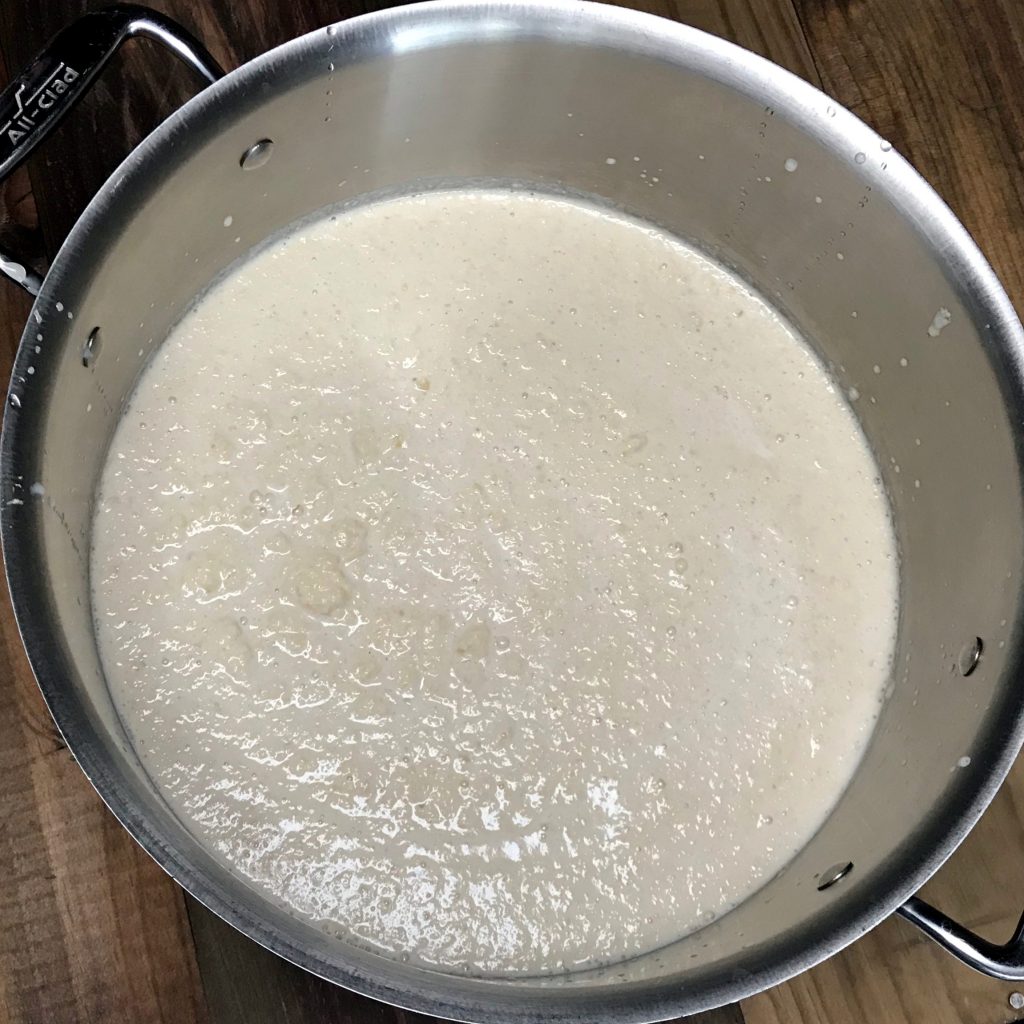
4. Stir in 8 cups of fresh water.


5. Slowly heat the mixture to a simmer and stir often until it becomes foamy, about 15 minutes.


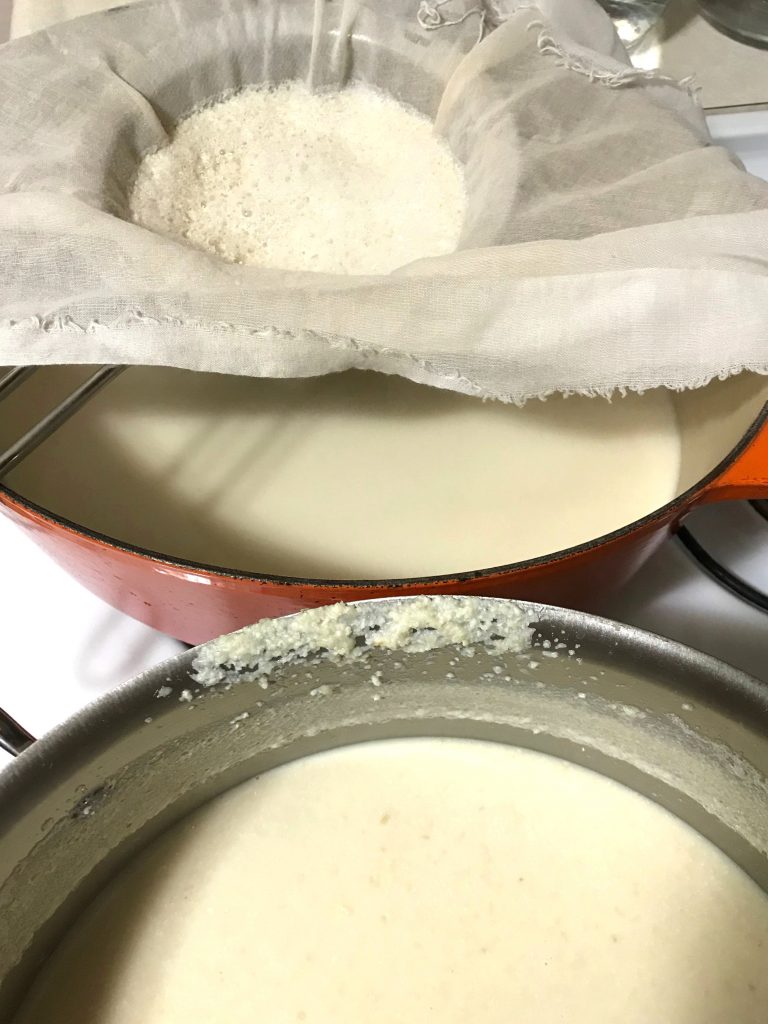
6. Line a sieve with a thin cloth or nut milk bag and place over another large pot. Strain out the milk. Squeeze out as much as possible from the cloth or nut milk bag. If you’d like to reserve some milk, remove it before moving on to the next step. This will render a little over 10 cups of soy milk.
Now, make the tofu
7. Heat the milk to 180° Fahrenheit. While the milk heats, dissolve the nigari in 1/2 cup water. If you reserved quite a bit of milk from this, adjust the amount of nigari accordingly.


8. When the milk has reached 180° Fahrenheit, turn off the heat, pour in the dissolved nigari and stir gently. Curds will begin to form.
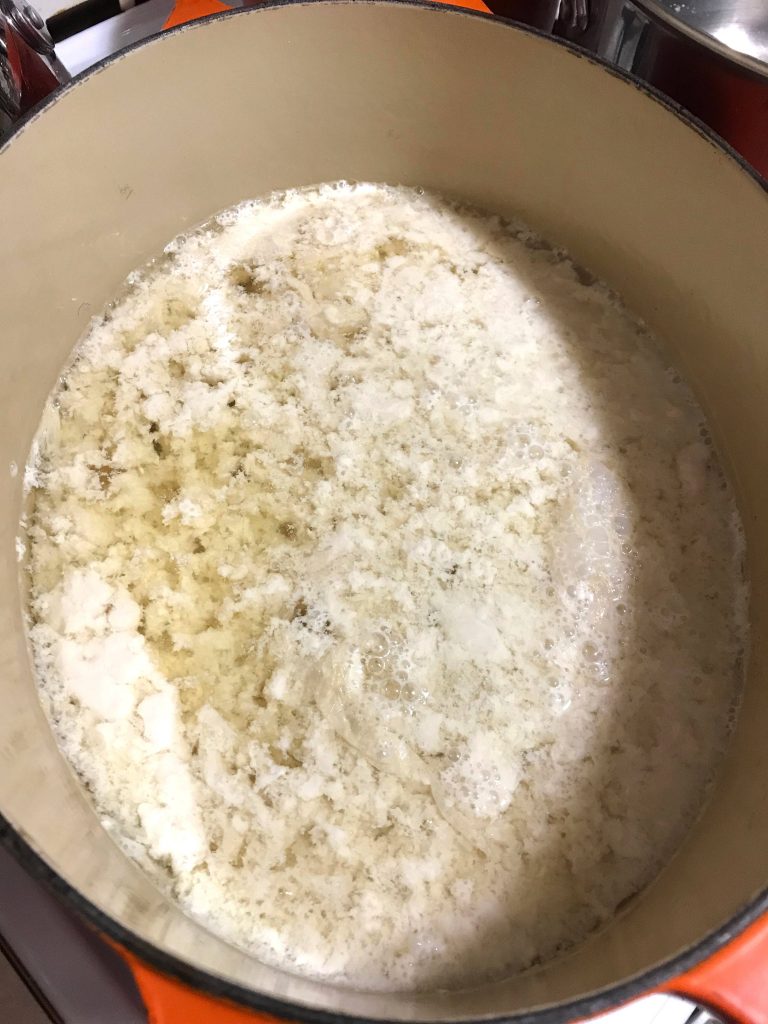
9. After the curds have formed—about 10 minutes—strain them out. If you have a tofu press, set that up in the kitchen sink, pour the curds into it and form your block of tofu. If you do not have a tofu press, place a colander in the kitchen sink. Line the colander with a thin cloth or nut milk bag. Pour the curds in. Squeeze out as much liquid as you can. Fold the cloth over the curds, place a plate on top and a weight (I use a jug of water) on that to press out more water.
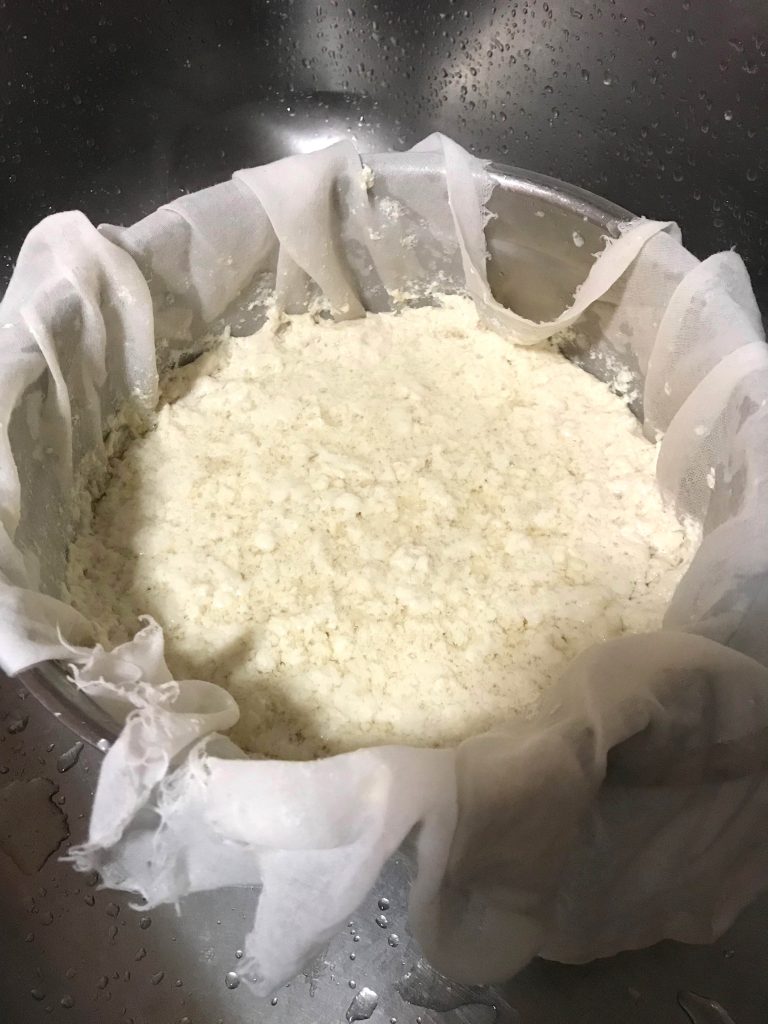

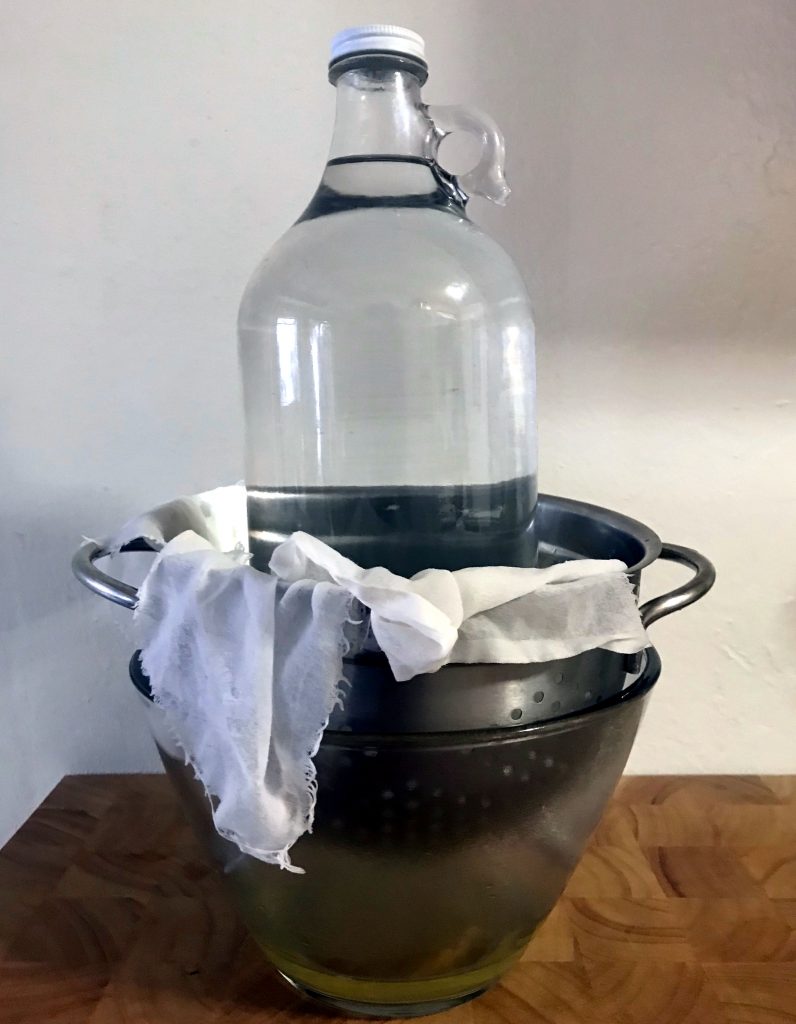
10. Let the tofu drain for about 20 minutes and then either cook it or store it in the refrigerator in a container of water.

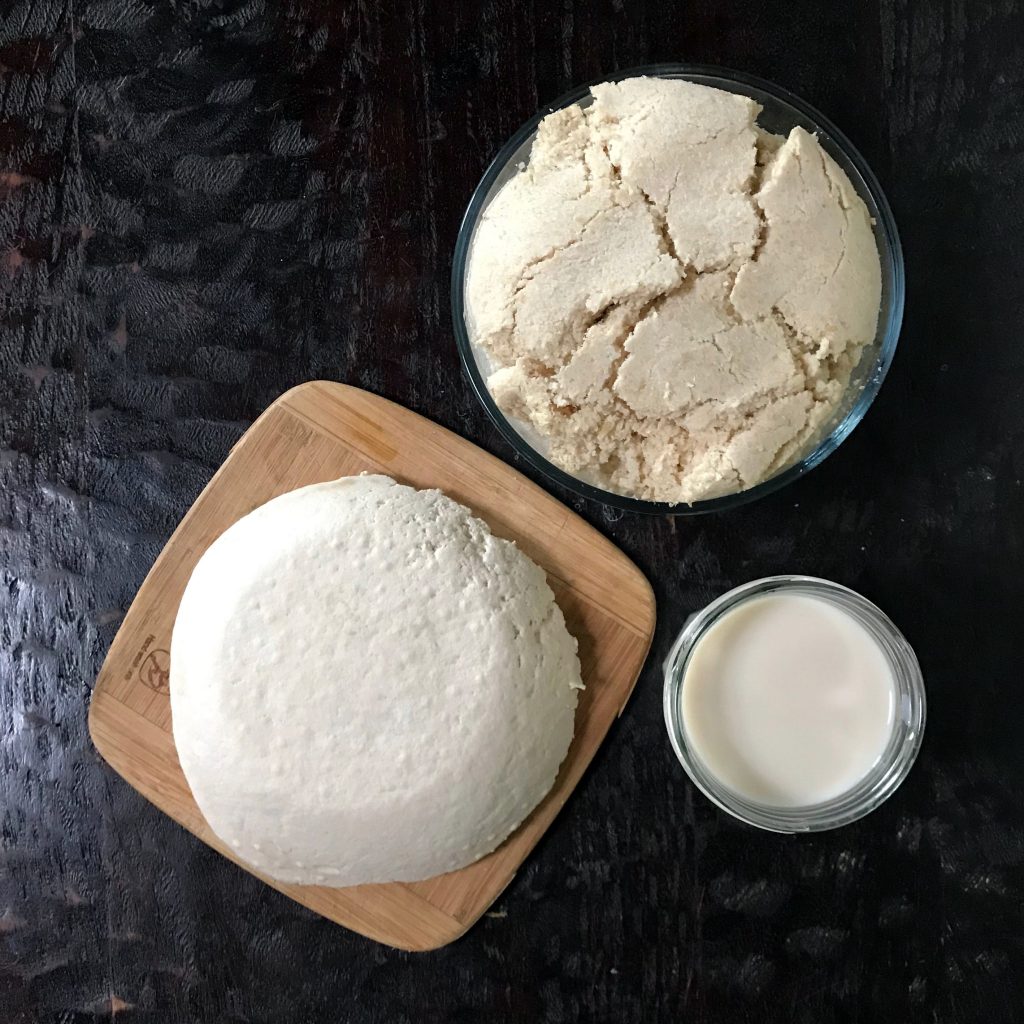

Homemade Soy Milk and Tofu
Ingredients
- 2 cups non-GMO, organic soybeans
- 1 ½ teaspoons nigari powder
- water
Directions
1. Soak soybeans overnight.
2. Drain, rinse and place beans in a blender with just enough fresh water to cover. Purée in two batches.
3. Add the puréed beans to a large pot.
4. Stir in 8 cups of fresh water.
5. Heat the mixture to a simmer and stir often until it becomes foamy, about 15 minutes.
6. Line a sieve with a thin cloth or nut milk bag and place over another large pot. Strain out the milk. Squeeze out as much as possible from the cloth or nut milk bag. If you’d like to reserve some milk, remove it before moving on to the next step. This will render a little over 10 cups of soy milk.
7. Heat the milk to 180° Fahrenheit. While the milk heats, dissolve the nigari in 1/2 cup water. If you reserved quite a bit of milk from this, adjust the amount of nigari accordingly.
8. When the milk has reached 180° Fahrenheit, turn off the heat, pour in the dissolved nigari and stir gently. Curds will begin to form.
9. After the curds have formed—about 10 minutes—strain them out. If you have a tofu press, set that up in the kitchen sink, pour the curds into it and form your block of tofu. If you do not have a tofu press, place a colander in the kitchen sink. Line the colander with a thin cloth or nut milk bag. Pour the curds in. Squeeze out as much liquid as you can. Fold the cloth over the curds, place a plate on top and a weight (I use a jug of water) on that to press out more water.
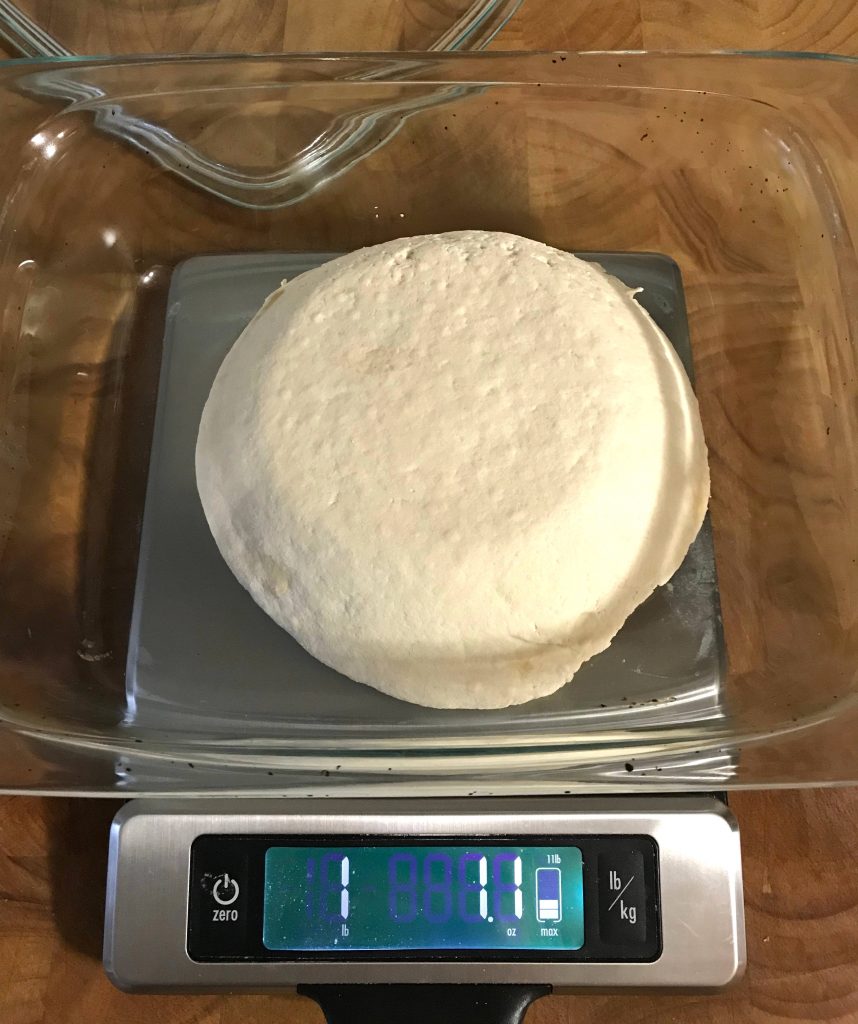
10. Let the tofu drain for about 20 minutes.
11. Cook the tofu immediately, store it in the refrigerator in a container of water or freeze it. Freezing renders a chewy, firmer, flavor-absorbing texture. Cube the tofu, spread it across a cookie sheet and once it has frozen, pop off the cubes from the pan and either allow them to thaw if you’ll cook the tofu now, or store them in a glass jar in the freezer to cook later.
