

Sprouts are good for you. — me
I tried to find a credible source to cite for the nutritional benefits of consuming sprouts. My search results listed page after page of blog posts touting the benefits of sprouts and sprouting. Although I do believe sprouting provides health benefits, I can’t cite just anyone, especially another blogger. Most of us are just average people with a keyboard and an Internet connection, not experts, myself included.
I know some bloggers here in America have risen to dizzyingly heights of power previously unheard of. By this logic, as a food blogger, I now qualify for the position of US Secretary of Agriculture. But I still prefer to cite credible sources that base their information on facts and research. The best online sources I found on sprout nutrition came from WebMD and SF Gate.
Then I pulled my trusty copy of Nourishing Traditions off the bookshelf (good old books…). According to author Sally Fallon:
The process of germination not only produces vitamin C but also changes the composition of grain and seeds in numerous beneficial ways. Sprouting increases vitamin B content, especially B2, B5 and B6. Carotene increases dramatically—sometimes eightfold. Even more important, sprouting neutralizes phytic acid, a substance presence in the bran of all grains that inhibits absorption of calcium, magnesium, iron, copper and zinc.
Sprouting is very easy and you don’t need to buy any fancy equipment. You can splurge on a special sprouting lid for mason jars or simply use one of the following to sprout your soaked beans, grains and seeds:
- A jar with a piece of cheesecloth secured to the lid
- A colander covered with a plate (works best for beans that won’t fall through)
- A pie dish covered with a plate
For this post, I used a pie plate covered with a plate.
The steps are simple too:
- Soak beans, seeds or grains overnight in a jar. I usually sprout French green lentils, broccoli seeds, mung beans or black beans. Do not sprout kidney beans. Raw kidney beans contain the toxin phytohaemagglutinin. Cooking neutralizes this toxin.
- Rinse, drain and return to the jar and secure the cheesecloth to the open top. place in a colander or pie dish and cover with a plate.
- Rinse and drain twice a day.
- Wait 2 to 4 days (or longer) for tails to grow at least the length of the bean, grain or seed.
- When ready, refrigerate sprouts for up to a week.
By the way, sprouting makes a great science lesson for kids.
To cook or not to cook sprouts?
I have been eating my sprouts raw in salads or even just by the handful as I pack my finished product into a container for the refrigerator. But Sally Fallon warns against “overconsumption of raw sprouted grains as raw sprouts contain irritating substances that keep animals from eating the tender shoots. These substances are neutralized in cooking. Sprouted grains should usually be eaten lightly steamed or added to soups and casseroles.”
The FDA (I’m waiting for that job offer any day now…) warns people against eating raw sprouts as they can harbor pathogens such as Salmonella, Listeria or E. coli. The agency has put out many recommendations on sprouted seeds—for industry. But keep in mind, the FDA has also stated that “Raw milk is inherently dangerous. It should not be consumed by anyone at any time for any purpose.”
Perhaps I have the risk-taking gene. I’ll take my chances and continue to sprout my mung beans. (Maybe I’ll buy a Harley too.) Consider yourself forewarned of the dangers of producing your own food. (Do you think I’ll get that job?)
And now some pics.


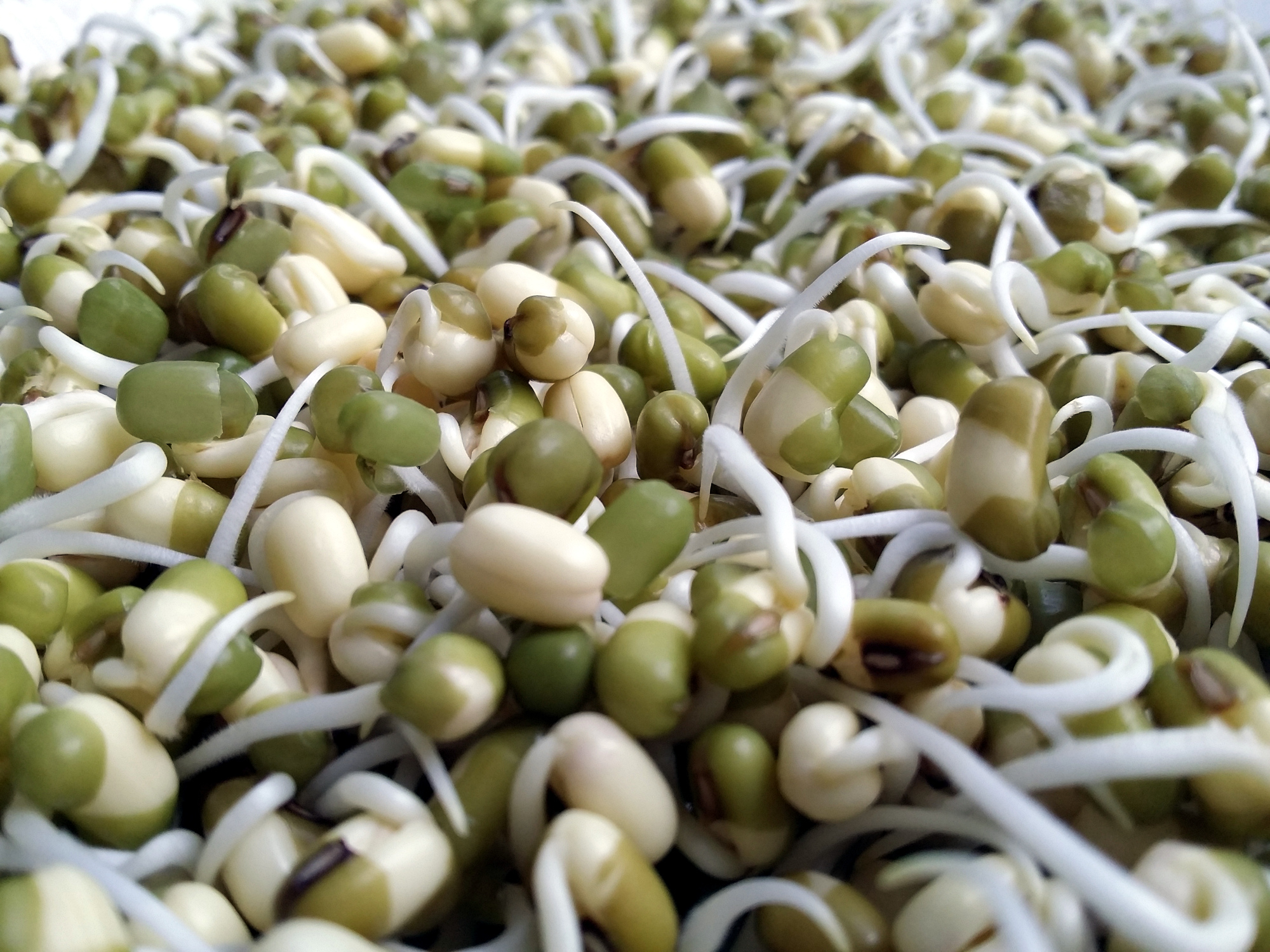


How to Sprout Beans, Grains and Seeds
Ingredients
- 1/4 cup beans, grains or seeds
- water
Instructions
- Soak beans, grains or seeds overnight in a jar.
- Drain and rinse.
- Choose your sprouting equipment. Place beans, grains or seeds in a jar with a piece of cheesecloth attached securely to the lid, in a colander covered with a plate and resting on another plate or spread across a pie plate covered with a plate.
- Rinse and drain twice a day.
- Return to the sprouting surface (jar, colander, pie plate).
- Wait 2 to 4 days for tails to grow at least the length of the bean, grain or seed.
- When ready, refrigerate sprouts for up to a week.
Notes
should not be consumed by anyone at any time for any purpose.” 4. Consider yourself forewarned of the dangers of producing your own food.