

Find your local farmer’s market through Local Harvest.
I’m a huge proponent of shopping at the farmer’s market. Here’s why:
1. The FDA just approved GMO apples and potatoes
Silly Mother Nature. She designed apples that turn brown or bruise and potatoes that develop spots—food that rots. Thank goodness agribusiness has come to the rescue. (No hubris there…) After all, who has time to deal with apples that brown? As my local paper, the San Jose Mercury News explains:
Okanagan, based in British Columbia, is trying to make apples a more convenient snack with its non-browning version. The company says bagged apples wouldn’t have to be washed in antioxidants like they are now, a process that can affect taste. […] ‘We know that in a convenience-driven world, a whole apple is too big of a commitment,’ Carter [Okanagan company founder] said.
If you find a whole apple too big of a commitment, you need to examine your life.
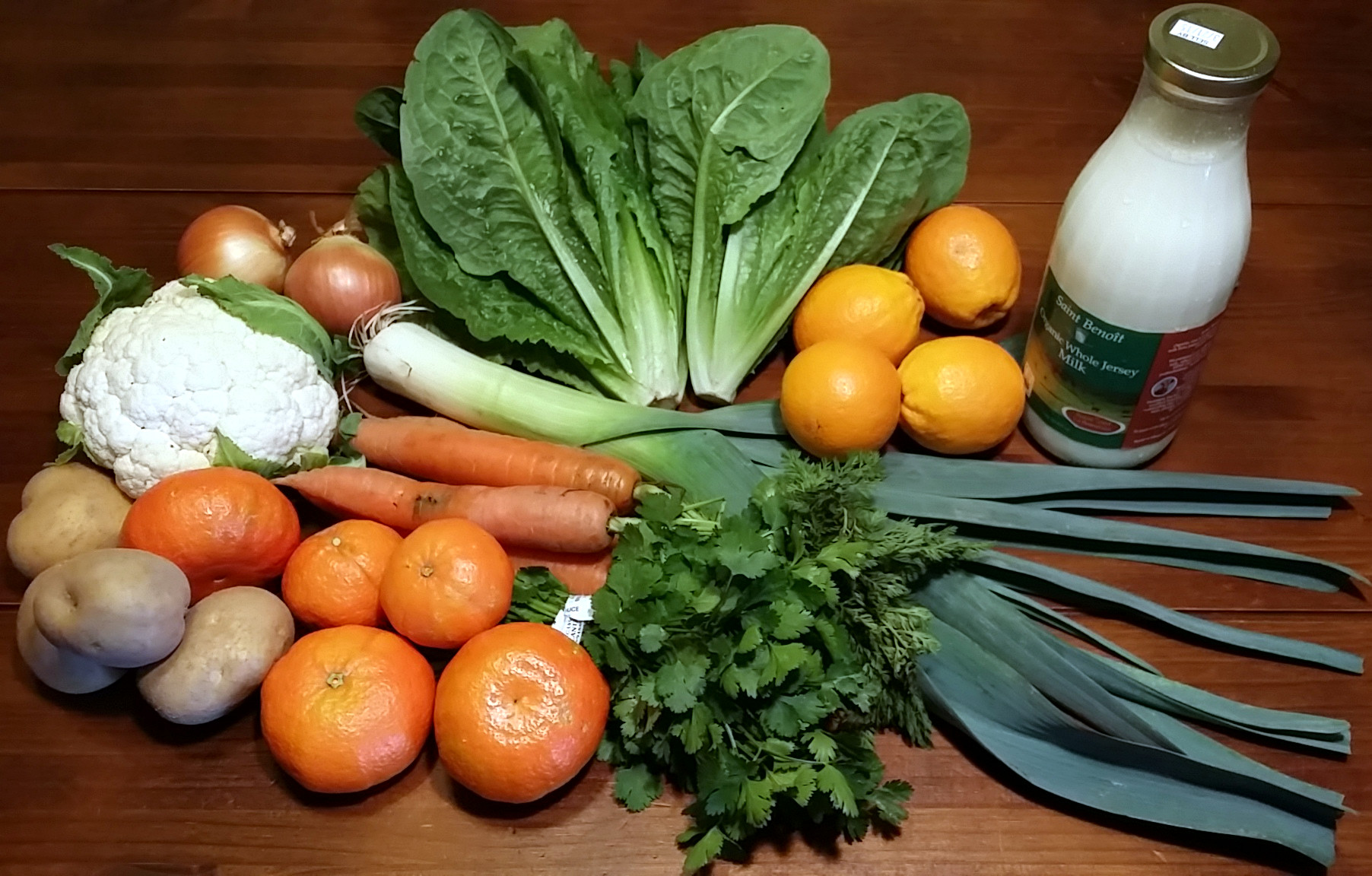
When you shop at the farmer’s market, you’ll find all sorts of locally grown, delicious organic, real food. Organic food cannot contain GMOs. If you don’t know why you would want to avoid GMOs, read this article by Maria Rodale, granddaughter of J.I. Rodale, a pioneer of organic agriculture.
2. Produce has natural, biodegradable packaging
When I went plastic-free in 2011, I quickly realized I could no longer buy processed food-like products at the supermarket, almost all of which arrive at the store enshrouded in plastic packaging, which never breaks down. At that time, I began shopping at the farmer’s market religiously.
3. Your community benefits
According to IndieBound, when you spend $100 at a local, independent business, $68 of that money stays in your community. If you shop at a chain, only $43 remains. That extra $25 creates jobs, pays for services and strengthens neighborhoods where you live. And of course, when you shop local, your food travels fewer miles, requires less packaging and lowers your carbon footprint.
4. You help reduce food waste
Most supermarkets refuse to carry cosmetically challenged fruits and vegetables, which means many of them end up rotting in landfill where they release methane gas, a green-house gas more potent than CO2. That ugly produce accounts in part for the 40 percent of food wasted in the US. At the farmer’s market, the sizes and shapes of food vary. And some vendors, like one of my favorites, Prevedelli Farms, offer a discount for not-so-pretty—yet organic—produce.

5. You generally won’t buy more than you need
I ride my basket-covered bike to the farmer’s market and can safely manage to transport about three bags’ worth of goodies home. That limit is probably a good thing. I buy what I need and eat what I buy. I don’t wheel around an SUV-sized shopping cart that cries out for the 2-for-1 deals on ice cream and frozen pizza. At the farmer’s market, you also avoid the impulse checkout candy at a 5-year old’s eye level.
6. Inexpensive therapy
Not that I would know, but therapy where I live costs around $200 an hour. If I wake up grumpy on Sunday morning—the only day my market operates—grumbling about how I want to sleep in for once and why can’t someone else do the food shopping and I’m going to be a man in my next life, a trip to the market always snaps me out of it. The food looks spectacular, the flowers smell wonderful, the vendors know me (that could be due to the homemade cloth produce bags, the jars and the containers though…).

7. The taste
Unless you grow your own, you cannot find food that tastes better than what your local farmer’s market offers. As Dan Barber said at a recent lecture I had the good fortune to attend, the most ethical food also tastes the most delicious. And how could it not? A pesticide-sprayed strawberry grown in a giant monoculture cannot compete with a strawberry grown on a small, diverse, organic farm. Like food made with love, food grown with love tastes best.
