


If this was truly DIY, I would also raise the pigs…
This may sound like a contradiction, or merely a justification from a woman who really likes to eat lard, but I don’t actually eat much meat and I rarely eat pork.
I never eat meat in restaurants. I don’t know how the animals on the menu were treated, so I don’t eat them. Actually, I do have a pretty good idea how they were treated, so I don’t eat them.
I do eat some meat at home. I buy pastured meat at Whole Foods. The store follows an animal welfare rating system, with a 1 indicating “no crates, no cages, no crowding” and 5+ meaning “animal centered; entire life on same farm.” The chicken used to rank a 4 (pasture centered) but now a new supplier provides only 2s (enriched environment). We’ve been eating less chicken. You can read about the rating system here. I’ve recently found out about another butcher not far from the office, so I’ll have to check that out. Maybe it will carry pastured meat.
So why would I render lard from pigs with a 2 rating, especially if I refuse to buy the pork Whole Foods sells? Because the butchers throw the pork fat out. Maybe I am justifying my taste for lard, but it seems horribly wasteful to me to throw out all that pork fat. The animal died for crying out loud. Don’t throw a bunch of it in the garbage.
I haven’t rendered lard in a year at least. I try to live plastic-free and when I ask the butchers to save me pork fat, over a few days, they stuff a plastic bag with it and then wrap that in plastic-lined paper and then perhaps toss that whole wad into another plastic bag. But a blogger friend had a good idea. She said leave them a container to fill. With this gentle nudge from Mrs. M, I approached the counter, container in hand and asked a butcher to fill it with pork fat. “Sure!” he said. Success!
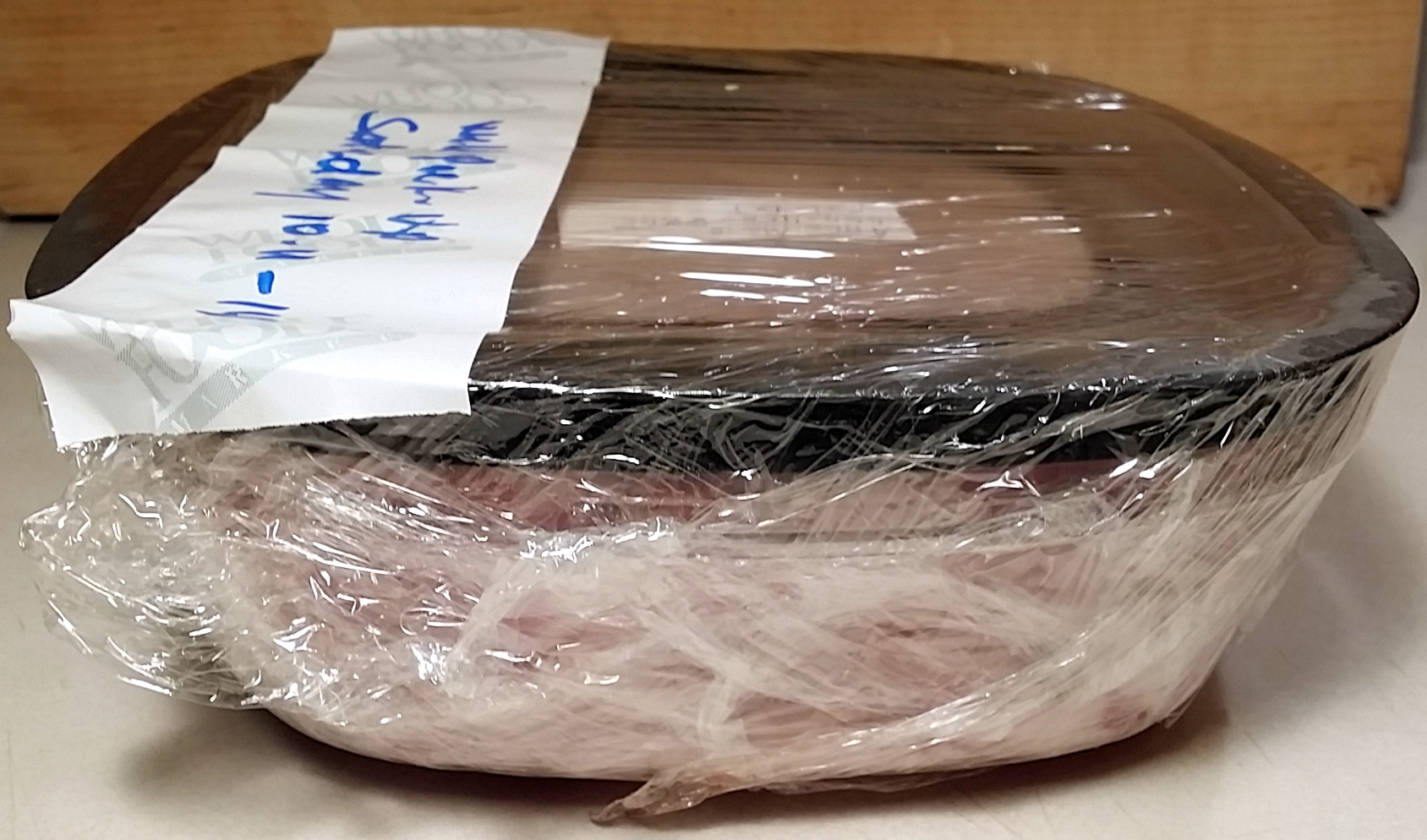
The store called me a few days later to pick up the pork fat. My heart sank when I saw the plastic-swathed container. Next time, I’ll have to explain better why I bring the container.
I think this pork fat weighed at least five pounds. It rendered quite a bit of lard.
Ingredients
- Pork fat
Directions

1. With scissors, cut pork fat into 2-inch pieces. Arrange in a roasting pan. I had not quite a 2-inch layer of fat in the pan.


2. Place pan in oven at low heat, around 275°F. Check every hour or so. After an hour, my fat had melted quite a bit. After three hours, I had vast pools of melted fat.

3. With a turkey baster, transfer fat to clean jars. Set aside to cool. I didn’t need to strain it, although I have in the past. Store in the refrigerator. It keeps for months.

I put the fat back in the oven and let it cook for another three hours. This was a little too long and rendered darker lard. Luckily it didn’t burn.

I think I rendered as much as I could from this and will have to toss what remains. So much for zero-waste. Well, overall I did reduce the amount of landfill the fresh fat would have created, as that shrank by more than half.
UPDATE: Incredibly helpful Becky from the blog Chicken Wire and Paper Flowers suggested tossing some of these bits into corn bread. So I did and froze the rest for future corn bread. Paula Deen’s version popped up at the top when I searched for a recipe. I liked that it called for buttermilk, and could use my homemade version. I cut out a bit of the butter the recipe called for, but I did add a cup of chopped up pork fat bits. So I actually made a Paul Deen recipe more fatty. This is a feat.

Because Whole Foods considers this pork fat garbage, I get it free. I can buy lard at my farmer’s market but this amount (about 30 ounces) would cost at least $20, probably more. Eventually stores will catch on and charge for pork fat.
I’ll use my lard for pastry, tortillas, refried beans and this Alton Brown baked bean recipe. It calls for bacon, but I just sauté the onion and jalapeños in my lard instead.
Does anyone else render lard? Do you have any tips? I would love to hear them.