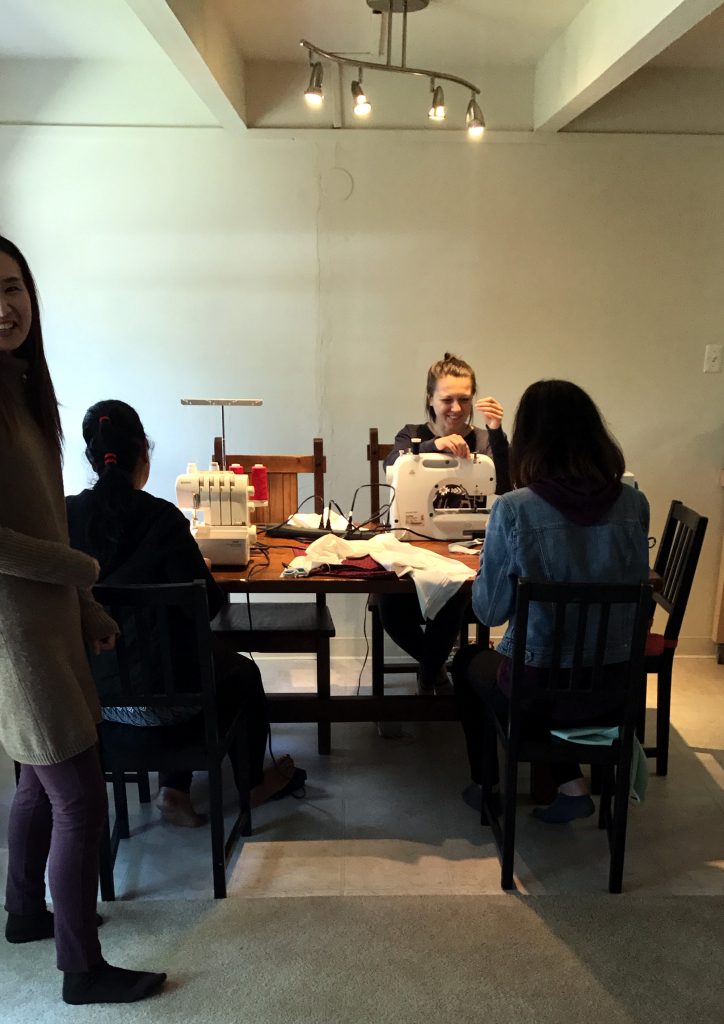
Would you like to help reduce plastic pollution in your community? Are you crafty? Then consider organizing a sewing bee to sew and distribute reusable cloth produce bags made out of upcycled material.
The people
You can easily make and give away bags on your own but doesn’t gathering with like-minded people to craft and chat and eat galettes sound like fun? Recruit friends, family, neighbors, coworkers, fellow students or churchgoers and so on.
We have found that small groups work best. We organized a large sewing bee at the library and I spent most of my time rethreading or troubleshooting the library’s machines, tearing out seams (mistakes happen) and cleaning up the big mess afterward. It was fun but too big, not very productive and a lot of work to plan.
I started listing groups in 2019 on the map below but have not updated it other than by adding new groups. Although a few groups have contacted me to let me know they have stopped sewing, I’m sure Covid caused others to cease operations. But check the map out—you might get lucky. And if you start a group, please fill out the form at the bottom of this page and I’ll add you.

The fabric
You will not need to buy fabric.
Thin sheets and pillowcases cut down to size make perfect produce bags. According to the EPA, Americans tossed 1.5 million tons of towels, sheets and pillowcases in 2018, with a 15.8 percent recycling rate. When you upcycle some of this fabric into produce bags, you’ll keep plastic bags AND textiles out of landfill. (By the way, textiles made of natural fibers emit methane as they break down, just like all organic material.)
When searching for fabric, keep the following in mind:
- Choose natural fibers. We make most of our bags out of cotton. Occasionally, we’ll score a linen sheet!
- Avoid synthetic material. Polyester, nylon, acrylic—these and other synthetics are made of plastic. It not only never breaks down, it pollutes along its entire lifecycle well before disposal—from extraction of the fossil fuels used to manufacture the plastic, to refining those fossil fuels, to manufacturing, to use (hello, microplastics and toxins). The good news is you can be picky about the types of fabrics you choose. Once you start asking for fabric, you should have zero trouble sourcing cotton.
- Pick lightweight fabric. You don’t want to make heavy produce bags. When shoppers buy produce priced by the pound, a heavy bag will add to the total cost. (More on the tare later.)
- Ask for fabric in your Buy Nothing group. Almost everyone has at least one worn out sheet. What can you do with it? You can’t donate it. No one wants it. Except for busy bees like us!
- Search for a reuse center. FabMo—short for fabrics and more—near me diverts 70 tons of fabric (and notions, yarn, tiles and so on) from landfill every year. Look for fabric at a reuse center near you. (Read more about FabMo here.)
- If possible, choose cotton thread. We buy cotton thread wrapped on thick cardboard spools. This costs more than the large plastic serger cones of synthetic thread but it doesn’t shed microplastic in the laundry (or anywhere else). People donate money when we give the bags away, which covers the cost of the pricier thread.

The sewing machine (or machines)
You won’t need many machines at your sewing bee if you keep it small. Cutting fabric consumes much more time than sewing. So if you only have one machine for a small group, you will be able to crank out lots of bags.
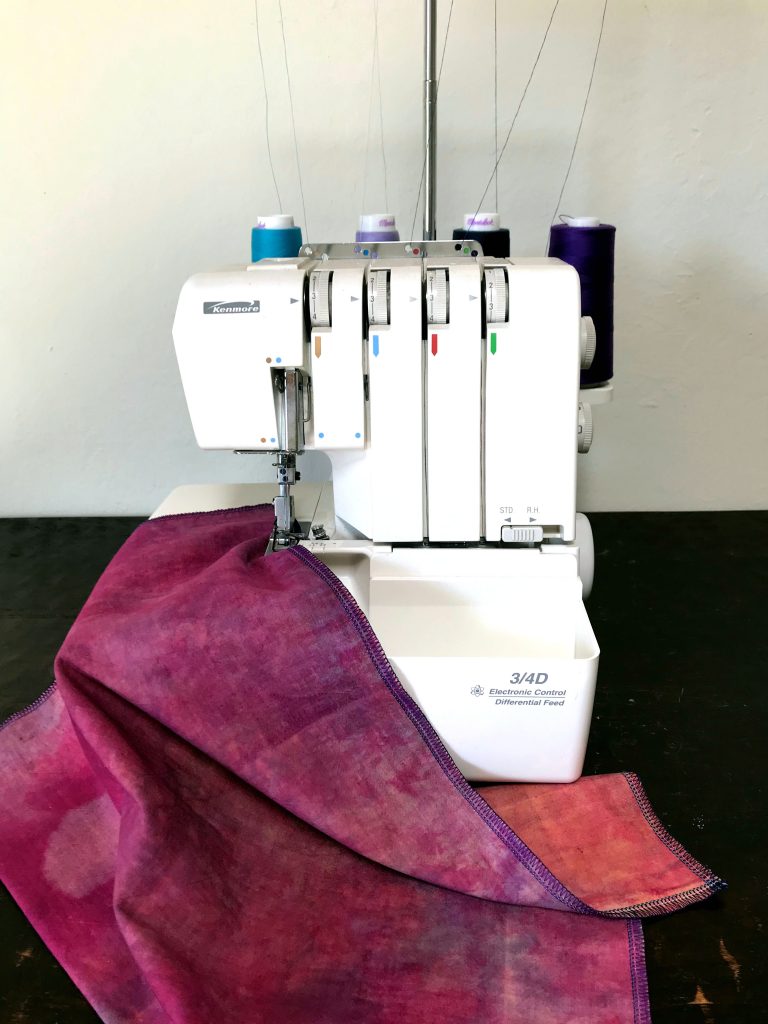
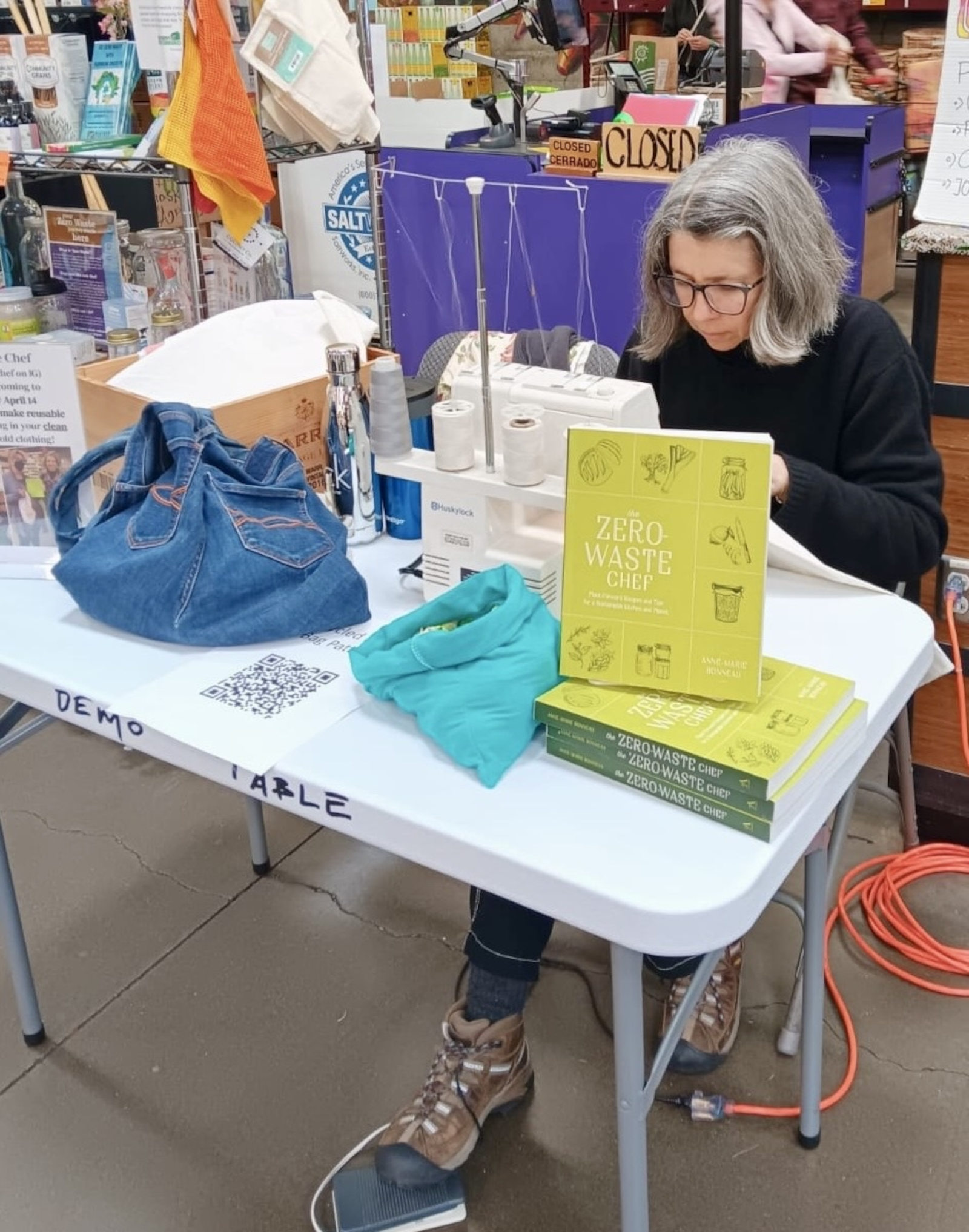
We sew most of our bags on sergers (aka overlock machines), which speed up the production line. However, you don’t need a serger to make these. And if you don’t have a machine of any kind, you may not need to buy one.
Where to find inexpensive or free machines for your sewing bee
- Ask for a machine on Buy Nothing or Nextdoor. People buy sewing machines with good intentions but might not have time to use one or discover they dislike sewing. Some of the people in my sewing bee have found very inexpensive or free machines by asking around. Our group bought a second-hand Husqvarna serger on Craigslist.
- Check out the library. More and more libraries have expanded from offering books to libraries of things. Yours may have a bank of machines you can use at specific times on the premises.
The bags
The “pattern”
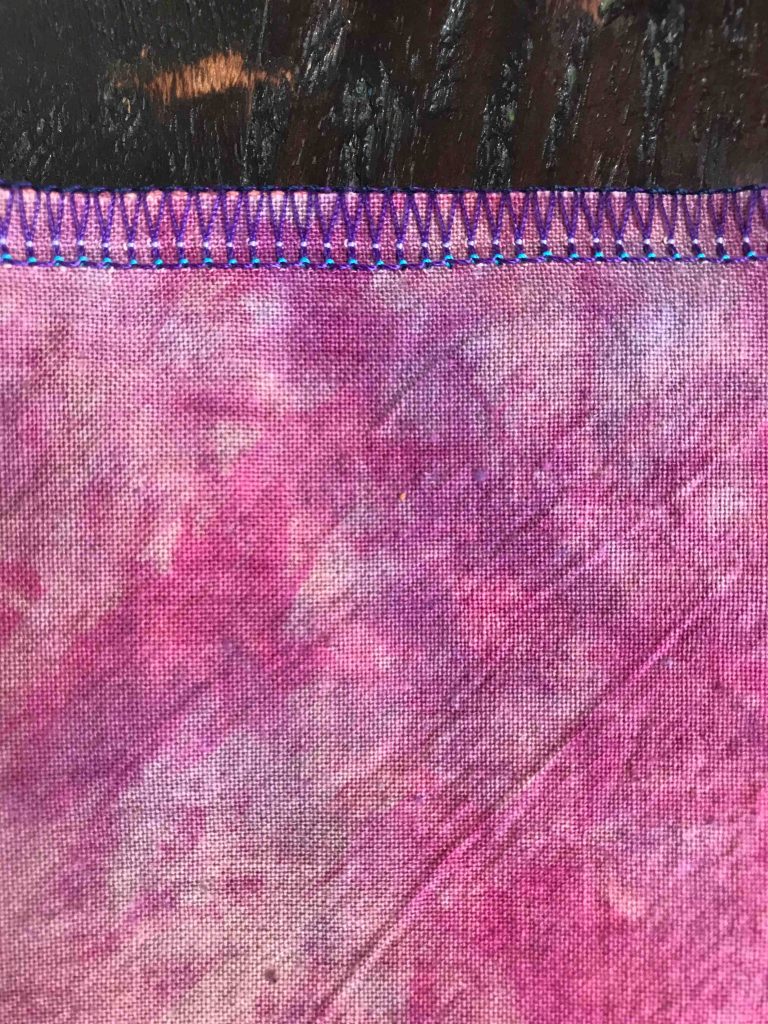
We make very simple bags that keep the line moving. They are similar in size to the single-use rectangular plastic bags you find in many grocery stores and farmers’ markets. Go here for the instructions. (Go here for instructions to sew bags with a French seam.)
We don’t bother with drawstrings. They slow down the line and casings can fail. If you’d like to add a very simple closure quickly, sew a long, thin, finished strip of fabric into the side seam of the bag to use as a tie.
Optional labels
On of my Zoom attendees, Nancy of Toward Zero Waste, said her sewing group labels their bags with a laser-cut stamp and Versacraft ink. They also write in who made the bag, which adds more of a connection for whoever uses it—an actual person made it!
Optional tare
To mark the tare on a bag, first weigh it. We’ll use grams for this example. Divide the number of grams by 454. That’s your tare. It will likely be around .06.
If your machine features an embroidery function, you could embroider the tare onto the bags. I’d put that near the top of the bag where it won’t compromise the bag’s strength and/or pin a small piece of scrap fabric inside the bag behind the embroidery to reinforce the stitches. You could also write the tare onto the bag with a permanent fabric marker. I haven’t tried that myself but it should work.
Ideas for scraps
Reusable snack bags gobble up lots of fabric scraps and take mere minutes to sew. I stash a couple in my purse at all times and they come in so handy. I bought a few pieces of bulk candy in one this weekend. If you rip out fitted sheets, you’ll wind up with lots of elastic—perfect for sewing scrunchies! Tiny unusable bits and pieces of fabric make decent stuffing for a draft blocker at the base of a door or a cushion.


The production line
Assign jobs to keep the line moving. At our sewing bees, I’m busy brewing tea, feeding people, threading the sergers and exorcising them when they act possessed.
- Cutters. CUT BAGS OUT BEFORE YOUR EVENT. Otherwise, people will have nothing to do. If you can’t cut in advance, work on that first thing when your hive gathers.
- Seam rippers. Fitted sheets need the elastic removed.
- Sewists. People usually take turns at this most popular task.
- Bag inspector. Have someone check the seams of each bag. At least a couple of our bags always need a redo. If the sewist accidentally missed sewing around a corner, leaving a hole, box the corners into flat bottom. (I am obsessed with flat bottoms.)
- Mark the tare. This is always a good idea.
- Document the event! I always forget to do this. Have someone snap a few pictures during your sewing bee. You’ll see a lot of faces smiling back at you in the pics!
The giveaway
Once we have (or almost have) a stockpile of bags, we schedule a giveaway. Depending on the venue, sometimes we need only 100 but usually hand out at least 200.
The farmers’ market is ideal. People will use the produce bags on the spot and you’ll likely see a few of them walking by with their full bags! (That always makes us so happy.) Our farmers’ market provides a free speech area. We could go there and not have to pay for a booth but luckily, my city’s Environmental Services Department allows us to squat in their booth with them. (They tell me we attract people to the booth!)
At the farmers’ market
- Create some signs for your giveaway. Our sewist Cecilia makes simple cardboard signs for us to hold up that say “FREE PRODUCE BAGS.” She’s very vocal and awesome! Find someone who is good at attracting people to the table. Cecilia brings them over and I’ll often give them my spiel if they want more info.
- Consider bringing a donation jar. People are very generous. With some of our donations, we bought that secondhand serger I mentioned earlier. We also buy all of our thread with donations.
Other ways to give away the bags
- Work with a store. You could arrange to drop off the bags at a store for the staff to distribute. I’ve sewn these on the spot at Rainbow Grocery, which attracts lots of attention.
- Give them away through your network. Offer them in your Buy Nothing group, at school, at work or at church (plastic pollution is a moral issue, after all!).
- Offer bags to the sewists. They will be the most committed to using them and they may have friends who would like some.


Add your sewing bee to the map
If you’ve formed a sewing bee and would like to be added to the map, please fill out the form below. Thank you!
Your message has been sent
I recently hosted a Zoom meeting which covered most of what I’ve written here. You can watch it (and skip around) below.