Brew this fruit kvass out of mere scrappy bits and enjoy a carbonated drink during Plastic Free July—or any time!—without the fossil-fuel-based plastic soda bottle. (Cans are lined with plastic and also contribute to plastic pollution.)
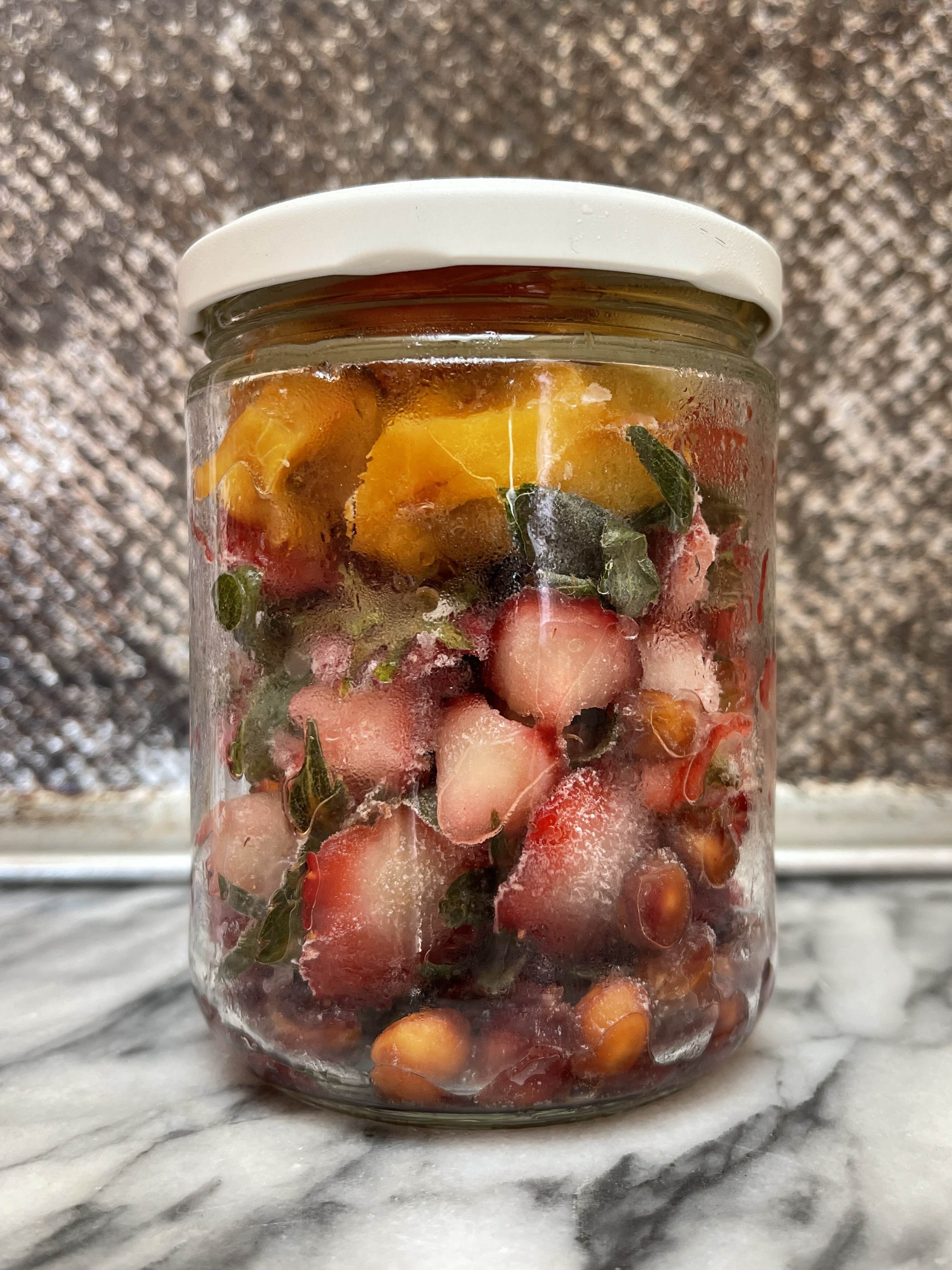
Save strawberry cores, plum peels, intact peach and cherry pits that have stubborn bits of flesh stuck to them—all the fruit scraps that you’d ordinarily compost. If you don’t have enough fruit scraps to brew a bottle of fruit kvass, stash your scraps in the freezer until you’ve accumulated enough. The bacteria and yeast that ferment your drink won’t die in the freezer—they simply take a little nap.
Combine these scraps in a clean jar with water and a bit of sugar, stir daily and once the brew starts to bubble, taste it. If you like the flavor, strain and bottle it. If you’d like it less sweet, let it ferment longer.

The sugar feeds the bacteria and yeast
Choose from granulated sugar, sucanat, coconut sugar, rapadura or honey (preferably raw for extra microbial goodness). You want caloric sugar that will feed the microbes. As the bacteria and yeast feast, they excrete acids and gases that ferment the drink and carbonate it. Depending on your kitchen environment, the drink will likely start to bubble around the second or third day.
This fruit kvass provides just a hint of sweetness. The longer you allow it to ferment, the more sugar the microbes will consume and the less sweet the drink will taste. If you’d like it sweeter, slow the fermentation early by moving the strained drink to the refrigerator while it still tastes sweet. Or slightly increase the amount of sugar. Or do both.
Crank up the carbonation
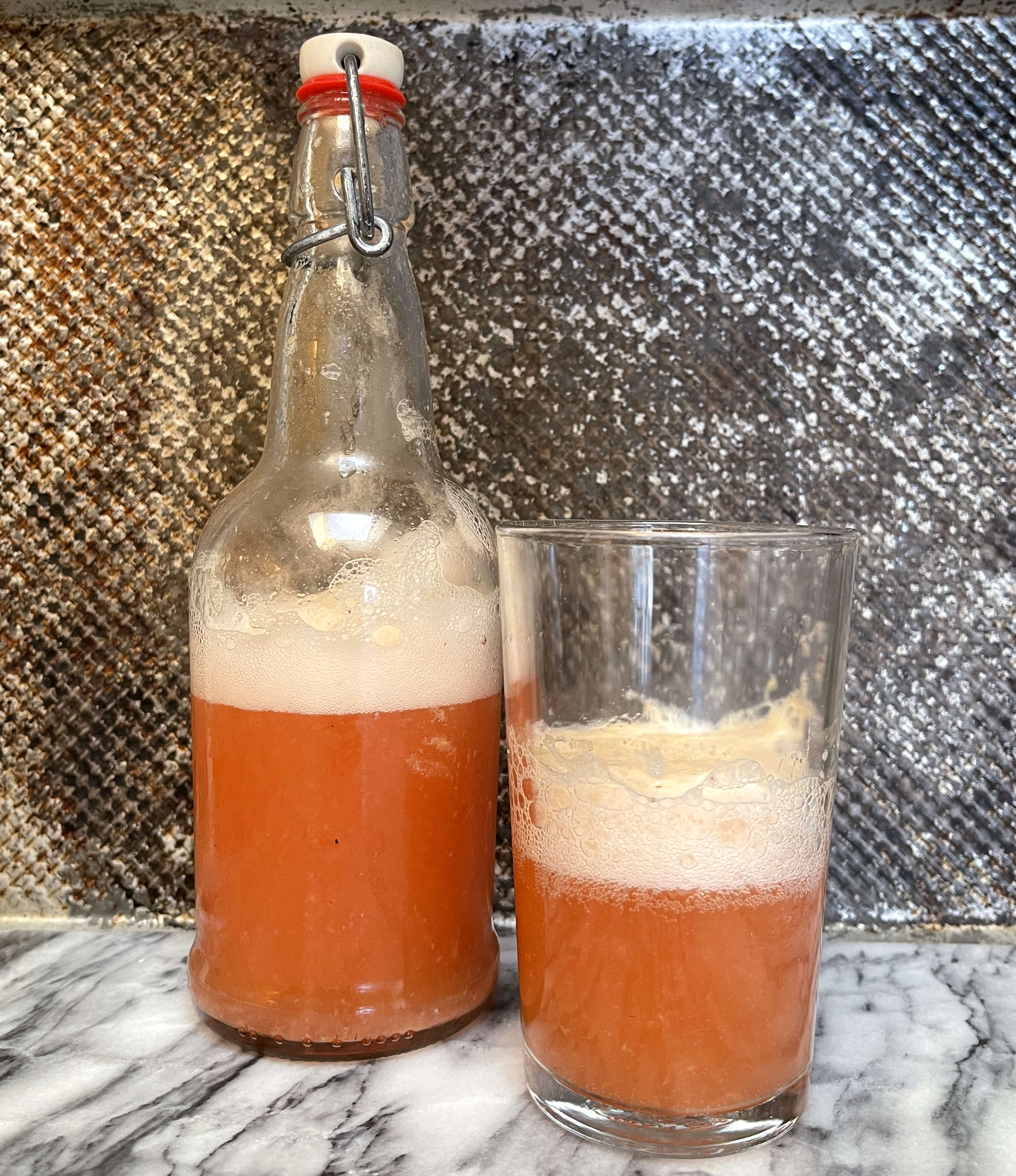
You want to drink or bottle the fruit kvass while it’s bubbly. If you wait too long, it will become flat and turn into mild vinegar (which is useful stuff so don’t throw it away!). At this point, you can strain the liquid and enjoy the fruit kvass as is. But if you’d like more carbonation, funnel it into a flip-top bottle if you have one and let it sit at room temperature. As the drink continues to ferment, the tight seal traps the carbon dioxide building up in the bottle, increasing the fizz. A screw-top bottle will render a good amount of carbonation also if you don’t have a flip-top bottle.
After the bottle has sat on the counter for a day, burp it (i.e., open the lid slightly). If it has carbonated so much that you can’t get it open for fear of spraying the drink all over your ceiling, chill it in the refrigerator to calm it down. If the bottle emits no hiss at all, let it sit for another day or two before moving it to the refrigerator. But don’t let it go longer than a couple of days without burping. The gasses can build to dangerous levels and lead to exploding bottles. (I’ve never had this happen and hope I never do.) Storing your bottle in a box, cupboard or closet will help contain potential messes.


Make a second batch of fruit kvass
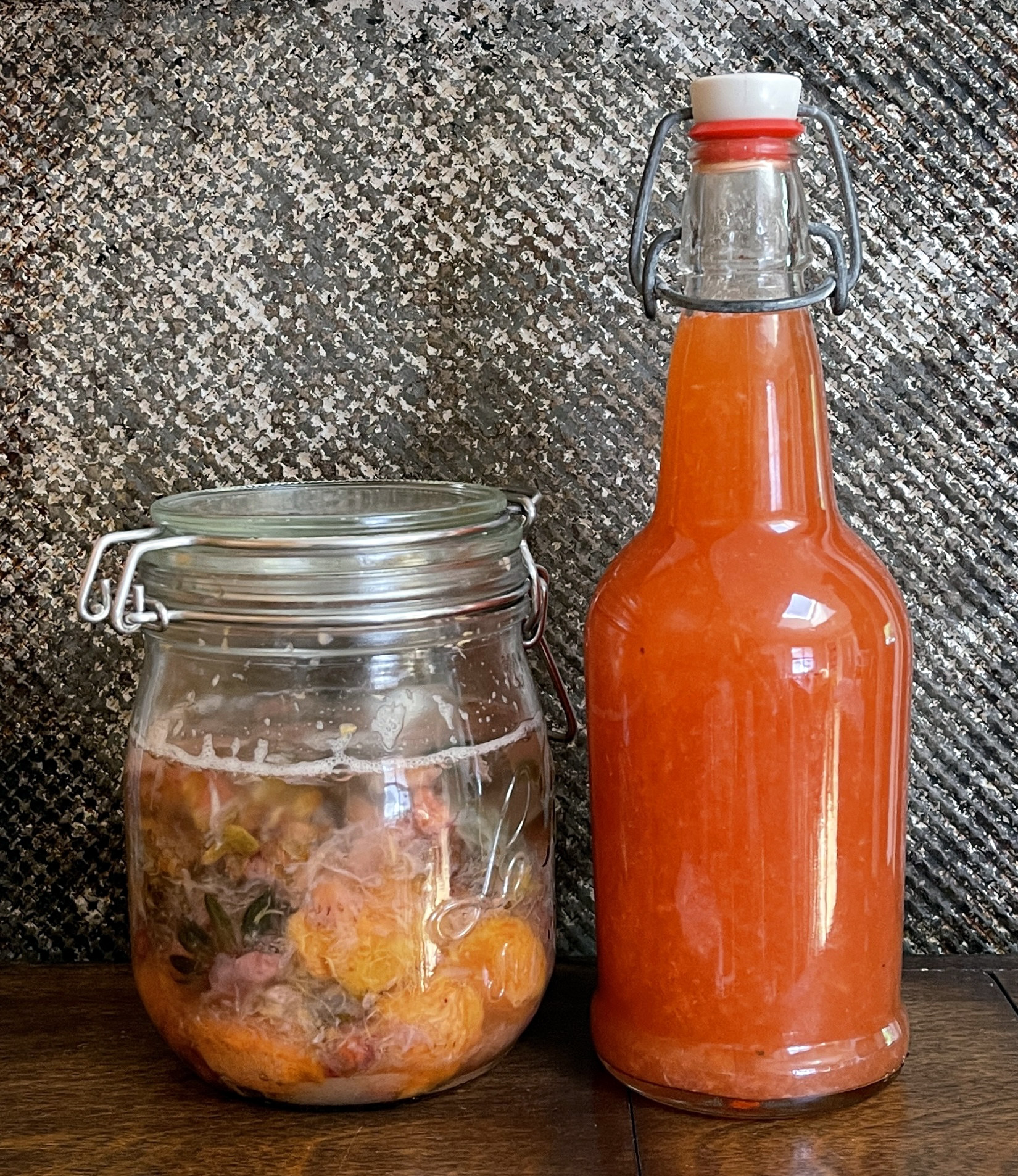
After straining and bottling the fruit kvass, make a second batch. Because the fruit will contain less flavor and sugar, add less water to this second infusion to prevent a diluted flavor. The good bacteria and yeast that have proliferated all over the fruit will kickstart the ferment and the second batch will be ready quickly, possibly in less than a day.


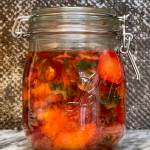
Scrappy Fruit Kvass
Ingredients
- 1 cup fruit scraps
- 2 tablespoons sugar or raw honey or more if you want a sweeter drink
- 2 cups water
Instructions
- Stir 2 tablespoons of sugar into 2 cups of water in a clean 4-cup jar. Add the cup of fruit scraps. Close the jar or cover it with a piece of cloth secured tightly around the mouth of the jar. Stir a few times daily.
- Depending on your kitchen environment, from between 2 to 5 days, the fruit kvass should be very bubbly and perhaps a bit frothy, while the colors of the fruit will have faded. Strain it and set aside the fruit scraps. Drink immediately or bottle it to increase the carbonation. After the bottles have sat in a cupboard or cardboard box for a day, burp them by slightly opening the lids. If you can't get them open for fear of spraying the drink all over your ceiling, chill them in the refrigerator to calm the drink down. If they emit no gas, let them sit another day or two to carbonate further. Burp them again to prevent explosions. Chill the bottles in the refrigerator before serving.
- Make a second infusion with the fruit scraps. Concentrate the remaining fruit flavors by using less water for the second batch, about 1 cup. (Add more water if the 1 cup doesn't cover the fruit scraps.) Stir in 1 tablespoon of sugar and add the scraps. The second infusion will ferment quickly, often in less than a day. Strain the fruit kvass and either drink it immediately or bottle it. Compost the pale, spent scraps.
Find more fermented drinks in my cookbook. Learn more about the book here!
- Taste Canada silver for single-subject cookbooks
- Second-place Gourmand cookbook award in the category of food waste
- Shortlisted for an award from the International Association of Culinary Professionals