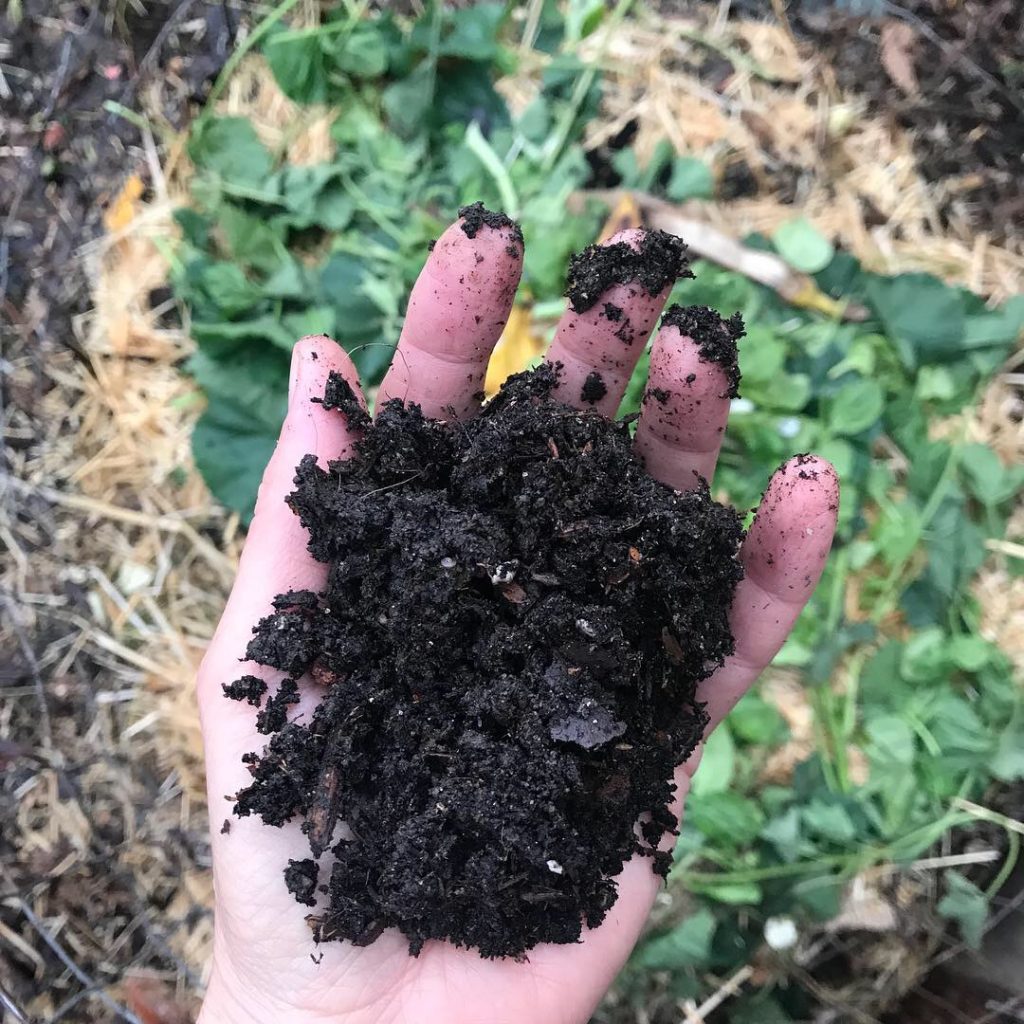
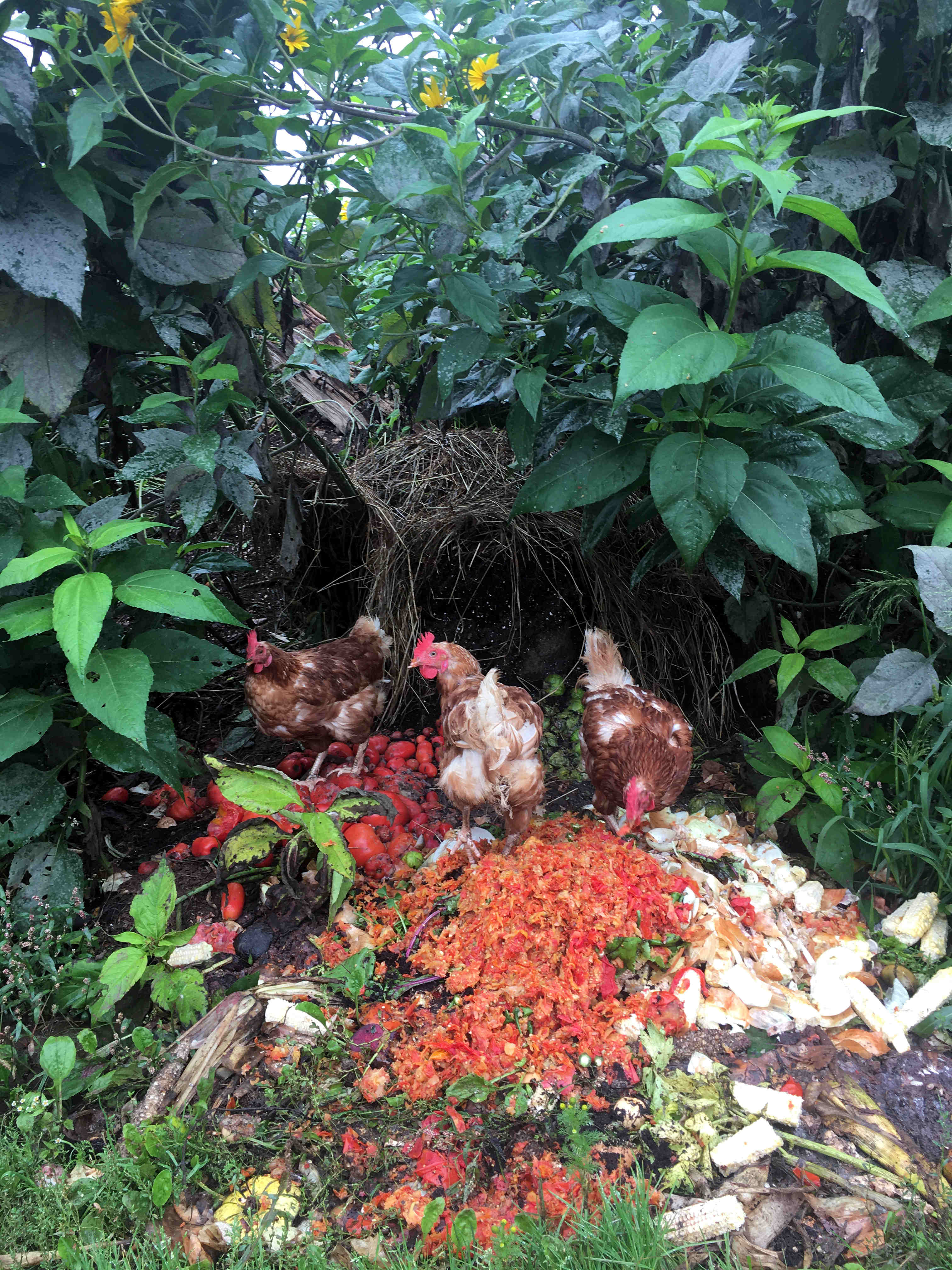
Ideally, we would eat all the food we buy. (Go here for 23 simple tips to help with that.) But food waste happens. If we can’t eat it, or give it away, or feed it to our chickens or goats, then wasted food belongs in a compost heap of some sort—along with inedible food scraps.
Composting food does not prevent food waste. Previously edible food sent to either a landfill or compost bin wastes food. However, food decomposing in a compost bin eliminates the methane gas that the food would otherwise generate in a landfill. Compost also sequesters carbon. And mixing finished compost into your soil will enhance it for free. It’s magical stuff!
Think of composting previously edible food as a greenhouse-gas-reducing, last resort.
Compost bin ingredients
What I put in my compost bins:
- Fruit peels, scraps and pits. Even avocado pits break down quickly!
- Vegetable peels and scraps. After I make vegetable broth out of vegetable scraps, the strained bits go on the pile. Even corn cobs—delicious in broth by the way—decompose surprisingly quickly. After a couple of weeks, you can easily break them up into one- or two-inch pieces, which speeds up their decomposition.
- Grains, breads and pasta. Avoid adding pasta dripping with sauce and oil. It can glop up your pile.
- Hair. I bring mine home from my very accommodating hairdresser after a cut.
- Tea leaves and coffee grounds. Sometimes I throw these directly on my rosebushes instead of in the compost bin. The roses love the coffee grounds especially.
- Eggshells. These decompose faster if ground up but I personally don’t bother doing that extra work.
- Plant trimmings. I throw some green plant trimmings into my bins but set most of them aside to dry out and add later after they have transformed into brown matter. (I generally need more brown matter than green. More on that down below.)
- Grass cuttings. Postponing mowing—or stopping altogether—will provide vital habitat for insects and birds. If you mow, grass clippings can go in the compost bin.
If you don’t have a yard for composting
Backyard composting requires, well, a backyard. If you live in an apartment building, you can try to convince your landlord to set up a compost bin outside. Say the words landlords long to hear: they may save money. Because food accounts for 21 percent of landfills by weight in the US, most likely your complex’s garbage bins have a similar composition. If your landlord can get tenants composting, the cost of waste pickup may drop.
Other ways to compost without a yard:
- Curbside green bins make composting easy for apartment dwellers—where green bin programs exist (and more and more cities have adopted them). Find out if your city has a green bin program or plans to start one.
- Drop-off sites may be available in your city. Community gardens sometimes accept food scraps, for example. The gardens often need all the compost they can get! New York City maintains a map of compost drop-off sites here. Your city may provide a similar resource. Some farmers’ markets also provide drop-offs for food scraps.
- ShareWaste is like Tinder for food scraps. It matches eligible composters with eligible food scrap donors. Although some areas have very few participants, you may get lucky and find the compost bin of your dreams on the app.
- Vermicomposting is another option for composting indoors. You’ll keep a bin of red worms in a convenient location and feed them food scraps—with a few exceptions such as excessive citrus peels. Your worms will produce earthy-smelling, nutrient-rich material that you can add to houseplants or give to gardening friends. You can buy bins or build them. Many gardeners who compost outdoors also vermicompost indoors too reap the rich worm castings. This soil amendment is expensive to buy.
- A bokashi bin ferments food scraps indoors. However, you eventually will need a location for burying the fermented food scraps outdoors.
If you do have a yard for composting
Backyard composting is ideal even if your city does have a green bin program for food scraps. You won’t rely on trucks to haul your food scraps away and you’ll make a soil amendment in your yard for free. It’s a bit silly to send all of these resources away and then spend money on fertilizers and mulch.
Composting in a bin (or on the ground)
When I first began composting, like many people, I believed I needed to buy a special bin. But if you have a patch of soil or grass in your yard, you can start composting today.
The short version of how to maintain an outdoor compost pile, either in a bin or directly on the ground:
- Throw kitchen scraps on the pile. There are green materials. You want a mix of green and brown.
- Throw a handful of brown materials on top, such as leaves or hay (it should be organic hay, which can be very hard to find). By creating air pockets, brown materials prevent your pile from becoming a soggy, smelly mess.
- Add moisture to the pile when necessary. Compost will dry out in the summer, so ideally, situate your pile in a shady spot. You want the pile about as damp as a wrung-out sponge.
- Turn the pile every few weeks or so to inject it with air, which helps speed up decomposition. Very small piles will break down quickly without turning.
- Once the pile becomes large, starts to break down and “cooks,” consider starting a second pile.
- Remove the finished compost from the first pile, pull out any noticeably large pieces that haven’t broken down and move them to the new pile of food scraps. Work the compost from the finished pile into your soil where desired.
- After using up the first finished pile, let the second pile cook and begin to throw scraps where the first pile had been. You’ll have one pile cooking and one pile piling up. (Hopefully, this doesn’t sound too much like Who’s On First…)
Done properly, compost does not smell at all even with the addition of urine. Yes, you read that correctly. Urine contains high amounts of nitrogen. Brown materials contain more carbon. A low carbon-to-nitrogen ratio (say, 7:1 as opposed to 35:1) decomposes organic matter quickly.
Pit composting
Skip steps 1 through 7 above and bury your food scraps instead. Dig holes in the yard, toss in food scraps, cover with soil and you’re done. You won’t need to maintain a bin or mix the finished compost into your soil.
Hugelkultur
I am a bit obsessed with my hugelkultur raised beds. The base of these ultimate raised beds contains a layer of dead logs and branches, followed by a layer of compost and a layer of soil. Over time, the buried decomposing wood releases water and nutrients into the soil. The organisms that break down the rotting wood to make all of this goodness available to the soil help aerate that soil.
Because the beds contain bulky wood, they require less soil to fill, which reduces the need to spend hard-earned cash on soil bagged in plastic. And on top of all of these benefits, I get to say (and write) the word “hugelkultur” over and over and over. Go here for more on hugelkultur.

Do you have a yard and a dog?
Yes, you can compost dog poop in a dedicated backyard bin—but never in your regular bin as Fido’s waste can make you very sick! Find out how to build a backyard dog waste compost bin in Michelle Balz’s wonderful book, No-Waste Composting: Small-Space Recycling Indoors and Out.
Composting in winter
My sister composts year-round in the Great White North. She tosses her food scraps onto the compost heap outside. They freeze. They thaw. They compost. (But they first feed her chickens.)
Want more food scraps?
Consider accepting food scraps from your friends and neighbors. Ask around, post your request on Nextdoor or sign up on ShareWaste as a drop-off location. After Halloween, between Nextdoor and ShareWaste, I received about 20 pumpkins of various sizes for my hungry compost bins!

Check out my award-winning cookbook!
- Taste Canada silver for single-subject cookbooks
- Second-place Gourmand cookbook award in the category of food waste
- Shortlisted for an award from the International Association of Culinary Professionals
Learn more about my book here.