


Updated 01/05/18
Every time I post pictures on Instagram or Facebook of my bulk shopping or farmer’s market hauls, I get lots of questions:
- Do you bring your food home in bags and transfer it to jars? (No, I bring the jars shopping and fill them directly.)
- Doesn’t your food cost more because the jars weigh so much? (No, have customer service weigh and mark the jars BEFORE you fill them up with food.)
- Stores let you bring your own containers?! (Mostly…)
- I live in the UK where bulk stores are almost non-existent. What can I do? (Read on.)
- I live in Canada where the farmer’s markets run from May to September only. How do I avoid the over-packaged produce in the grocery store? (Ditto.)
So I thought I should write a post on shopping practices and rank those practices in order from good to better to best. Some practices fall in between these subjective categories so I had to make the call in a couple of cases.
I live in Northern California, with access to several good bulk stores (and one amazing one) and year-round farmer’s markets. Because I avoid buying much of anything besides food (unless I can get stuff second-hand), I can live plastic-free and zero-waste pretty easily. But you may not have similar shopping choices or you may just be starting out on the zero-waste path, in which case, I’d suggest you make your changes slowly. Otherwise you may feel overwhelmed—and give up.

Good
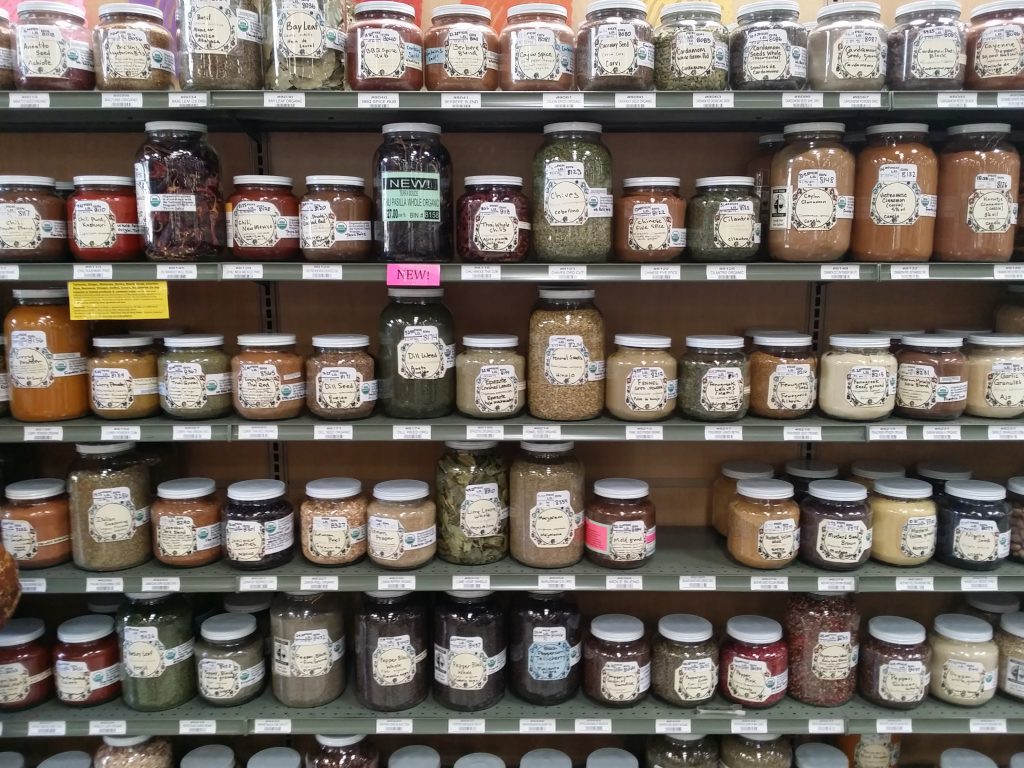
Bulk Food
If you don’t have a good bulk store near you, you can still reduce your product-to-packaging ratio by:
Buying giant packages of food (that you will eat and not waste). For example, when I bake a lot, as I fill up my jars with flour yet again, I often think to myself “Maybe I should just buy the large bag of flour the store fills these bins up with.” Yes, I would have a large bag to deal with, but, unless I grow, harvest and mill wheat myself, I do generate some waste shopping at the bulk bins, albeit not nearly as much as if I bought many small bags of flour.
Buying giant packages of food and splitting them with friends and neighbors. When you pitch this idea to your friends and neighbors, explain that they will save not only money but also time, as only one person will have to do the actual shopping and schlepping. Plus, when you all get together to split the goods, you can make a party of it (woohoo!). Who knows, you may even start your own buying club. Over 40 years ago, residents at a commune in San Francisco needed to buy large quantities of food, started buying it in bulk and then began selling it. Rainbow Grocery (a.k.a. bulk heaven) was born.
Produce
Bring a bag. If you don’t have access to farmer’s markets, where you can (usually) find delicious food unpackaged, take reusable cloth produce bags to the store for buying produce. I make very simple produce bags the same size and shape as the plastic ones that stores provide. You can also buy reusable produce bags if you don’t want to make them. Fill your bags with loose apples, carrots, potatoes and so on. Buy greens such as bunches of spinach and romaine lettuce rather than the pre-washed in plastic bags. Yes, trimming does require more work. Save all the stems for vegetable broth.
Join a CSA and request no plastic bags. About 10 years ago, I belonged to a CSA (community supported agriculture) but all the plastic bags inside my box drove me crazy. (Also I enjoy picking out my produce myself…) Some CSAs use less packaging than others. Ask around. If your CSA wraps its food with lots of plastic packaging, when you return your box, return the packaging along with it too and a note explaining why. In the US, you can find a CSA near you at Local Harvest.
Better
Bulk Food
If you do have access to bulk bins but the store won’t allow you to use your own containers and produce bags, I have a few ideas:
Ask for a paper bag. Some stores may have paper bags you can use instead of plastic. Plastic is just plain terrible. It lasts forever. It clogs our oceans. It kills wildlife. Paper, while wasteful, does break down. You can also reuse it.
Reuse the store’s plastic bags. My daughter returns to Canada next month for school, and can shop at a Bulk Barn near her. The store, however, will not allow her to bring her own containers. The chain seems to want its customers to use new plastic bags every time they shop. But if you reuse Bulk Barn bags over and over, how will they know? I’m just asking…
(Update: Bulk Barn began allowing customers to bring their own containers in 2017.)
Complain. It amazes me that some shops just flat-out refuse to allow customers to do bring their own bags and containers. Don’t they want our money? Is business so good that they can afford to turn it away? If you speak with store management, explain to them that they will save money if they allow people to bring their own bags.
Produce
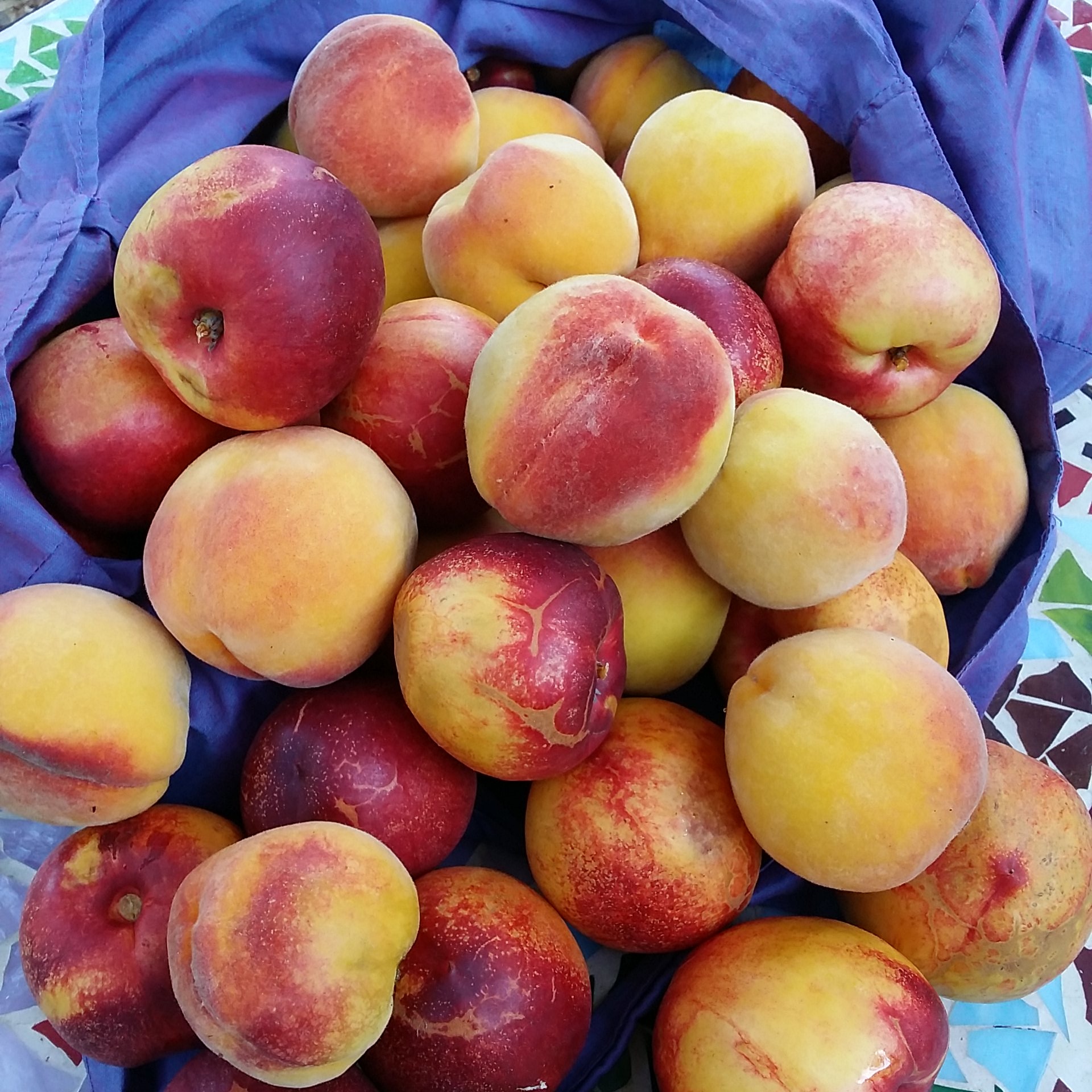
Shop at the farmer’s market. I try to go to the farmer’s market every weekend. I find it outrageous that in Northern California—where farms abound—I can’t find a local apple at Whole Foods. The apples there travel all the way from Washington or even Chile. Plus they have those annoying produce stickers stuck to them.
Produce at my farmer’s market has very little—if any—packaging and it tastes better than anything I can buy in a store. At the farmer’s market, you can also buy “ugly” fruits and vegetables that supermarkets refuse to carry. This helps reduce food waste (we toss 40 percent of the food we grow in the US).
To make your trip to the farmer’s market zero-waste and plastic-free, you’ll need some minimal equipment:
- Cloth produce bags. Often farmers will give me a bit of a deal for bringing my own bag—maybe a quarter off or an extra piece of fruit.
- Metal containers. I like to use these in the summer for strawberries, raspberries and blueberries. I had been using my cloth produce bags for these but on the way home, would accidentally make jam out of my fruit. LunchBots sent me six containers recently. I love them.
- Glass jars. I use these for strawberries also. When I get home, I freeze some of them. I fill the jars with water to wash the berries, cut them up and freeze them in a single layer on a cookie sheet. Once they’ve frozen, I transfer them back to the empty, dry glass jar and put them back in the freezer.

Best
Bulk Food
If you have access to bulk bins in a store that allows you to bring your own containers, then you can shop with:
Glass jars. Just make sure you get these tared—in other words, weighed—before you fill them with food. You don’t want to have to pay for the weight of the jar, especially if you buy tea that costs $40 per pound. Where I live, some stores set out scales and you weigh and mark the jar yourself with a sticker (or with a china marker on the glass). At other stores, customer service will weigh and mark the jars for you.
Metal containers. Get these tared also. My small LunchBots are a good size for bulk candy 😉
Cloth produce bags. These work well for “chunkier” food, like bulk pasta, beans, rice, popcorn, oats and granola.

Produce
Extend the season. In Ontario, Canada, my mom can shop at the farmer’s market for only a few months. If you also live in a cold climate, extend the season by learning to preserve food, something our grandmothers knew how to do.
For example, right now, during tomato season, you can buy piles of tomatoes cheaply and:
Roast and freeze them. I have been buying extra tomatoes every week and roasting them so I’ll have some throughout the winter.
Make tomato or pizza sauce and freeze it. You’ll be so happy come December to find your sauce in the back of the freezer.
Ferment them. If you haven’t tried making fermented salsa, you won’t believe how delicious it tastes. You can also ferment tomatoes plain. If you don’t have a cold cellar, you can store these in the refrigerator.
Dehydrate them. A chef on Facebook today told me she dries her tomatoes—sprinkled with oregano, salt and pepper—in the oven and then freezes them. I’ve dehydrated them in a solar food dryer and they taste like candy. They actually are candy. I would like to keep them through the winter but we eat them all…
Can them. I have canned jam but not tomatoes. You can put up a pile of them now and have them all winter long.
Grow your own. I originally planned to include “shop at the farmer’s market” in the best category but I think growing your own—which I know many of you do—is ideal. Not everyone can do this (or wants to) but when you grow your own, you become more self-reliant, you save money, your food tastes delicious, you teach your children valuable life-long skills, you reduce your waste and your food travels the shortest distance possible to your table. (Gardening also provides cheap therapy.) I have grown food sporadically in the past. One of these days, I hope to have the sunny space for it.

