A grey water system diverts untreated, relatively clean wastewater from bathroom sinks, bathtubs, showers and washing machines to landscape. Wastewater from kitchen sinks, dishwashers or toilets is not suitable for a grey water system.
Last week we had the simplest of grey water systems installed—laundry to landscape. No permit necessary! Greywater Landscape Design installed the system in less than a day. If you’re handy, you could install one yourself for about $300.

Benefits of a grey water system
Tree ring data reveal that the megadrought afflicting the Western US is the area’s worst drought in 1,200 years. While running our new system for the first time, I was shocked by how much water the washing machine sends out the yard. Why haven’t we been diverting it to plants all these years?! Laundry-to-landscape grey water systems should be standard in new Californian homes. Some municipalities offer small rebates for installing them. (Go here for a list of rebates available in the San Francisco Bay Area.)
Our grey water system:
- Reuses water, which conserves this precious resource and allows reservoirs to recharge
- Grows plants that pull carbon out of the atmosphere
- Reduces the need for sewage treatment
- Lowers our water bill!
We could install another, more complicated system for the bathroom tubs and showers. For now, a brute force grey water system helps capture and conserve water there—a bucket in the shower.
A note on laundry-to-landscape detergent
This helpful article from This Old House lists safe detergents and soaps for grey water systems. Laundry detergent must be liquid, not powder, and free of:
- Salt and sodium compounds
- Boron (including borax)
- Chlorine bleach
Alkaline compounds may also pose problems, depending on your plant types.
We do have grey water-friendly soap nuts MK bought long ago but I’d prefer something that racks up fewer soap miles. (Soap nuts usually come from the Himalayas.) This mild homemade chestnut detergent would work. And bulk stores near us carry grey water system-friendly liquid detergents. I’m using this brand at the moment.
A note on microplastics from synthetic clothing
A typical load of laundry containing synthetics can shed 700,000 tiny plastic fibers, which I don’t want to send out to my soil and plants. The delicate cycle makes matters worse by increasing the number of microplastics washing machines release. This study found that the cycle can release an additional 800,000 plastic microfibers because the more water used, the more plastic microfibers released. (The delicate cycle uses up to two times as much water as the regular cycle.)
Washing synthetic fabrics—polyester, acrylic and blends—in cold may shed fewer plastic microfibers. And while today’s washing machines cannot capture these microfibers from synthetics, Guppyfriend bags, which Patagonia sells at cost, reduce the amount of microfibers that washing machines release. I avoid synthetics in the laundry altogether when directing the waste water outside and wash only natural fibers in those loads.
Step 1: Hook up the washing machine
In temperate Northern California, our washing machine resides in the garage. (When I lived in Canada, our washing machine sat in the basement.) The front yard lies on the other side of the wall the machine butts up against, making the washer a prime candidate for a grey water system.
Wastewater from the washing machine goes up a hose, into a three way valve and either:
a) sends grey water to the sewer via the sink or
b) sends grey water out to the landscape.
In other words, we can divert water to the sewer when necessary. You’d do this when washing a load of diapers, for example.
The pipe then runs through a wooden cabinet next to the washing machine, and through the garage wall to outside. An existing boxwood hedge camouflages this pipe.


The image above shows the direction of the pipes through which the grey water flows. The white pipe coming from the garage attaches to flexible black piping that runs underneath the sidewalk over to a garden bed. A second section of piping branches off toward the front yard.
Step 2: Immerse the mulch basins into the yard
Before the digging began, I picked 15 spots for mulch basins. These basins feature an open bottom and removable lid which sits flush with the top of the soil. After they go into the ground, mulch goes into them. When the washing machine runs, the basins fill with grey water, the mulch inside treats it and nearby plants drink up the water through their roots.


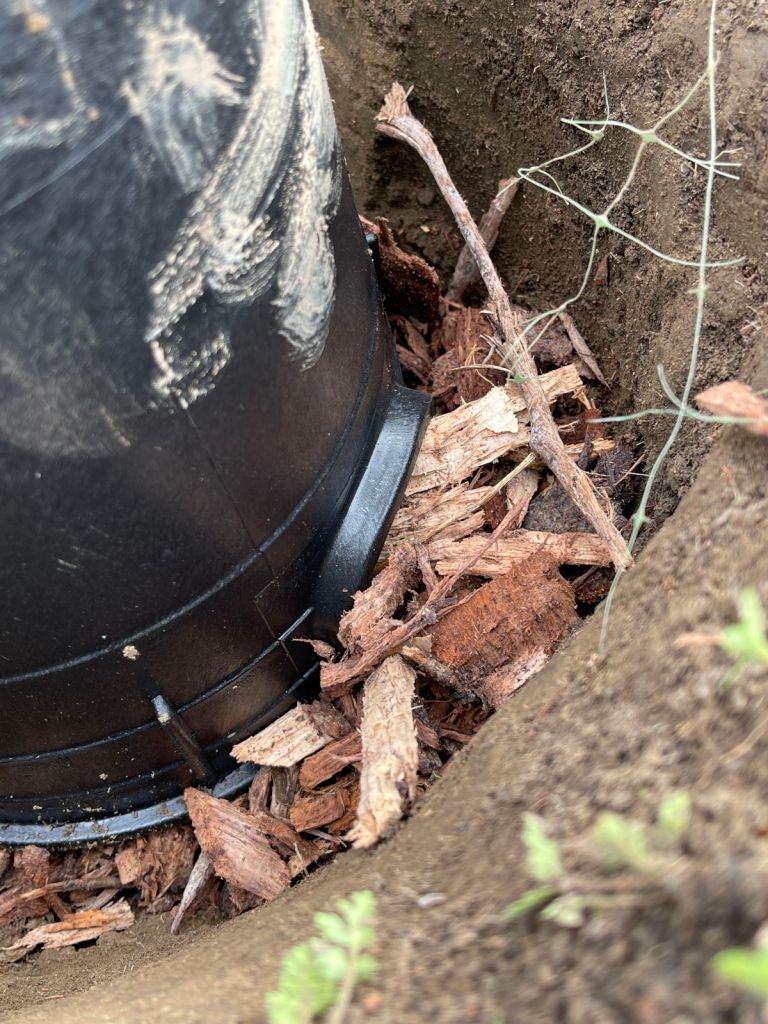
Step 3: Connect the mulch basins to the grey water system
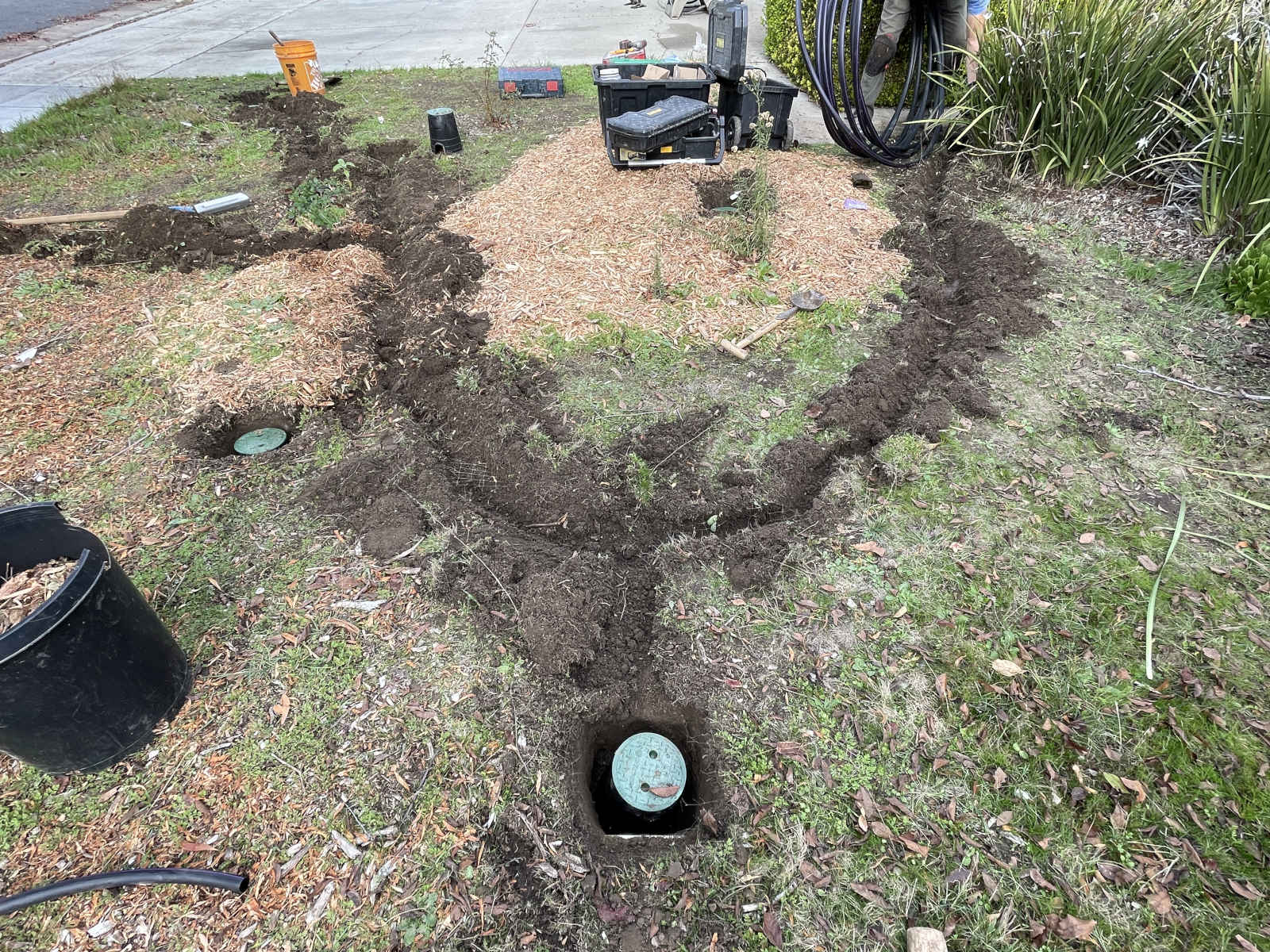
After installing the mulch basins, the team dug trenches in the yard in which to lay piping. They arranged the piping, hooked it up to the mulch basins and covered the piping with soil to conceal it.
Thanks to gravity, the grey water system doesn’t require a pump. The yard, like most of the yards in this neighborhood, gently slopes down toward the curb. The water runs through the pipes at the top of the yard down toward the lower bottom, filling the mulch basins as it moves.
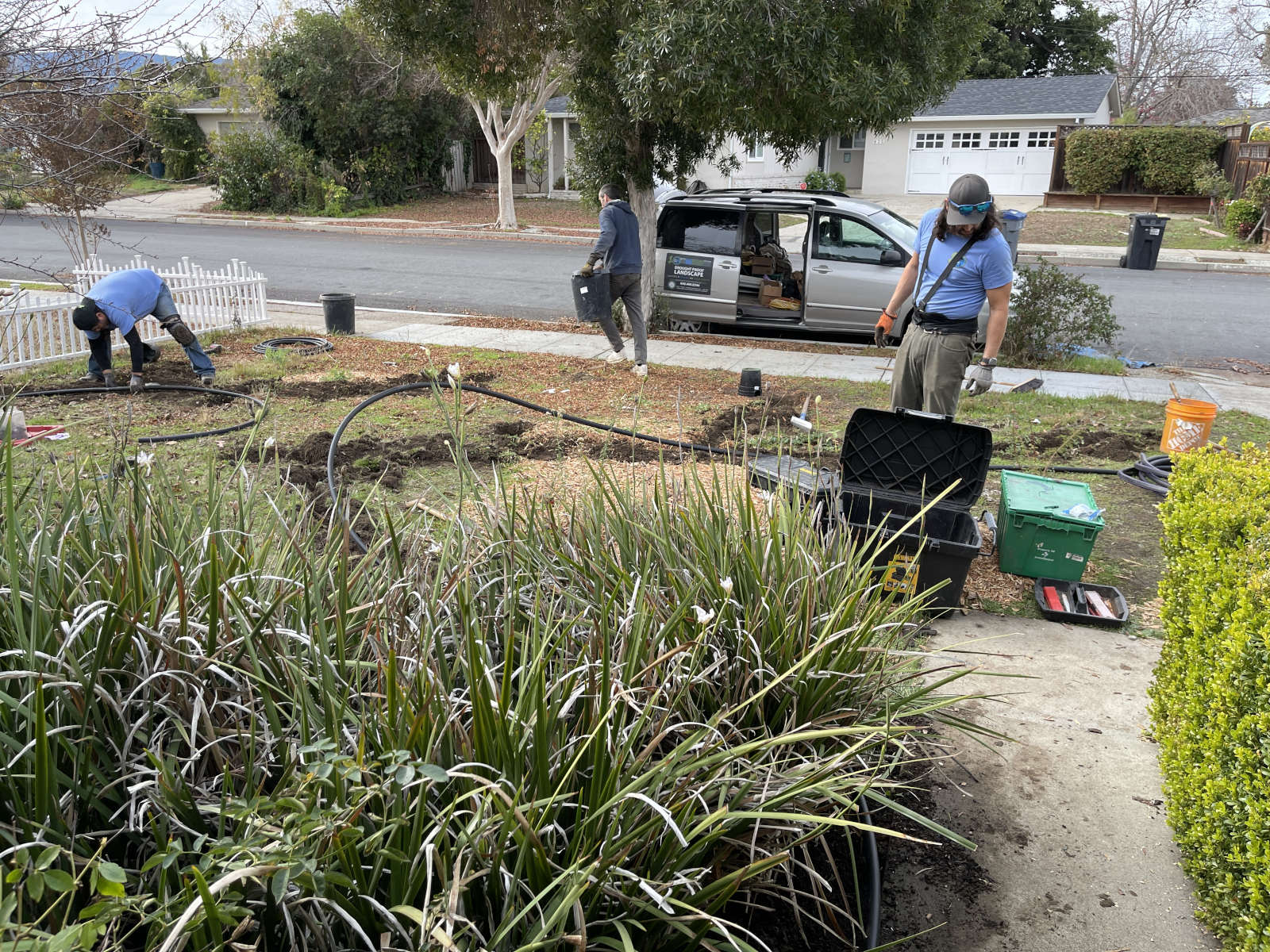
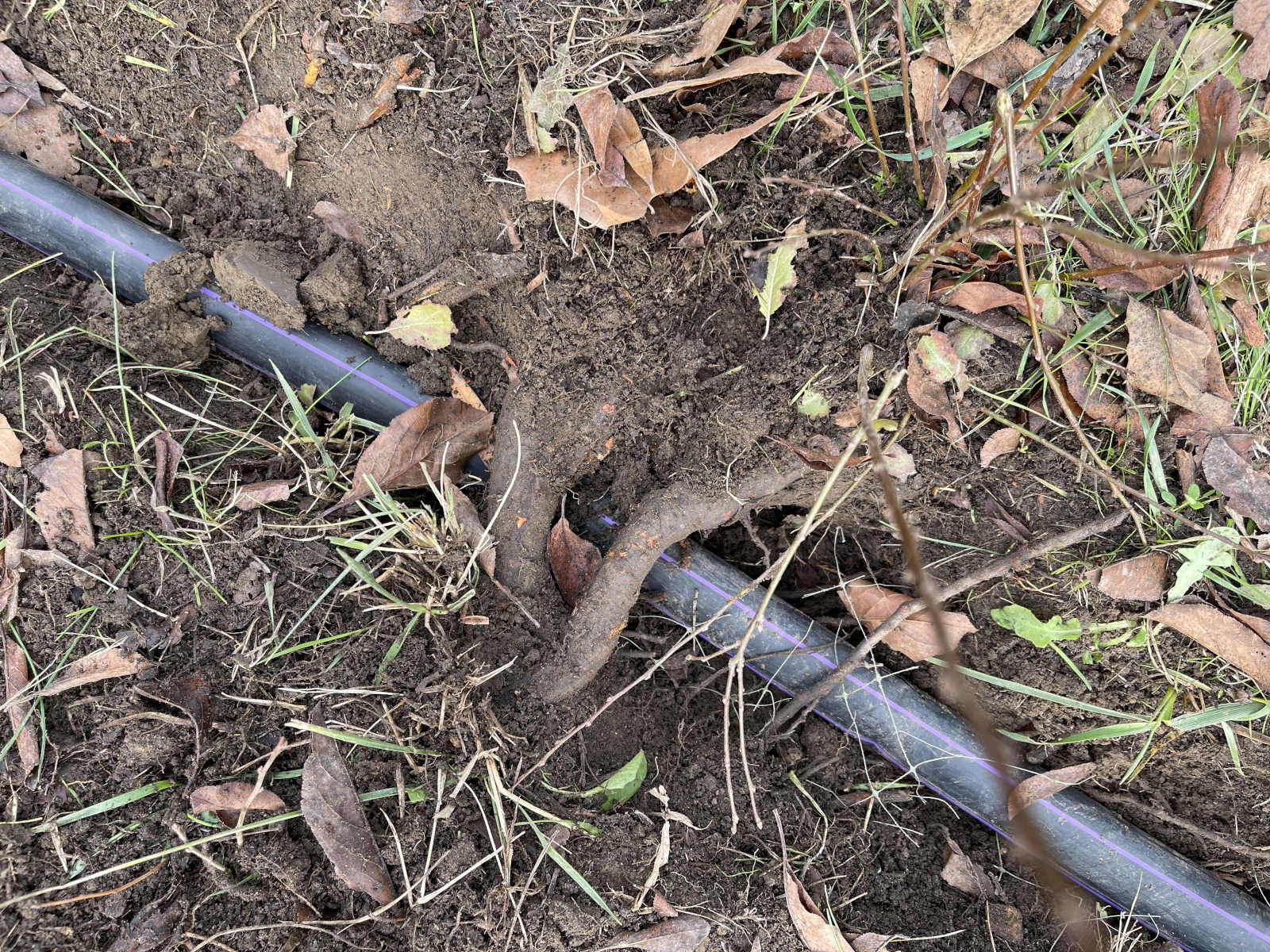


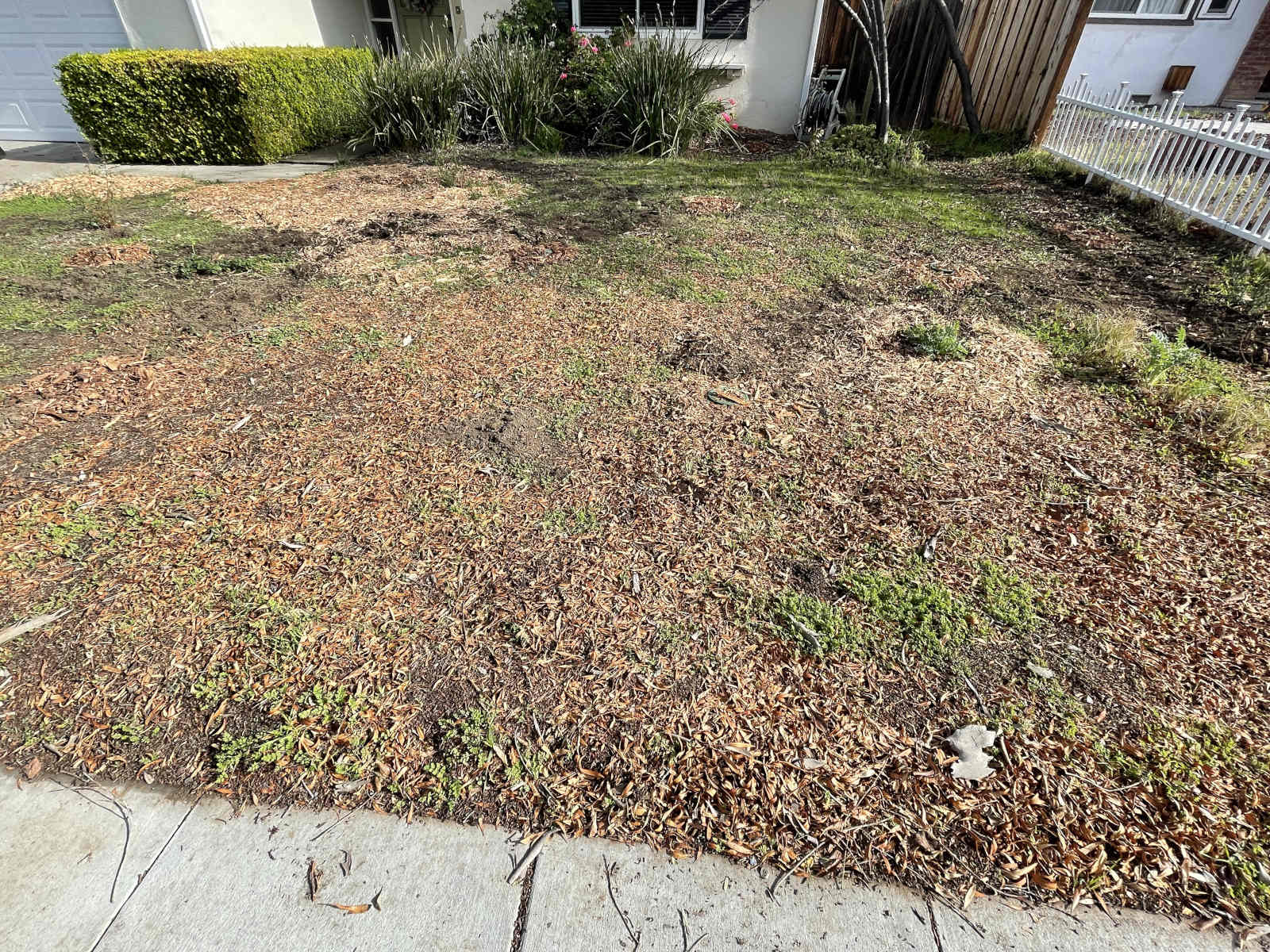
I was worried the mulch basins would stand out but I hardly notice them. After my small-for-now native plants and trees grow to fill the yard, they’ll conceal the basins completely. However, I will need to cut back any dense plants that make the basins inaccessible. Rogue roots can grow inside the basins and clog the water emitters. I’ll have to clear these out when I find them.
The yard doesn’t look like much yet—it’s a work in progress! I’ve made a wish list of additional native plants for this space. Now that the grey water system has been installed I can move onto the next phase—planting. (Go here for an 8-week challenge to plant more native plants.)
Relocating the soil removed to accommodate the mulch basins
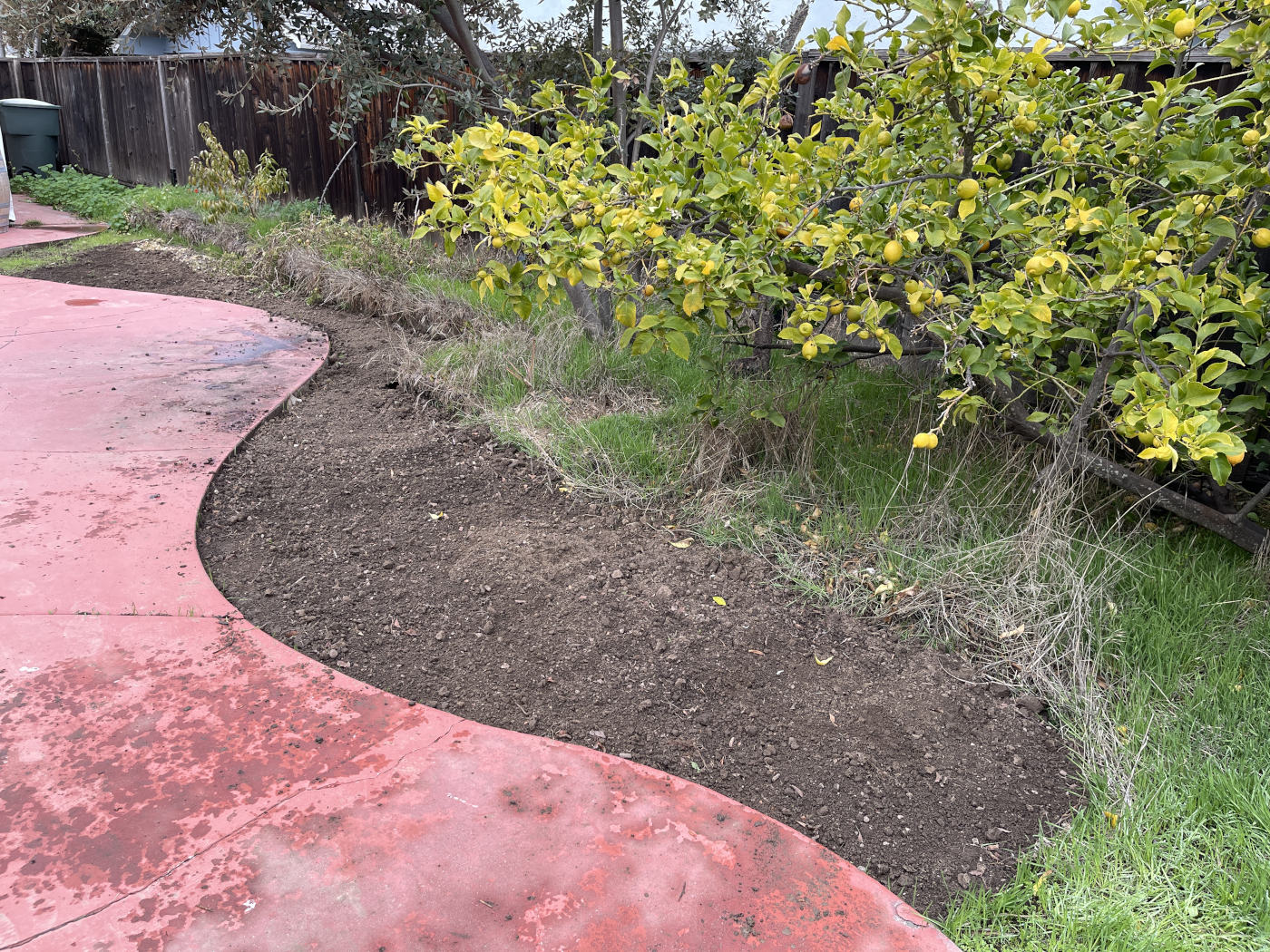
In the backyard this summer, we had part of the patio torn out after discovering that cutting edge Zanker Recycling accepts concrete—and recycles it into new building materials. I’d like to tear out the entire surface eventually but we started with two manageable semi-circle shaped areas for now.
The grey water landscapers transferred the soil they dug out of the front yard to the new empty spaces in the back. We need a bit more soil to completely fill in these areas but much less than we did.




My book won silver for single-subject cookbooks at the Taste Canada awards!
I’ve also won a second-place Gourmand cookbook award in the category of food waste. And my book was shortlisted for an award from the International Association of Culinary Professionals.
Learn more about my book here.