

Made of lentils and rice, khichdi (aka khichuri, kitchri, kidgeree, kitchari…), a porridge-like, one-pot dish, originated in South Asia. Satisfying and nutritious, this comfort food can be light and simple, consisting of only lentils and rice (and water of course), or rich and elaborate, with the addition of many spices, various vegetables and loads of ghee. My daughter MK cooks a lighter version on the weekends to eat for breakfast throughout the week. We enjoy it for lunch or dinner as well.
Although the list of ingredients in the recipe down below may look long, khichdi calls predominantly for dry ingredients that you merely measure (versus chopping piles of food). Once combined, stir occasionally during cooking. A few minutes of hands-on work and 30 minutes of simmering produces a filling dish that keeps in the refrigerator for about a week—simply reheat when hungry.
Having a pot of khichdi on hand provides something like ready-to-eat convenience food without the side effects of ready-to-eat convenience food, such as throwaway plastic packaging encasing nutritionally bereft substances.
Ingredient substitions and garnishes
We cook khichdi with moong dal and basmati rice. If you can’t find moong dal, use red lentils. Don’t have basmati rice? Try jasmine.
Golveda ko achaar (tomato sauce) tastes delicious on the side of this one-pot meal as do chopped fermented hot peppers and preserved lemons. Like a pot of khichdi, after you have prepared a jar of fermented food, you can conveniently pull it out of the refrigerator at mealtime to enjoy.
Ayurveda and khichdi
For many, khichdi serves as an introduction to Ayurvedic eating, a diet based on a natural system of medicine known as Ayurveda, which originated in India about 3,000 years ago. People will sometimes eat khichdi during cleanses and here in the West, the wellness industrial complex is all over the dish. But please don’t associate khichdi with fasting and deprivation! You’ll find a pot of it tasty, nutritious, easy on the stomach, inexpensive and convenient.



MK’s Khichdi
Ingredients
- 1 cup moong dal (split yellow mung beans)
- ½ cup basmati rice
- 1 tablespoon ghee or, if vegan, coconut oil
- 1 tablespoon minced ginger
- 4 cardamom pods
- 2 teaspoons black mustard seed
- 1 teaspoon cumin seed
- 1 teaspoon fennel seed
- 1 teaspoon fenugreek seed
- 1 teaspoon ground cumin
- 2 teaspoon ground turmeric
- 1 teaspoon ground coriander
- 3 bay leaves
- 8 cups water (see Note)
- 1 teaspoon salt, or to taste
- 2 tablespoons lime juice, about 1 lime optional
- ½ cup cilantro for garnish optional
Instructions
- Rinse the moong dal and rice. (See Note.)
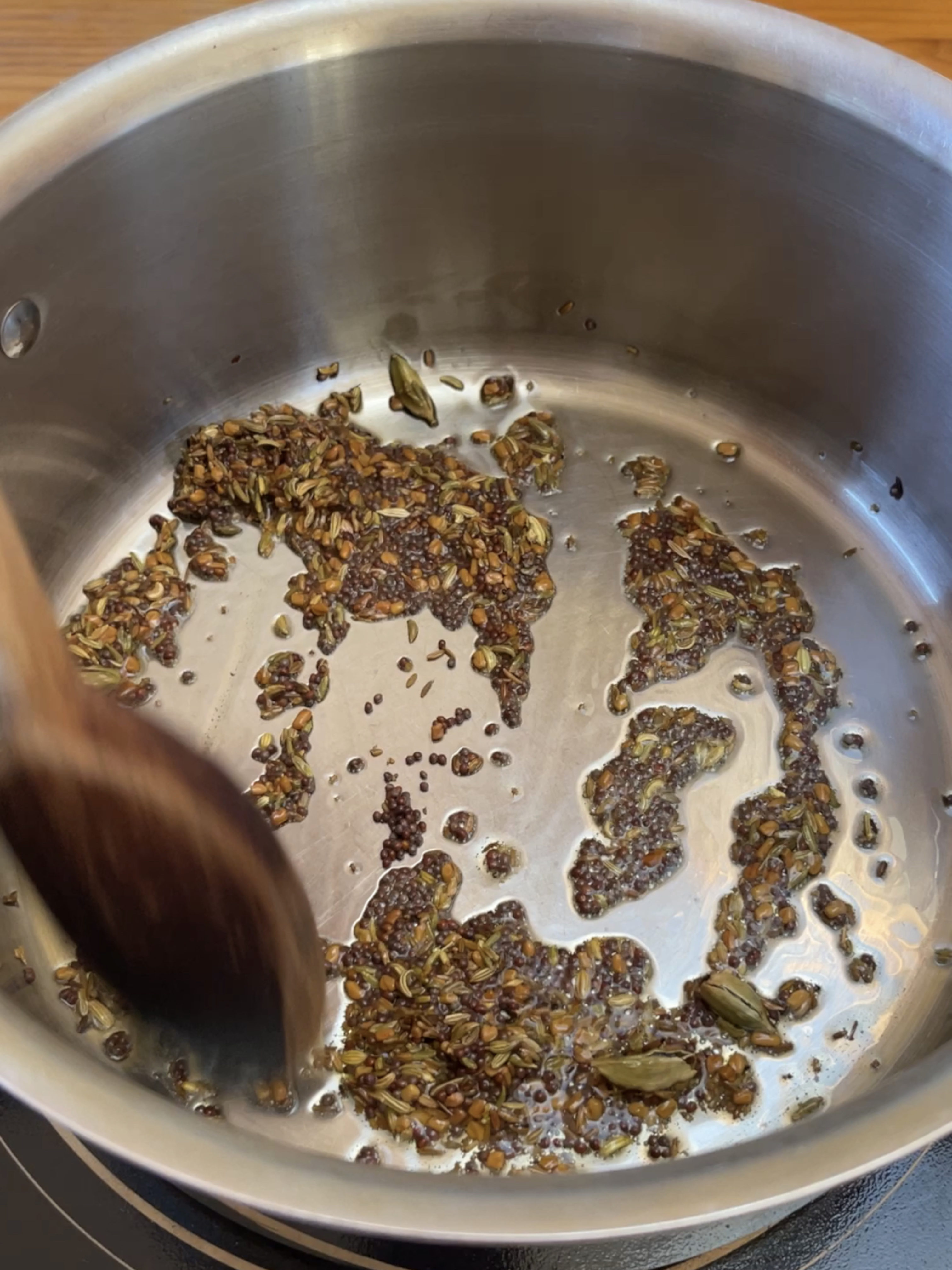
- Heat the ghee or coconut oil in a medium-sized saucepan over medium heat. Add the minced ginger, cardamom pods, black mustard seed, cumin seed, fennel seed and fenugreek seed all at once and stir constantly. As soon as the mustard seeds start to pop (after about 1 minute), add the rinsed moong dal and rice, ground cumin, turmeric and coriander. Stir to coat the moong dal and rice with the spices.
- Add the bay leaves. Pour in the water and stir. Bring to a boil, turn down to a simmer and cook covered for 30 minutes, remembering to stir every 10 minutes. Turn off the heat once the water is absorbed and the moong dal and rice are cooked. Stir in the salt and, if using, lime juice. Garnish with cilantro before serving, if desired.
- Store leftovers in the refrigerator for a week. Reheat portions before serving.
Notes
- If you have plants, keep a bowl or tub in the sink to capture the water you rinse the moong dal and rice with. Save this greywater for watering your plants.
- Add less water for thicker khichdi and more water for a soupier consistency.
My cookbook is a finalist for a cookbook award from the International Association of Culinary Professionals and has been shortlisted for a Taste Canada award! You can check out the book here.
