My daughter Charlotte began brewing iced tea regularly during the first lockdowns. It costs less than store-bought iced tea, requires only minutes to make and you can control what goes into it—and what goes into you. Perhaps just as importantly, homemade tastes delicious.

The short version of the iced tea recipe
Brew black tea much stronger than you would ordinarily drink it hot. Let it cool. Pour some into a glass full of ice cubes (these dilute it, hence the need for a strong brew). Enjoy.
I add lemon juice to mine. Charlotte prefers hers without lemon. She also doesn’t add sweetener as a rule. I like mine with a little bit of added sweetener. Her dad likes lots of sweetener and no lemon. And yet, we all manage to live under the same roof! Adjust the flavor as you’d like.
Save money
This recipe yields a half-gallon or 64 ounces. I use high-quality ingredients: organic loose-leaf tea, a small amount of organic cane sugar, a free lemon from my tree and (essentially) free tap water. I spend less than $2 per jug. This organic brand costs more than double that for a mere 42 ounces in a plastic bottle, which, once emptied, will outlive us all.
After you have brewed your tea, your leaves may have enough life left in them to brew a small amount of additional tea. At this point, I boil water, add my tea ball to the pot and let the tea sit from a few hours to all day, depending on what I’m up to that day.
Save time
Yes, time is money but preparing this drink requires very little of either. I can make a jug of iced tea in about 15 minutes and that includes 5 to 10 minutes for the tea to steep as I do nothing. Preparing iced tea gobbles up less of my time than running to the store to buy it.
Reduce emissions
Shipping heavy bottles of iced tea to the store consumes much more fossil fuel than shipping lightweight tea leaves. Eliminating the plastic bottles that homemade replaces further reduces emissions. (Made of fossil fuel, plastic pollutes all along its lifecycle.)
Reduce your consumption of microplastics
Much food packaging contains harmful chemicals and almost every non-alcoholic bottled beverage in this country is packaged in either a plastic bottle or a plastic-lined can. These plastic food containers shed microplastics—tiny plastic particles—into the food or drinks inside. When we consume the food or drinks, we consume the plastic.
While these unappetizing facts may persuade you to brew your own iced tea, if you brew it with teabags, you may still consume microplastics. Many tea bags contain plastic in the bag’s sealant. The paper of some brands of tea bags contains plastic. And in the case of “silky” synthetic bags, the bags are completely made of plastic. (Synthetic is plastic.)
Consumers pay a premium for these novel and supposedly upscale silk-like bags, one of which can shed billions of microplastics into a single cup of tea. Please do not buy these. According to The Guardian,
For context, a liter of water in a single-use plastic bottle contains 44 microplastic particles; a portion of mussels contains about 90; a kilogram of salt over 600. One study found we consume 70,000 particles annually just from the ambient dust that settles on our food.
Those fancy tea bags? Microplastics in them are macro offenders
You can contact the various tea bag manufacturers to ask them if their bags contain plastic or you could look for loose-leaf and skip the hours of research.
As an added bonus, tea brewed with loose-leaf tastes better than tea brewed with teabags. If you don’t have access to bulk bins or a tea shop that sells loose-leaf tea, you may be able to find a canister of it at the grocery store.
The ingredients
If you choose a very strong black tea, such as puehr, you will need fewer tea leaves than if you brew something like Earl Grey (depending on the brand). You can also brew this with decaffeinated tea. Or green tea. Or a combination of green and black.
If sweetening, choose from granulated sugar, coconut sugar, sucanat, honey and so on.
Instead of adding lemon juice directly to the tea, you may prefer to garnish it with lemon slices or wedges. Or do both. The recipe is extremely customizable.


Charlotte’s Iced Tea
Ingredients
- 2 to 3 tablespoons loose-leaf black tea see Note
- 4 cups water plus more to dilute
- 2 to 4 tablespoons sugar or honey (optional) or to taste
- 2 tablespoons lemon juice (optional) 1 medium lemon
Instructions
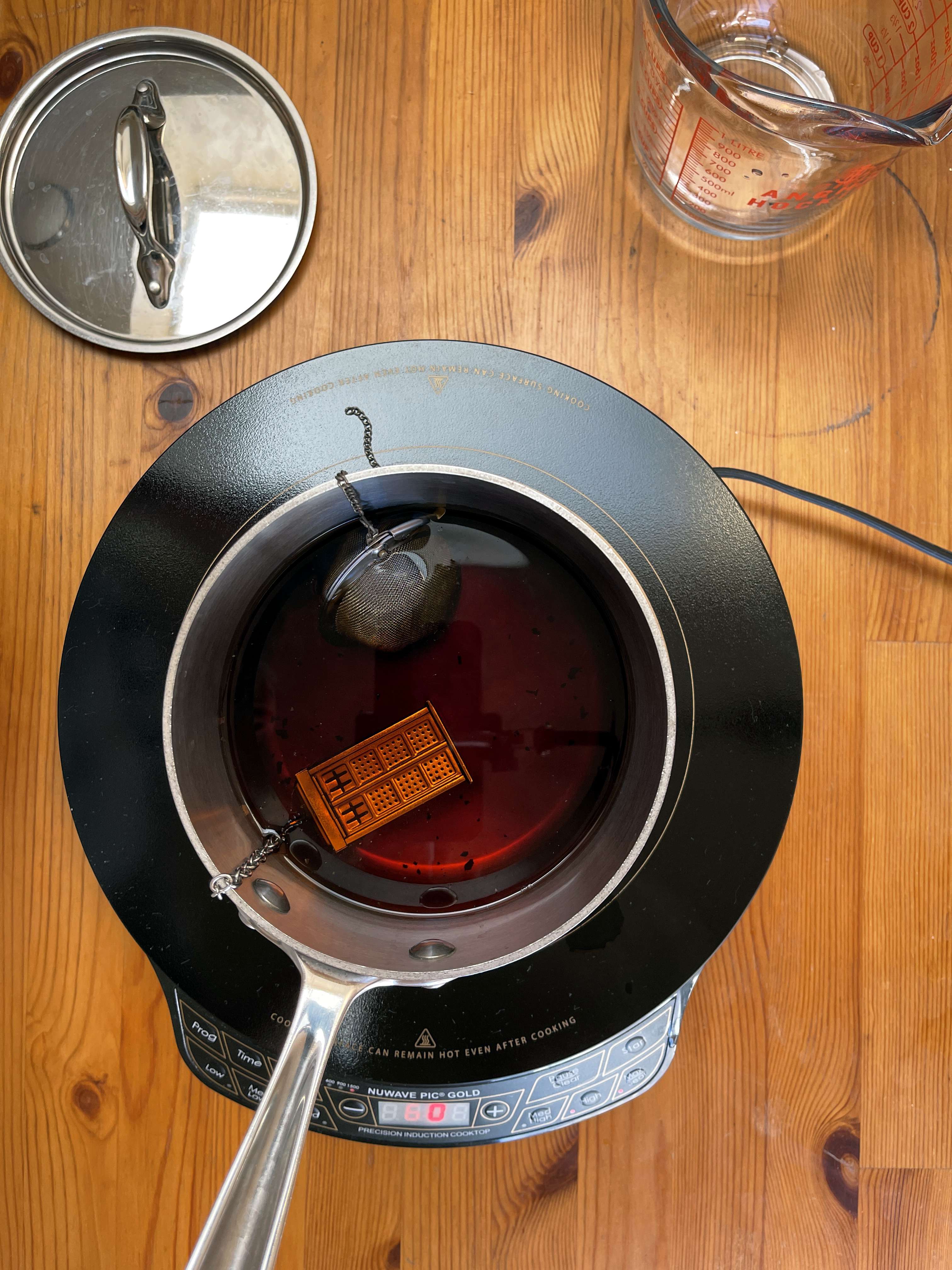
- Place the tea leaves in one or two tea balls. Bring 4 cups of water to boil. Turn off the heat and place the tea balls in the pot.
- After 5 to 10 minutes, when the tea is much stronger than you would usually drink hot, remove the tea balls. If using, stir in your sweetener of choice until dissolved.
- Dilute the tea with 4 cups of cold water. Stir in lemon juice if desired.
- Using a funnel, pour the tea into a half-gallon jug or into a few bottles. Chill in the refrigerator before serving with ice cubes.
Notes
- If you prefer, brew decaffeinated tea or green tea or a combination of green and black tea.
- And now for your next recipe! Brew another pot of tea with the tea leaves but use half as much water. Let it sit for a few hours or until very strong.