

Induction cooking emits no fumes.
Gas stoves consume planet-heating natural gas and fill homes with pollutants similar to what a car’s tailpipe emits: carbon monoxide, nitrogen oxides, particulate matter and formaldehyde. These pollutants have been associated with a host of respiratory and cardiovascular diseases. In this study, a gas stove and oven running for an hour raised nitrogen oxide levels so high that they would be deemed illegal outdoors. And the smaller the home, the quicker the pollution reaches these unhealthy levels.
Gas stoves also emit methane gas, the primary compound in natural gas, the second or so before a flame ignites on a burner. Methane is a greenhouse gas about 80 times more potent than carbon dioxide over a 20-year period. But a gas stove emits methane even when the stove is turned off, according to a new Stanford study. The study found that loose couplings and fittings between the gas pipes and a stove leak methane and these leaks account for about 80 percent of the unburned methane gas that stoves emit. (Read more in the New York Times here.)
So why do we love our gas stoves so when they seem to hate us? Enter marketing
Back in the 1930s, the gas industry sought to convince home cooks to abandon their electric and wood-fired stoves for gas versions. The marketing line “Now you’re cooking with gas” did the trick. Nearly a century later, that line still works. The gas industry now pays Instagram influencers to share posts of themselves #cookingwithgas.
I am obsessed with food. I write this food-themed blog. I teach workshops about food. I have written a cookbook. And although I believed the gas industry’s line about the superiority of gas for years, I’m here like your wizened aunt to tell you that it’s just not true. You can cook fabulous food without gas.
Induction cooking
If you are in the market for a new stove, consider induction. Induction cooktops use magnets to heat pots and pans—and their contents—very quickly. You can heat up water on an induction cooker in half the time of a gas burner (I’ve measured and tested it). The burners themselves do not heat up and they do not give off fumes. When you remove your pot, the heating stops automatically. Induction cookers also regulate the temperature and adjust accordingly.

You may not be ready to replace your stove just yet but you’re still likely thinking about those tailpipe-type emissions. One solution is to buy a portable induction cooker for now. And you could definitely do this if you rent your home and have no say regarding the types of appliances you use. Depending on how much you cook and the cost of the model you buy, the money you save on gas every month could soon pay for a portable induction cooker.
When I first discussed on Instagram my induction cooking adventures, several people pointed out that the magnets in these cooktops might interfere with pacemakers. The British Heart Association suggests that people with pacemakers stand two feet away from an induction cooktop when using them.
The portable induction cooker I’ve been using
I’ve used the induction cooker model pictured below fairly extensively. (Go here for more details on this model.) Last year, the city of Sunnyvale lent me this model to use during an Earth Day food waste reducing workshop I taught for the city (I was able to keep it for a month). Early in January this year, I borrowed the same model from the library for three weeks. By borrowing one of the library’s 14 induction cookers, patrons interested in switching to clean induction cooking can test drive a cooker before taking the plunge.
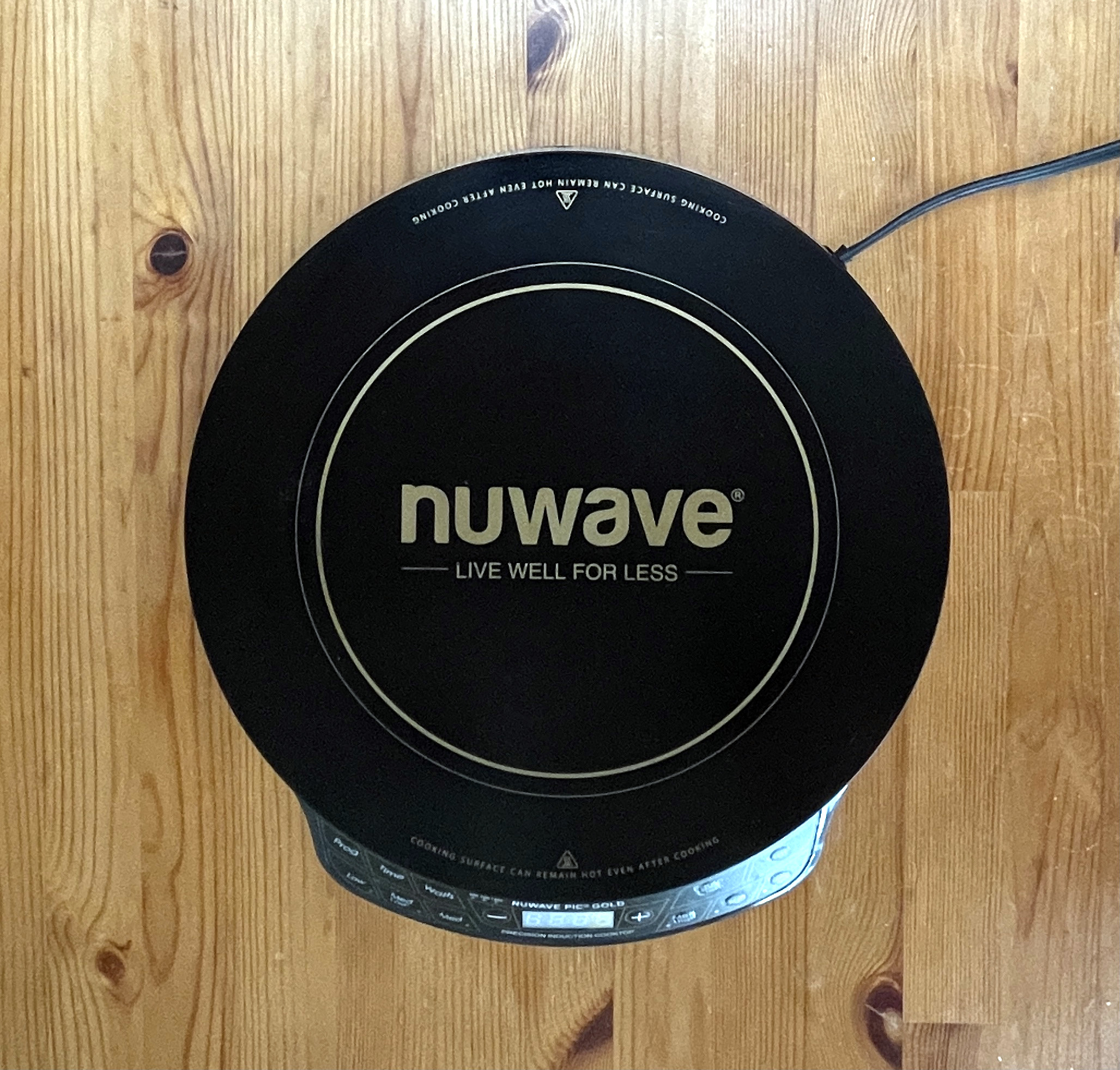

Right now, my energy provider is offering a $50 rebate on induction cookers bringing the price of this one down to about $50. Look for rebates on appliances where you live at Energy Star.
I’ve also used a ceramic glass induction cooker similar to this one (but I don’t remember the brand). I prefer the look of these sleek models but have more experience with the cooker in this post.
Pots, pans and recipes compatible with induction cooking
I mostly cook with cast iron, stainless steel and enameled cast iron pots and pans. (Read more about choosing pots and pans here.) I do have one fancy copper pot (it was a gift) and an inexpensive copper-bottom pot. Neither of those works on an induction cooker. To figure out if your pots and pans will work, try to stick a magnet to them. If it sticks, they’ll work. I love my pressure cooker but have been afraid to try it. From what I’ve read, they work on induction cookers with a few minor adjustments to the cooking settings.
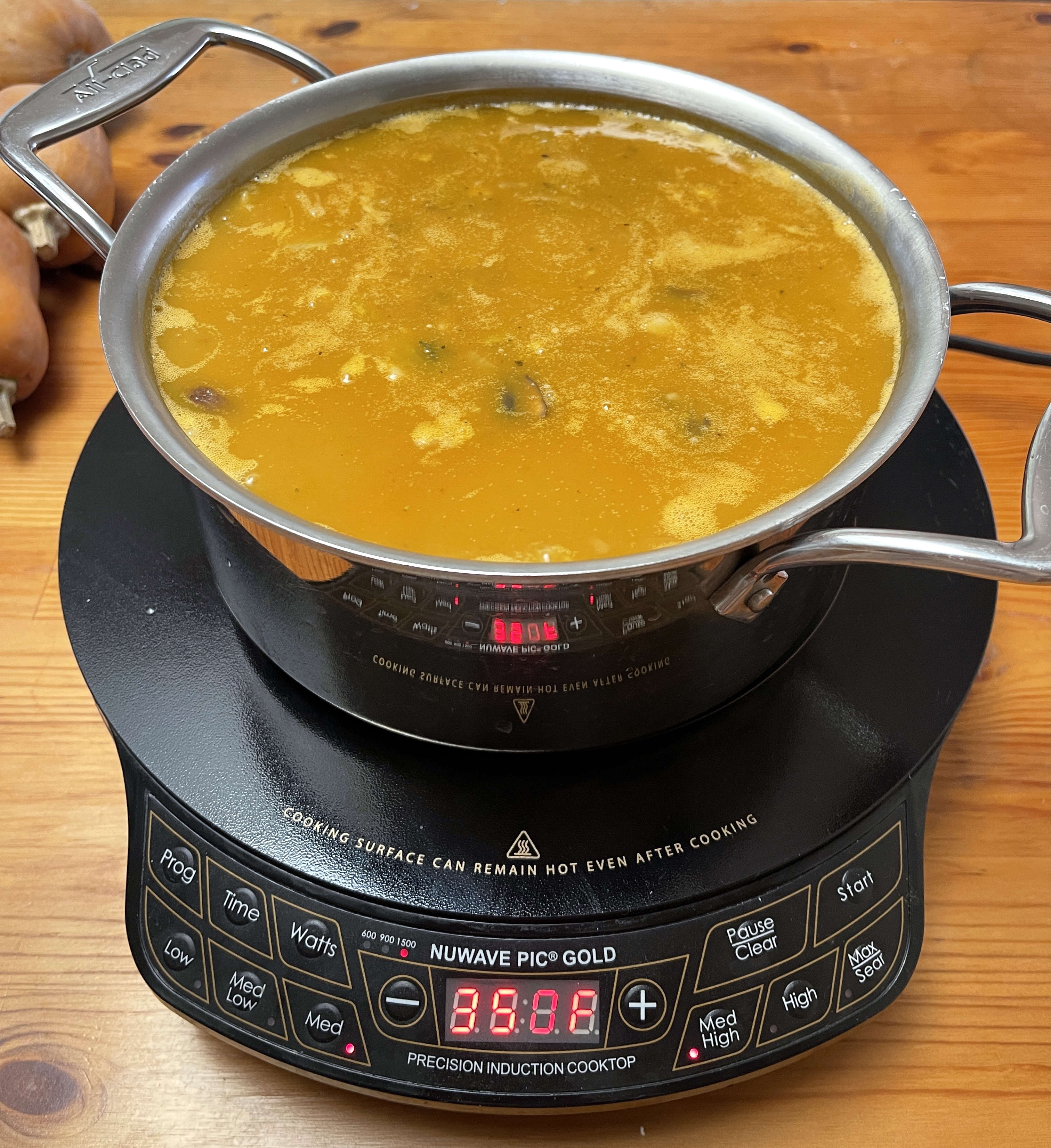
So far, everything I’ve cooked on the induction cooker has turned out well—the soup and sourdough pancakes below, for example, and also stir-fries, grains like oatmeal, pasta and rice, fried rice, shredded vegetable pancakes, omelets, steamed vegetables, mashed potatoes, mushroom gravy, sauces like béchamel and so on. Popcorn in my stainless steel Whirly Pop pops nicely (aluminum wouldn’t). An inability to pop popcorn would be a deal-breaker.

A cleaner cookstove fundraiser
Speaking of clean cooking, I’m holding a fundraising Zoom workshop on Thursday, February 24th, 2022 at 4pm Pacific Time: Make Soup, Not Waste. Pay what you like—a mere dollar will secure a spot! All proceeds will go to Solar Cookers International, which distributes solar ovens in developing countries—and saves lives.
Nearly one in three people on the planet cooks over open fires or outdated stoves, fueled by polluting wood principally but also charcoal, animal dung and agricultural waste. Because these fires and stoves burn inside people’s homes, families breathe in black carbon, carbon monoxide, carbon dioxide and methane. Additionally, women also miss out on opportunities to work or attend school, as some spend up to 20 hours or more every week gathering wood. (Read more about the importance of improved clean cookstoves here.)
Don’t grocery shop for this cooking workshop!
Bring a pot and the random vegetables you find in your refrigerator and pantry. We’ll make soup together over Zoom in this cooking workshop. When you view the registration page, you’ll find the list of basic workshop materials you’ll need.
You can check out some of my previous cooking fundraisers here, here and here.
