


The short version of this blog post: find a solution using items you have on hand. You’ll save money and time and prevent more garbage from clogging our overburdened landfills or oceans.
Here are five examples of simple ways I avoid using disposables.
1. How to bake without parchment paper
Single-use method: Use sheets of parchment under pizzas, cakes, cookies, pastries and more. Toss them after one use.
Non-disposable solution: If you bake cookies or a cake or brownies, simply grease the baking sheet, cake pan or baking tin. I sometimes use olive oil. Yes you get oil all over your hand. Rub some of that into your skin to keep your hands soft. Wipe the rest on a dishtowel or unpaper towel (that’s a bonus example).
Recently, I dried some apples in the oven. I didn’t want them to stick to the cookie sheet I had planned to spread them out on. We do have Silpats but I’d rather not use them. For one thing, I hate washing them. And I just don’t know how inert they actually are. (If you do, please let me know.)
My solution? I put a cooling rack inside my cookie sheet and arranged the apple slices across that. With the warm air of the oven reaching the undersides and tops of the apples evenly, the slices dehydrated quicker than when I have placed the apples directly on the cookie sheet.


2. How to sweat a charred pepper without a plastic baggie
Single-use method: In some commercial kitchens, after charring peppers, cooks with then put the steaming hot peppers into a plastic baggie and close it, trapping heat and moisture which causes the charred skin to blister. This makes removing the skin with a knife edge very easy.
Non-disposable solution: Put the hot peppers in a glass, ceramic, metal, cast-iron (i.e., just about anything that isn’t plastic) container or pot with a lid. If you don’t have a container with a lid, put the hot peppers in a bowl and put a plate on top of it.


3. How to roast beets without tinfoil
Single-use method: I love roasted beets and the beet pickles I make with them. In the old days, I wrapped them in tinfoil before roasting them in the oven. The tinfoil helps prevent the beets from drying out and keeps the roasting pan clean. Occasionally I would save a piece of tinfoil after unwrapping the beets but usually I ended up throwing out a bunch of beet juice-covered tinfoil.
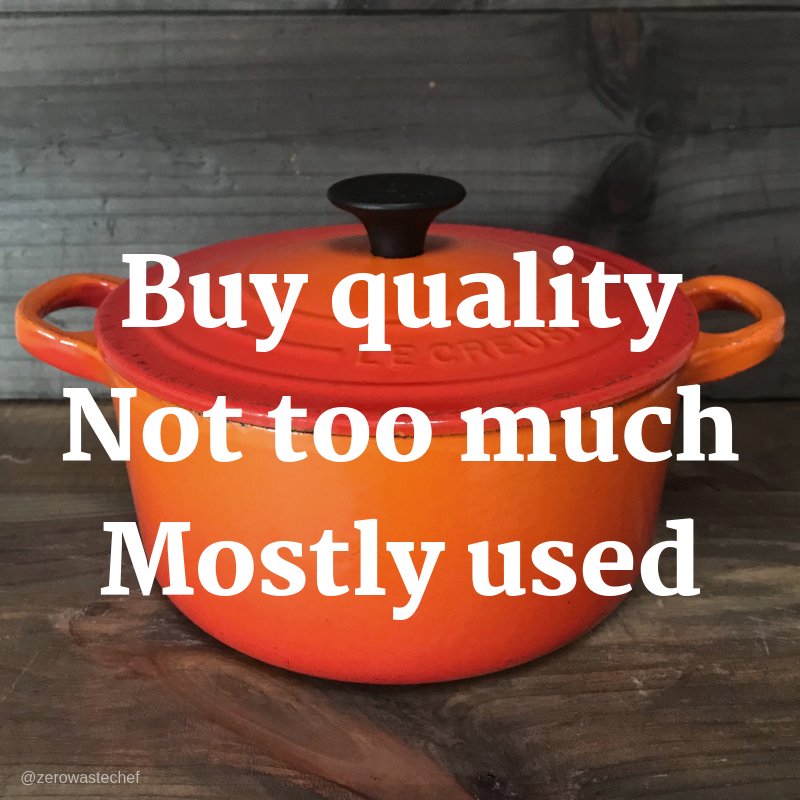
Non-disposable solution: One day after I had gone zero-waste, I wanted to roast some beets. But how to do that without tinfoil? I wondered if a Dutch oven would work. It did! Had I not gone zero-waste, I never would have bothered to figure this out. But my beet craving necessitated I find a solution.

4. How to strain stuff without cheesecloth
Single-use method: Strain scrap vinegar or coconut milk or whatnot with cheap cheesecloth from the grocery store. Lose your mind trying to untangle the fabric for reuse. Throw it out.
Non-disposable solution: Use a cloth with a finer weave and wash it. A friend of mine gave my some very fine gauzy fabric a few years ago and I use it constantly to strain food.


5. How to store half a melon without plastic wrap
Single-use method: Pull a sheet of plastic wrap from a roll and suffocate your melon with it.
Non-disposable solution: Place the melon on a flat dish, cut side down.


I didn’t have a flat plate large enough for the very big, very delicious and very juicy melon pictured above—my plates all have slightly concave bottoms—so I used a pie plate. The melon kept perfectly fresh in the refrigerator and we ate it within several days.
I store onion halves the same way.

Now, the onion cut-side-down on a plate in my refrigerator caused a small controversy over on Instagram. (Perhaps I should stick to politics on there!) Some people said they had found a half an onion in the refrigerator caused everything to smell like onions. Others said the onion odor does not escape from the cut side when it sits unexposed on a flat surface.
If you worry about the smell, reach for a jar to store the onion. If it won’t fit, you could chop it up first. On the one hand, it’s convenient to have those onions already chopped up in there. On the other, I prefer the taste and texture of onion chopped right before I cook it. I’ve already started one controversy for today so I’ll leave it at that. (I’m starting to feel like a Big Endian.)
My mom, who grew up without plastic wrap, wonders how my sister and I survive without the stuff. I wonder how we all got hooked on it in the first place. (Actually, I don’t wonder. I know. Marketing.) But you can kick some single-use plastic and other disposables quite easily: cover bowls with plates, hoard glass jars to store leftovers, freeze food in wide-mouth glass jars, chill pie dough between two plates, wrap a sandwich in Japanese furoshiki and so on.