


Shop small could mean shop less. And I do suggest we all do that. But in this post, by shop small, I mean shop at small independent businesses—the local bookstore, bike shop and bakery. Why?

1. Less packaging waste
Which came first, our addiction to convenience or the convenience of online shopping? Either way, this addiction has created a boon for online retailers—from clothing, to groceries, to meal kits with each ingredient individually wrapped, all delivered neatly to our door, no human interaction required. All of this convenience comes with literally tons of packaging—and in cities like San Francisco, higher garbage fees to handle all the waste.
If you buy online from a small business, such as an Etsy shop, it will more likely heed your no-plastic-and-less-packaging-please instructions. If you buy in person, you can bring your own bag or container to the store and eliminate the packaging altogether.
2. More efficient transportation
Locally owned stores receive many deliveries from one truck whereas a big online retailer ships out many deliveries all over the place. Think 100 items shipped to 100 addresses versus 100 items shipped to one address. Yes, you’ll need transportation to the store to pick up your item. But you’ll find most local businesses clustered together in city centers, not on the outskirts of town (where big box stores tend to be), so you may be able to take public transit, ride your bike or walk to the small business and ideally, also run a few errands at once.
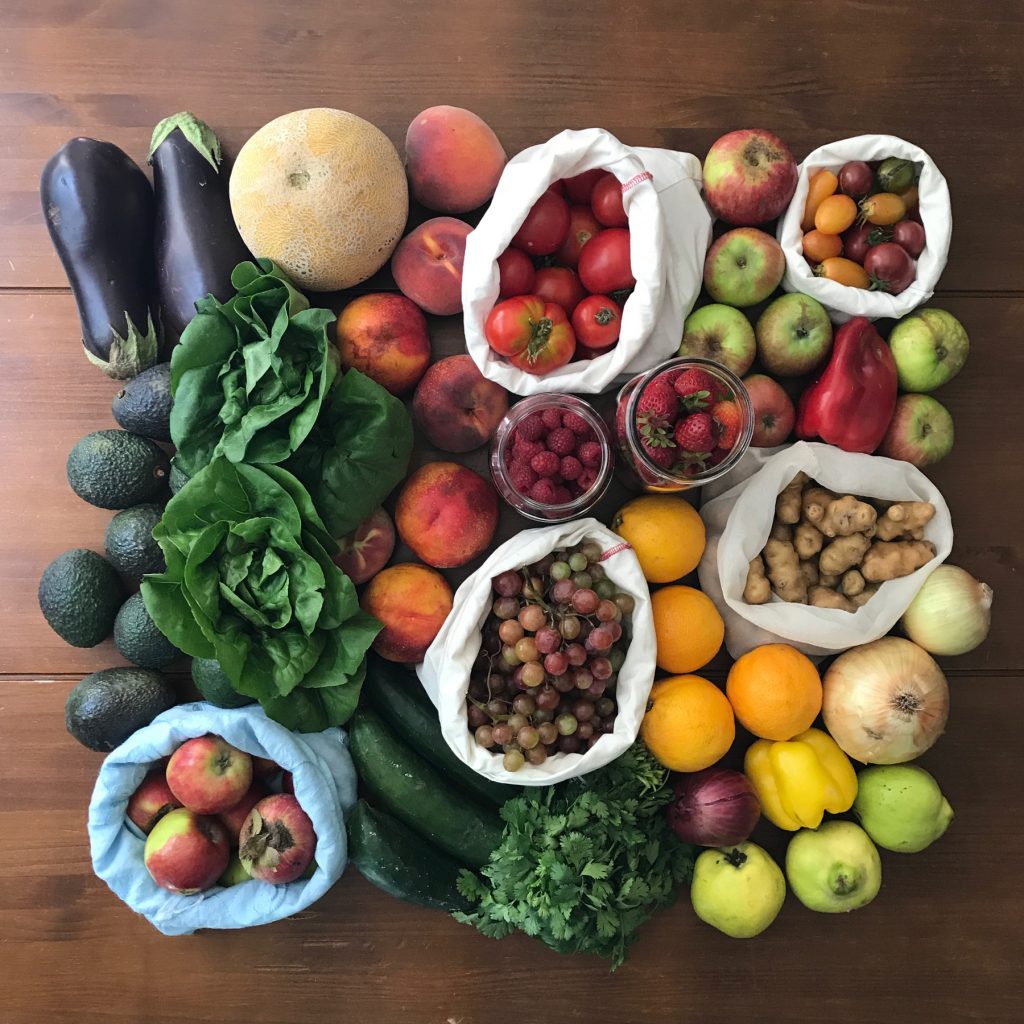
If you can buy local products in local stores, you slash the transportation emissions even more. Food is a great example. I live in Northern California. I can practically see the apple orchards from where I live but I cannot find a locally grown organic apple in the big chain grocery stores here. They come either from Washington State or even farther—Chile. When I shop at the farmers’ market, most of the food was grown less than 100 miles away.

3. More likely to fulfill your “weird” requests
Want to fill your jars up with bulk foods, provide your own container for takeout or bring your own mug for a cup of tea—all without the staff either flat out refusing or insisting that they must first call head office to seek permission? Go to a small business. Small businesses will more likely do whatever it takes to retain their customers. The big guys, not so much.
4. More money injected into your local economy
According to IndieBound, an association of independent local bookstores, when you shop at a small, local business, for every $100 you spend, $52 stays in the community. Spend $100 with the big guys and a paltry $13 remains in your community. Spend that $100 online remotely and no money stays in your community. No sales taxes are collected to pay for, you know, building roads and funding schools and keeping hospitals open and paying firefighters… Local businesses also create local jobs—and usually higher paying ones. Those employees go on to spend their paychecks in the community.

5. Stronger community
When I shop at the farmers’ market, I run into neighbors and chat with vendors. I feel a sense of community. You don’t experience that shopping online or passing by streets lined with boarded-up storefronts. Local independents also often get involved in the community—sponsoring baseball and soccer and hockey teams, taking part in local events and celebrations and donating to local causes. And they are very generous. According to Indiebound, “Local businesses donate to charities at more than twice the rate of national chains.”
6. More diversity
Every small, local café is unique—the beverages, the food, the décor. Every Starbucks is identical. Whereas big corporations make all their buying decisions from centralized head offices, rendering their stores homogenous, small businesses all differ in their offerings. Which would you rather see in your neighborhood? Corporate America or independents that reflect your town and region?
So, if you want that locally owned, quirky coffee shop down the road—the one that serves its to-go coffee in ceramic mugs that customers borrow and return—to be there when you need a quiet place to escape to, buy your coffee there rather than at a Starbucks.