

Unless you’re like Gandhi and own fewer personal possessions than you can count on two hands, you likely have stuff cluttering your home—perfectly good stuff that someone else wants. Recent graduates, new parents, growing kids—they all have needs, perhaps for the items you no longer want.
I belong to a zero-waste meetup group here in the San Francisco Bay Area and this past Sunday, hosted a community swap. People brought the best stuff. I was astonished!


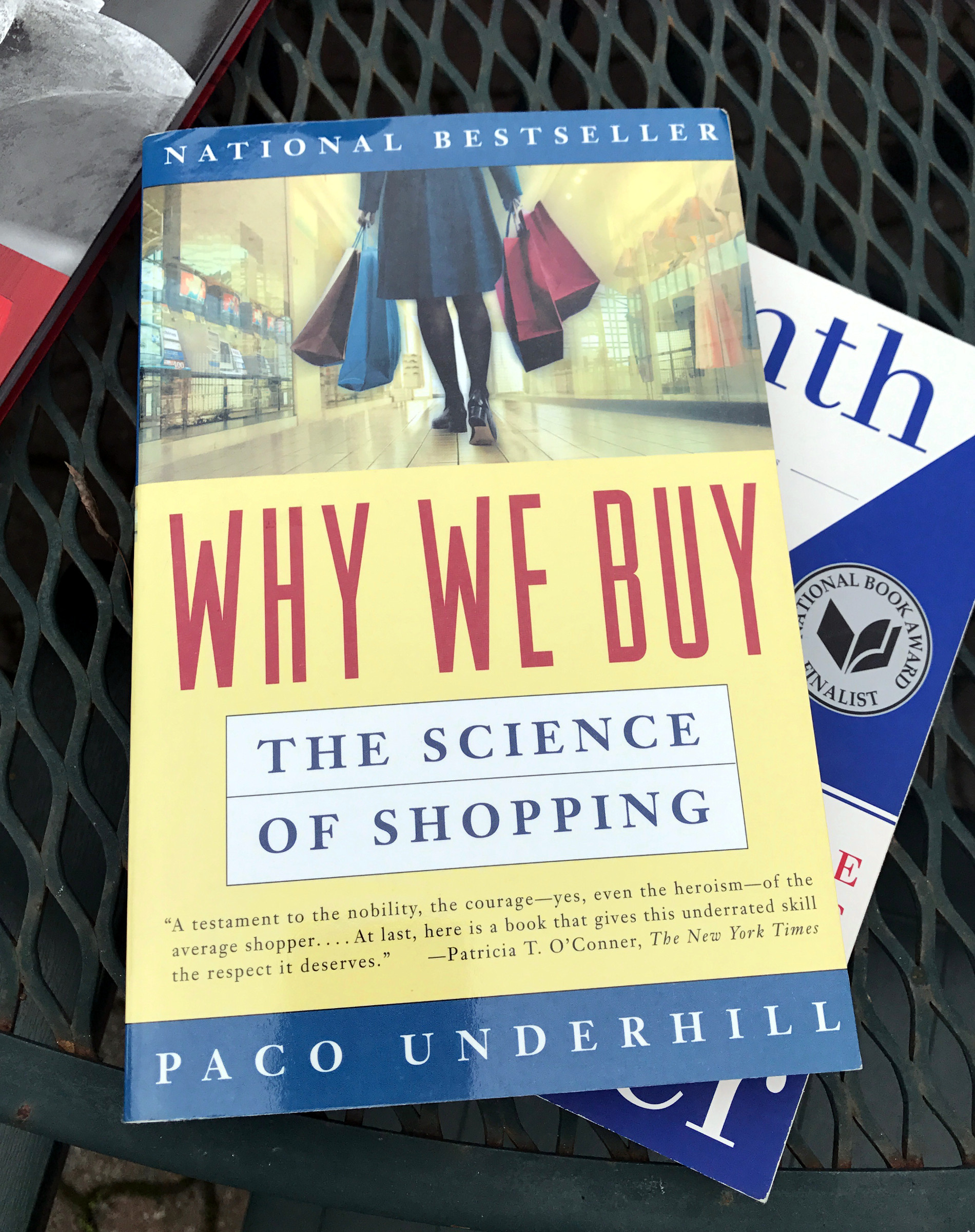



Check out my haul!

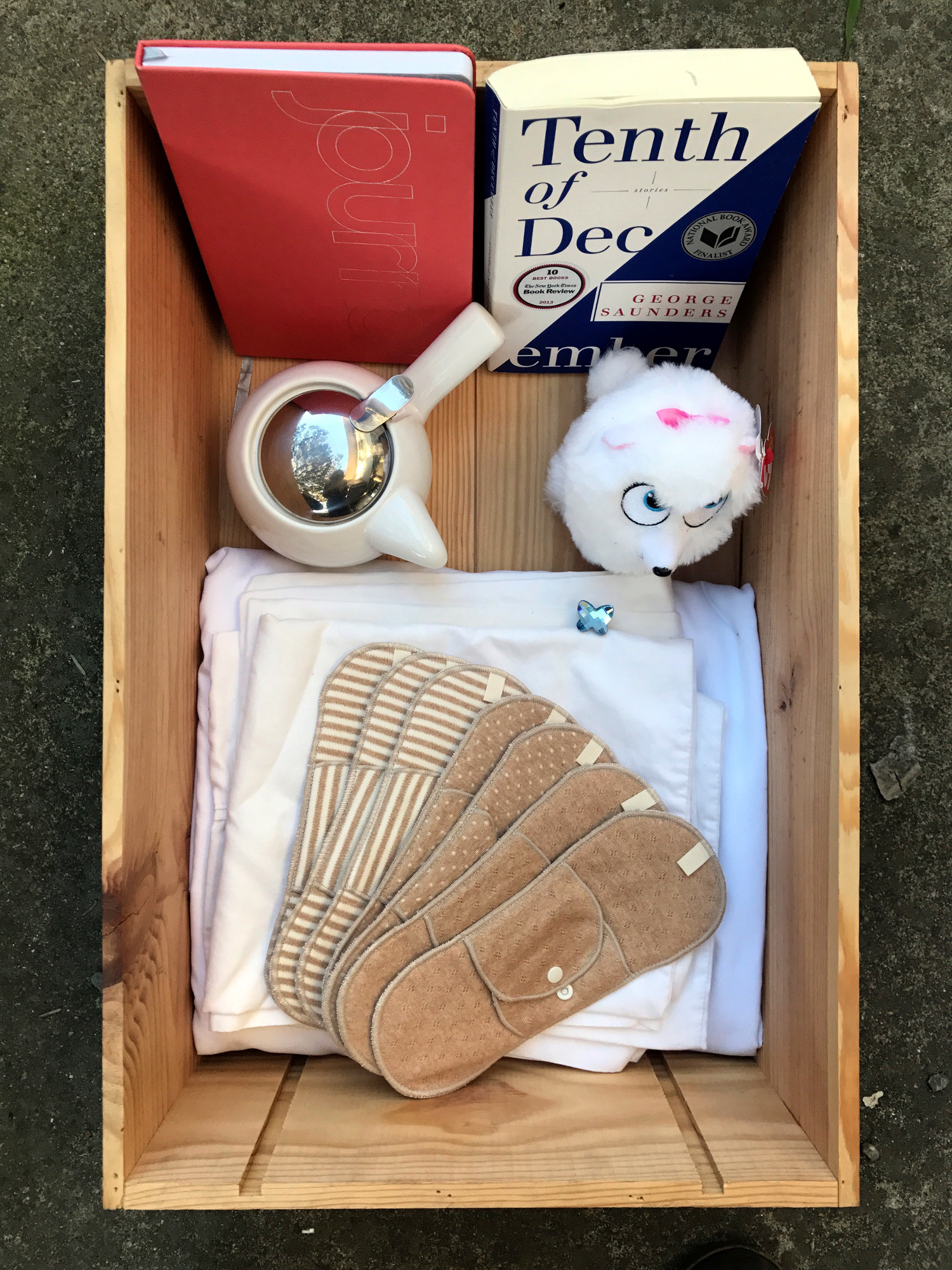
- I’ll use this wooden crate to transport tools, supplies or food to workshops.
- The blank journal will go to my daughter Charlotte.
- I had Tenth of December on my wish list, so I was pretty excited to snag that.
- I drink a lot of tea. The white Bee House teapot contains a metal infuser inside for brewing looseleaf.
- Charlotte gets upset when our cat Bootsy attacks the stuffed bear she gave me for Valentine’s Day when she was four, so I found him a replacement. Bootsy checked it out soon after I brought it home and then curled up next to it.
- I’ll give the little Swarovski crystal butterfly pin to Charlotte for her birthday. She likes pins and collects them. But if she doesn’t like this one, I’ll bring it to the next swap.
- At our next meetup, we plan to sew a pile of cloth produce bags. The thin sheets I asked for in the pre-swap—and received—will make many.
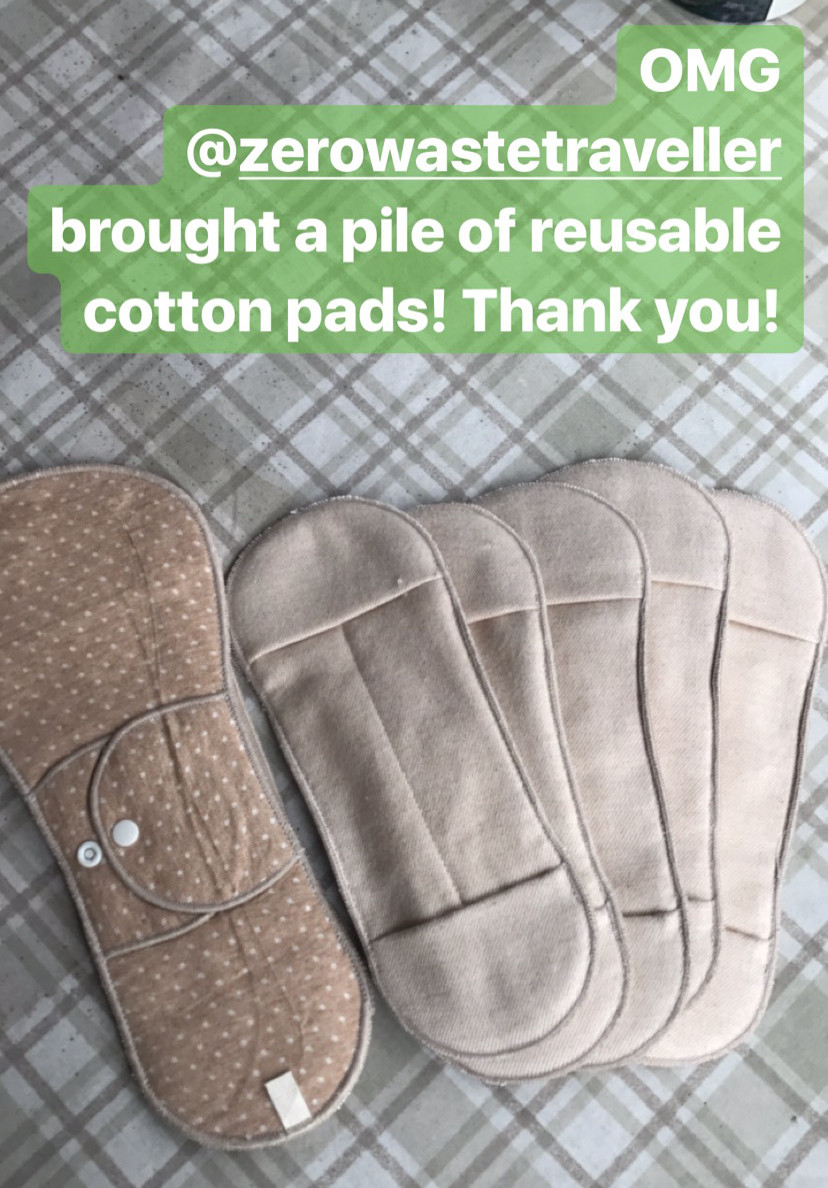
- Reusable organic cotton pads cost a bundle in stores or online. They are worth the price—they pay for themselves eventually, reduce trash in landfills and conserve resources. But free is even better! I took seven of the many pads up for grabs at the swap. They were brand new. (I know people will ask where to buy reusable pads, so…check out LunaPads and Glad Rags. Or sew some. Look here for patterns.)
- I also took the pile of pale green plates (see the pic below). They will come in handy for workshops.
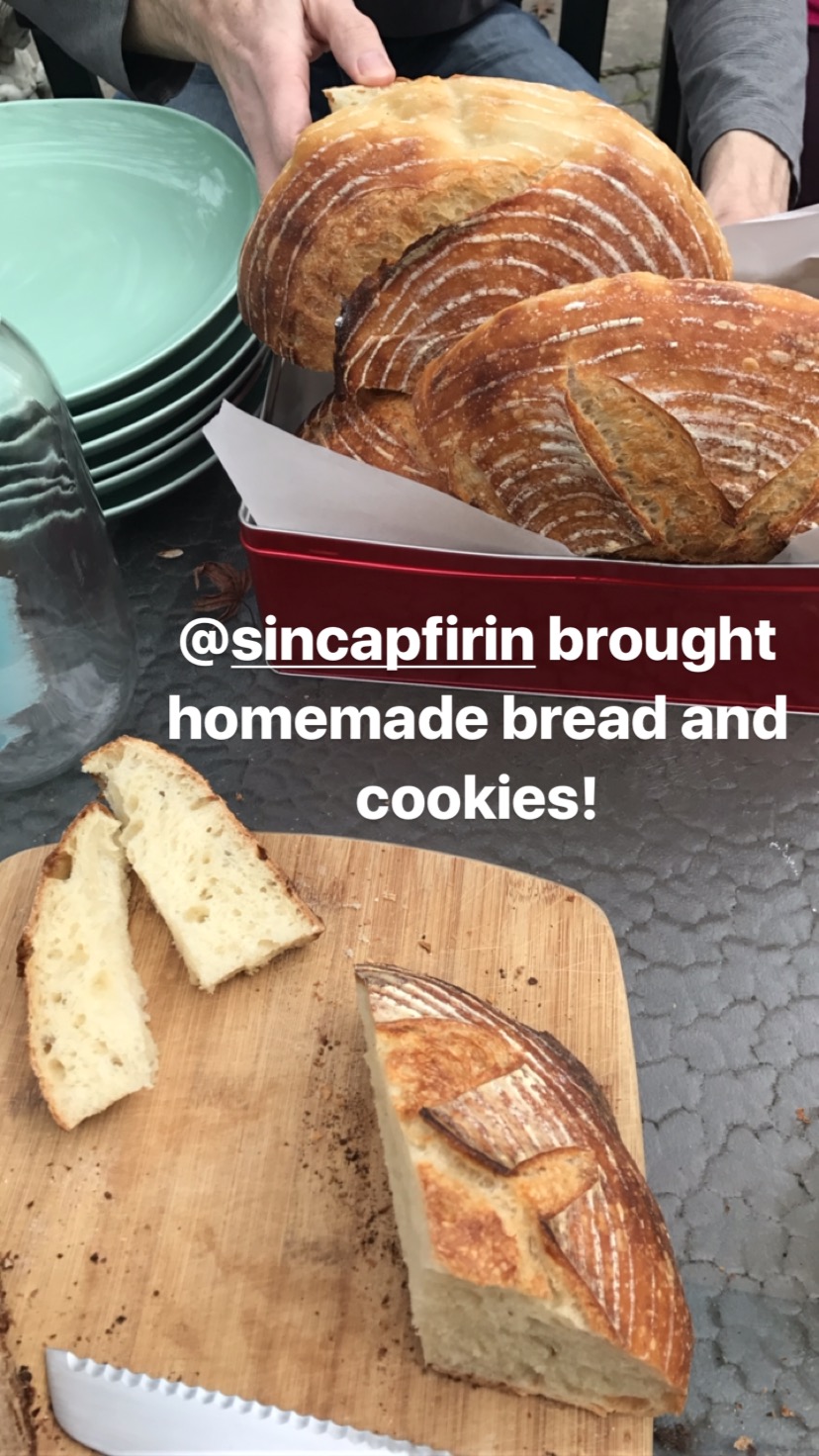
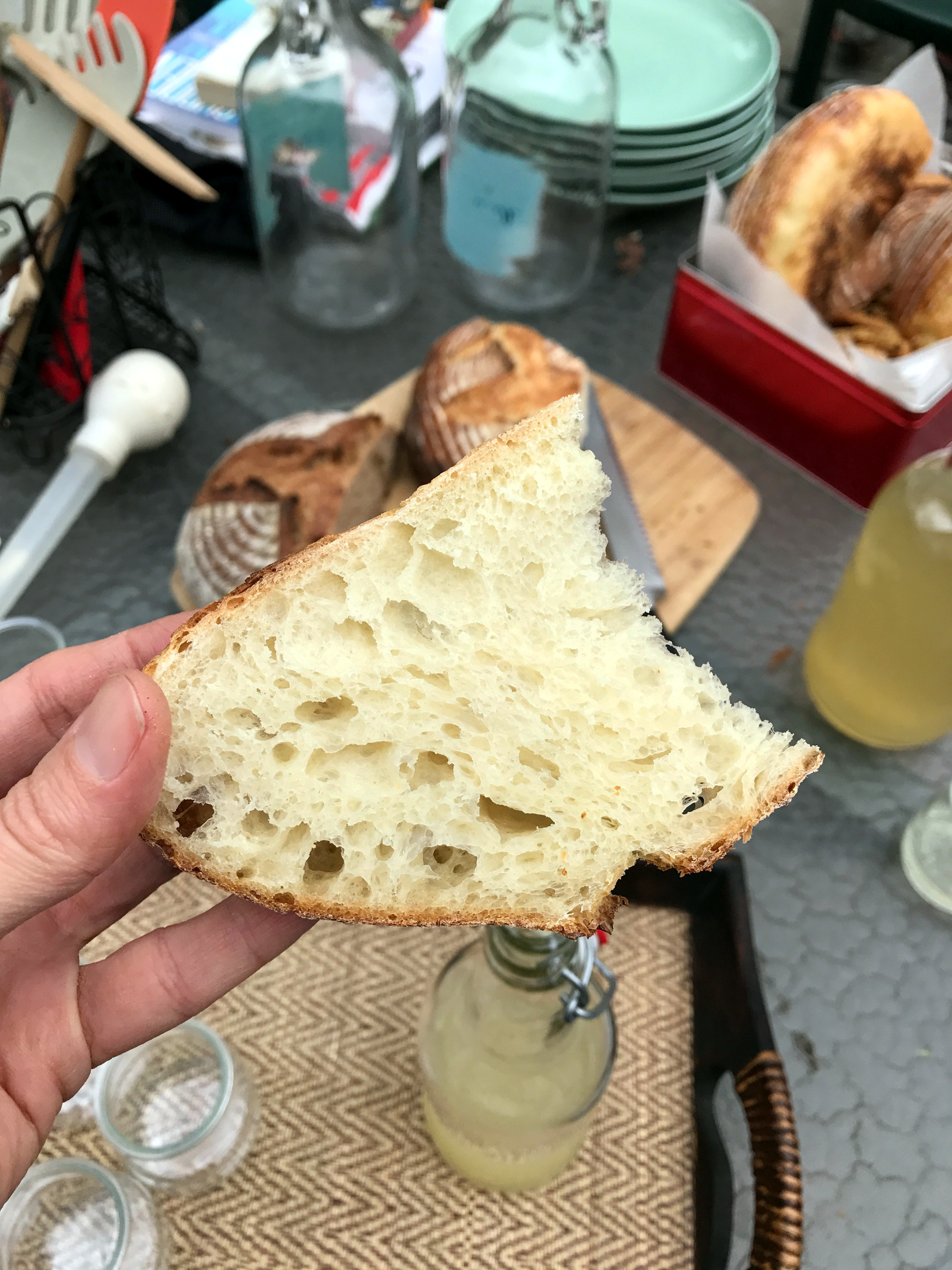
- I ate a bunch of homemade sourdough bread and cookies not made by me.

How to plan the swap
1. Decide how you’ll exchange the stuff
Among our small, polite and well-behaved group, no fist fights broke out over hot items up for grabs. If you have a bigger group, you may need some rules. Will you auction things off and then split the money evenly among everyone at the end? Create a fake currency? Will it be a straight-up barter system—“I’ll trade you this silk scarf for that loaf of bread.”
2. Pick a date and time
Ask prospective attendees what date and time works best for most of them. Also keep in mind that everyone will need some time to clear out their stuff.
3. Pick a place
If it’s a small swap like ours was, and you know all the attendees, you can hold it at your house or in your yard on a nice day. If you have a larger group, find a park or, if you have contacts at a school or church (your kids attend the school or you belong to the church, for example), ask if you can hold it there.
4. Encourage pre-swap swapping
On our event’s meetup page, I asked people to list stuff they had and stuff they wanted. This worked out so well. Someone said she wanted a small cast iron pan for cooking one egg. Until I read that request, I had forgotten I had that exact item. So I dug it out, cleaned up the rust and seasoned it. (Read how to maintain and revive cast iron here.)
5. Figure out where to spread everything out
If you don’t have a bunch of tables, sheets on the ground will do.
6. Figure out what to do with what’s left at the end
Some of our attendees took their stuff back home and some took it to Goodwill. I told people to leave some with me. My neighbor who scored the pressure cooker made a Goodwill run the next day and dropped off all the boxes sitting by my door.
Finding Attendees
It took me no time to organize our swap since I belong to an active meetup group of totally awesome people. I simply picked a time and place and posted the event online. If you don’t belong to a similar group, you could find prospective participants through:
- Your neighborhood. If your neighborhood is active on NextDoor, post your swap on there. Turn it into a block party or potluck while you’re at it.
- Your apartment complex. If your complex has a communal area, hold it there.
- Your place of work. Set it up one day during lunch. My boss mentioned the other day she has an ironing board she doesn’t need. I’m snagging that for our next meetup, when we’ll make beeswax wraps!
- Your place of worship. Hold it after service.
- Meetup. Search for events in your city. Or set up your own meetup group and start meeting people. I’ve met the nicest people through my meetup group!
Ideas for Items to Exchange
This is by no means a comprehensive list.
- Books: literature, cookbooks, children’s books, coffee table books, textbooks
- Clothes and footwear: jeans, sweaters, pajamas, coats, hiking boots, running shoes
- Kitchenware: plates, glasses, utensils, cookware, measuring cups, jars, small appliances, napkins, table cloths, dish towels
- Household goods: tools, seeds, plants, power strips, phone chargers, electronics, camping gear, sporting equipment, tarps, sheets, fabric, notions, picture frames, pet supplies
- Toys: games, puzzles, LEGO bricks, Meccanno sets, stuffed animals, art supplies
- Food: cookies, jam, bread, starters for fermented foods, garden surplus
- Skills: lessons of all kinds, such as knitting, cooking, music, dancing, skating, photography
Benefits of Organizing a Community Swap
1. You keep stuff out of landfill
Items you longer want get a second life rather than die a slow death in an overburdened landfill.
2. You clear out your clutter
Almost everyone I know says they love the feeling of getting rid of stuff. I’ve never heard anyone say, “I want so much junk in my bedroom that I can no longer sleep there.” When you get rid of the clutter, you gain space, you save time maintaining and dusting off your possessions, and if you’re into Feng Shui, you improve it.
3. But if you’re looking for something useful…
You don’t want to re-clutter right after decluttering but if you find something useful at a community swap—or tasty—take it. One of our attendees brought homemade sourdough bread and cookies. Those didn’t last. Seeds and plants are other hot-ticket consumable items at community swaps.
4. You spend no money
I’d be surprised if the pads I grabbed cost less than $10 a piece retail. Bee House teapots cost about $30 and mine looks brand new. Even used, my book would cost about $6. I snagged over $100 worth of stuff, easily—no tax. (Plan your swap now before these types of exchanges are outlawed…)
5. You engage in a small act of rebellion
No corporation profited from our little event. No bank earned a swipe fee. No tech company gathered—or sold—our data. We talked and ate and socialized and found free items we could use rather than just barking orders at Alexa for a pile of costly junk.
6. You have fun!
Can’t say the same about shopping in a big box store…
7. You build a sense of community
I think this is the most important benefit. So many of us live cut off from one another, isolated behind our screens, or isolated in our homes or both. When we’re active in our communities, we feel more fulfilled and happier. My kids have heard it from me so often, they now roll their eyes when I say,
It’s the marketer’s job to make you unhappy.
How can corporations sell happy people stuff they don’t need? It’s a challenge. But convince the public that tap water will sicken them, you can sell them bottled water. Make women feel insecure about their appearance, you can sell them plastic surgery. Tell people they’re missing out, you can sell them just about anything.
I’m off to bed now to read my new-to-me George Saunders book. In light of today’s horrific shooting—this time in Florida—I leave you with this video of Saunders reading “Manifesto.”
