

My daughter Mary Katherine rarely writes posts on the blog she started as a teenager, The Plastic-Free Chef. She did however write one a couple of weeks ago on how, as a busy, cash-strapped student, she finds the zero-waste lifestyle inaccessible.
I’m simply too poor. We need more solutions to deal with waste that don’t require average people to bankrupt themselves. Why should I have to pay extra money out of my meager paycheck to compensate for the fact that corporations manufacture enormously vast quantities of waste? Why aren’t they held accountable for that?
MK went on to offer some tips for people like herself who want to reduce their waste. You can read the full post here.
Yes, some aspects of zero waste cost more (milk in glass bottles versus milk in plastic jugs, for example). But others will save you money—buying in bulk (for many items, not all), eating all the food you buy instead of throwing some out, eating lower on the food chain…
And some aspects don’t have to cost anything at all, such as your zero-waste kit—the “equipment” you’ll need when you head out into the real world, bombarded by well-intentioned people offering you lattes in disposable cups, plastic cutlery for the catered office lunch, plastic to-go containers for your leftovers, bottled water and on and on. It’s a minefield out there!
This kit does require some rudimentary sewing skills. One of the many joys of the zero-waste lifestyle comes from learning to do things for yourself and becoming more self-sufficient and less dependent on corporations to fulfill your every need and desire.
If you walk or ride your bike everywhere, keep your kit packed and ready to go near your front door or in the front hall closet. If you drive, keep it in your car. Or make two kits (they do cost zero dollars…). Keep one in your car and one near the front door for errands you do on foot of by bike. This way, you don’t have to grab your kit from the car when you head out on foot, or grab it from the hall when you head out behind the wheel.
On the Go and Eating Out
1. Water bottle
You don’t have to spend money on a reusable metal water bottle. Yes, they look very nice and work very well. But I’m sticking to free stuff in this post. Reuse a glass bottle you bought that had a drink in it, such as kombucha. “But glass breaks!” you may say. People don’t seem to worry about glass bottles breaking when they buy kombucha, iced tea, sparkling water and all the other beverages packaged in glass. We have a few of these bottles kicking around from the days before I made kombucha. MK considered it a food group.
2. Mug
Carrying around my own mug has prevented so many plastic snafus over the years. (Those paper take-away cups at your favorite café are lined with plastic.) Some cafés will provide ceramic cups but others don’t. You may choose to skip the mug and just use item number 3 to drink out of.
3. Jar
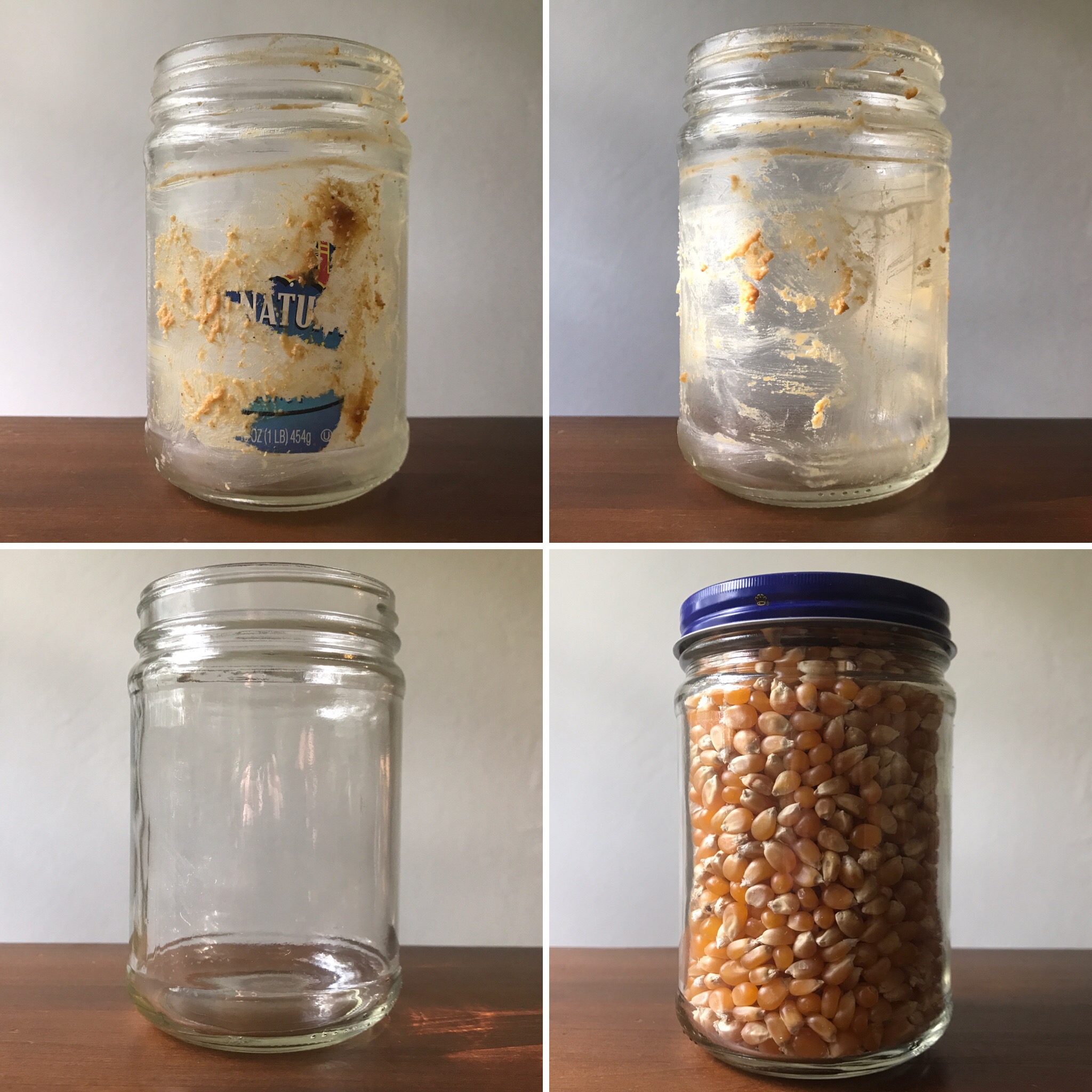
When we eat out, I often can’t finish my meal. Into the jar go the leftovers. I have lunch packed and ready to take with me to the office the next day. By taking a jar with you to restaurants, you avoid a common zero-waste dilemma—to waste the food or waste the disposable container your server really wants to hand you.
Almost everyone has a jar. If you don’t own a suitable jar, ask friends for their discarded jars, search through some recycling bins (I’ve found several very nice ones in there) or ask around at restaurants for empty jars. MK works in restaurants in the summers and brings home the nicest jars!
4. Metal cutlery
I can’t imagine you don’t own metal utensils. If not, go buy some at a thrift shop. Get at least two knives, two forks and two spoons. I see piles of these at my thrift shop and have bought quite a few to use in my cooking workshops.

5. Chopsticks
If you don’t have any, the next time you eat at your favorite restaurant that provides throw-away ones—the restaurant you’ve been avoiding because you hate the idea of those chopsticks going in the trash—just take the pair you use home, wash them and tuck them into your bag.
6. Cloth napkins
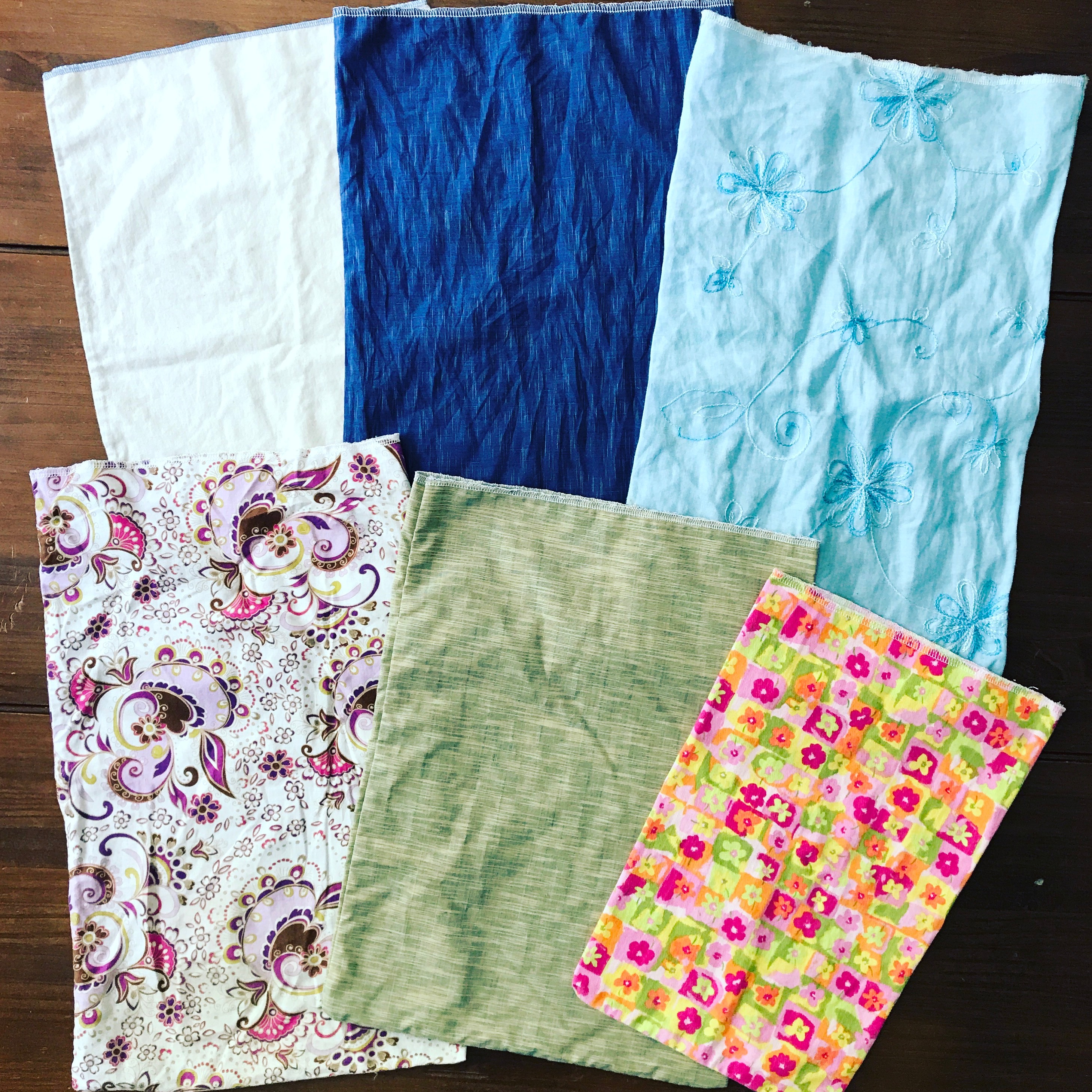
If you don’t have any cloth napkins, sew some. If you have no fabric, go buy an old sheet at a thrift shop and use that. If you have no sewing machine, check your library. Several libraries in my area now have banks of sewing machines available to use on the premises.
I own a serger that I love to use (when it doesn’t act up…). It makes the neat rolled hem you see below. For napkins, I just cut out a square of fabric and finish the edge with this stitch. I’m too lazy to make a real hem. But of course that’s an option and it looks beautiful. You’re a better person than I…

7. A bag to put everything in
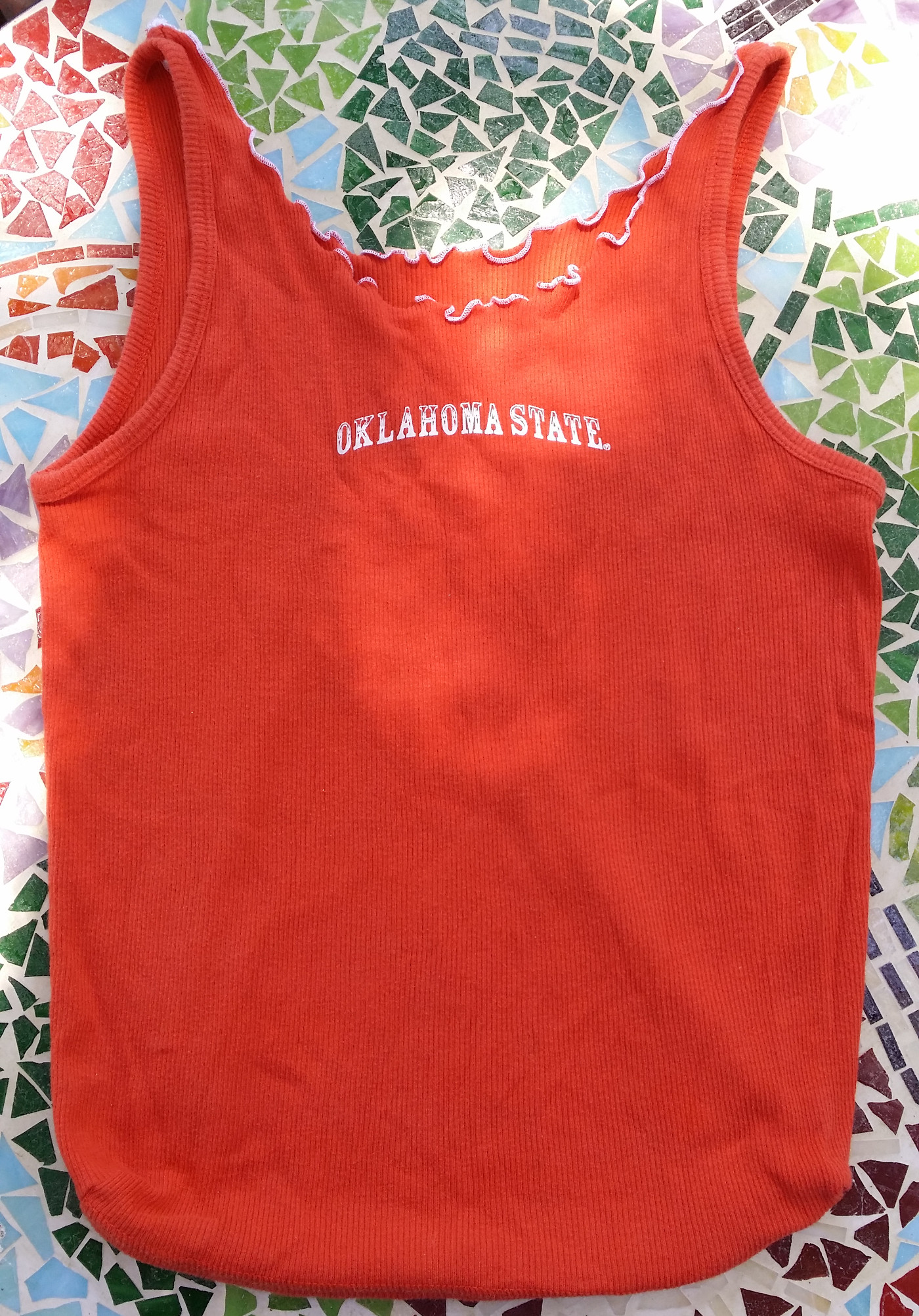
Most people now have reusable shopping bags. If you don’t, you can transform an old t-shirt into a bag. Surely you have an old t-shirt don’t you? I’m starting to worry about you—first you had no jar, then no metal utensils, now not even an old t-shirt!
A few years ago, a fellow blogger, Christina of Little Sprouts Learning, sent me a shopping bag her daughter had made from an old tank top. Below is a closeup of the inside bottom serged together, with a bit trimmed off the sides and serged there to make a bit of flat bottom. Very smart! To make handles in a t-shirt, cut out the arms and finish the edges.

8. Optional: a lunch container
I put this one as optional because you may not have a suitable metal or glass container and the metal ones especially can cost quite a bit. I sometimes see metal or glass containers at thrift shops.
A container to eat out of will keep many paper plates and plastic containers out of landfill. I attended a funeral a few months ago and Chandra and I avoided the disposable plates for the delicious catered buffet by pulling out my metal containers. We may have looked like weirdos, but people noticed and asked lots of questions, which spurred much discussion and got people thinking and talking about their waste. Oh and many of them said “What a good idea!”
Shopping
9. More cloth shopping bags
See number 7 above. You’ll want several of these—at least five. I hope you have lots of old t-shirts. I once saw a woman at the grocery store with the most awesome shopping bag ever, which she had made herself. The body of the quite large bag comprised a patchwork of jean parts from a couple of pairs (the seats of the jeans, the fronts, parts of the legs) and she had used waistbands for handles. A sturdy bag like that can hold lots of heavy groceries.
10. Cloth produce bags
These reduce piles of plastic waste. I use mine for buying fruits and vegetables and sometimes for larger items at the bulk bins, such as oats, nuts and dried fruit. I support plastic bag bans but they do not address the massive amounts of plastic going into the bags, such as plastic produce bags. I make mine the same size and shape as standard issue plastic ones. When my bags get dirty, I toss them in the washing machine. You don’t really need a pattern for these, but you’ll find mine here.
11. More jars
Jars need not be matchy-matchy—or cost a dime. I pilfered most of the jars in the pic below from recycling bins or restaurants. When you reduce your waste, you increase your jar consumption. Many of us don’t know how to stop collecting jars and need a 12-step program.
I use my glass jars at the bulk bins (and for many other purposes). Get the weight on these before you fill them up. At some stores, customer service will weigh them for you and mark that weight (the tare) on them. Other stores set out scales and you weigh the jars yourself. When checking you out (my, you look good today!) the cashier will deduct the weight of the jar from the total weight of food-filled jar. This way you pay for the weight of the food only.
In the summer, I bring jars to the farmers’ market for berries. That way I bring home whole fruit rather than jam.
