

For Earth Day this year, I visited Hamlin School in San Francisco and discussed waste with students from Kindergarten to grade eight. Considering my audience, I wanted to keep things straightforward and to the point so I came up with a list of steps to reduce food waste at home. I figured most adults might find this information helpful also and so decided to post it here on my blog.
Before my daughter MK and I arrived at the school, we went shopping at our favorite store, Rainbow Grocery, and displayed our zero-waste shopping haul on our table for the kids, parents and teachers to check out. I don’t think they had ever seen anything like it. “What’s this?” most of them asked.

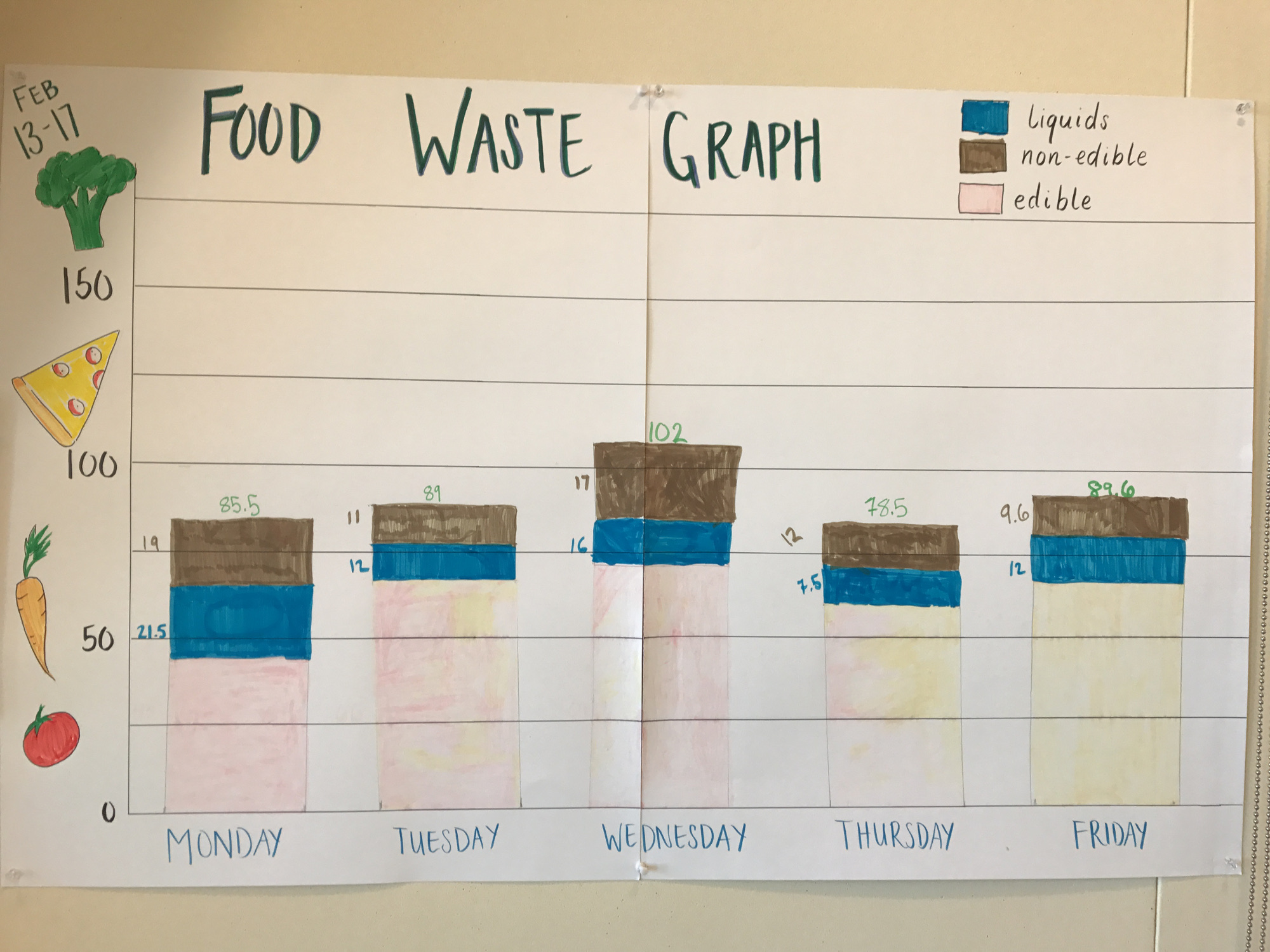
The theme for the day was food waste. I spied on the wall of the cafeteria the chart pictured below, which the kids had made to track their food waste for a week. Tracking your waste is usually very eye-opening.
1. Make a simple meal plan for a few days
Take stock of the contents in your refrigerator and pantry. You likely have enough food on hand to cook a meal or two. Cook these meals first. Make a list of missing ingredients for your meal plan. When you shop, stick to the list. Buy only what you need.
2. Shop more frequently and for less food
If you have time to do this, the smaller amounts of perishable food you buy have less time to go bad.
3. Learn to cook without recipes—freestyle cooking
If you strictly follow recipes, you’ll end up with a pile of ingredients you bought just for those recipes. Instead, let your refrigerator and pantry dictate what you’ll cook. You can throw all sorts of vegetables into soup, stir-fry, frittata or quiche, for example.
4. Store leftovers in glass jars and containers
If you can see it, you’re less likely to waste it. Leftovers in plastic takeout containers often sit in the back of the refrigerator unnoticed until it’s too late.
5. Repurpose leftovers
Fry leftover pasta and eggs in a pan, toss in chopped vegetables and sprinkle with cheese. Reincarnate chicken—make chicken pot pie. Turn bruised fruit into a quick bread or crumble.
6. Learn to preserve food
A head of cabbage will last a couple of weeks at most but when you transform it into kimchi, it will keep for a year at least.
7. Repurpose food “waste”
- Store vegetable scraps and bones in the freezer to make broths
- Stale bread makes delicious bread crumbs, croutons, bread pudding…
- Fry up organic potato skins in olive oil and butter *
- Make candied citrus peels with organic orange or lemon peels *
- Pickle organic watermelon rinds *
- Enjoy crackers, waffles, pancakes and more from discarded sourdough starter
- Make vinegar from fruit scraps