Imagine time travel was a thing, we worm-holed our way back to 1900 and convinced a bewildered bystander to get into our telephone booth with us. Upon arrival in the present, they wouldn’t recognize the consumer products on this list. And while they wouldn’t recognize heart transplants either, those provide a benefit. The following don’t really, other than to marketers who earn big bucks to sell us stuff we don’t need. So if our time traveler sells snake oil, they might be pretty excited.
Cut these products from your life and save lots of money. (Go here for 21 more consumer products to ditch. And go here for another 9.)
Multivitamins
Let me preface the following by stating that I am not providing medical advice. If you have a condition that requires supplements, listen to your healthcare provider. However, most healthy consumers waste their money buying multivitamins. The packaging is also a waste: oversized plastic bottles with thick plastic lids, a synthetic wad of cotton-esque fabric stuffed in the bottle, all of which may be packaged in a box.
The global vitamins and supplements market was worth $129.60 billion in 2021—and continues to grow. However, this 2019 study, similar to studies before it, found that the use of “dietary supplements is not associated with mortality benefits among U.S. adults.” And in fact, certain supplements pose potential health risks. Those that cost hundreds of dollars per year put your wallet at risk as well.
To layer on further discredit, many multi-level marketing (MLM) companies sell vitamins and supplements. Almost no one makes money through MLMs. If a friend pressures you to join a vitamin MLM, you’ll both sell vitamins and attempt to recruit more friends. The remaining friends you haven’t yet alienated will also sell vitamins. Who will you all sell vitamins to?
Alternative
You’d be better off spending that multivitamin money on fresh, local vegetables at the farmers’ market. They also taste better than pills.

Bottled beverages
Speaking of vitamins, when you buy vitaminwater, you essentially pay for water plus some additives—but mostly slick advertising. Same goes for Hint. And while I’m no nutritionist, I think I can safely say that soda is unhealthy. Like soda, energy drinks also contain lots of sugar in addition to loads of caffeine (some brands contain more caffeine than coffee).
Every year, new novelty drinks hit the shelves in the hopes of being the next big thing. Stores near me sell a fizzy CBD-infused drink for seven or eight dollars per 16-ounce bottle! And of course, almost all of these are packaged in potentially chemical-leaching plastic. (Bottles made of recycled plastic leach more chemicals than bottles made of virgin plastic.)
Alternatives
For the price of one of those CBD-infused drinks, I can buy a 16-ounce jar of looseleaf tea at the bulk store and drink it all day, every day, for a week. I prefer looseleaf not only for its taste but for what it lacks. Many tea bags contain plastic in the bag’s sealant. The paper of some brands of tea bags contains plastic. And in the case of supposedly upscale “silky” synthetic bags, the bags themselves are made entirely of plastic. (Synthetic is plastic by another name.) One of these silk-like bags can shed billions of microplastics into a single cup of tea.
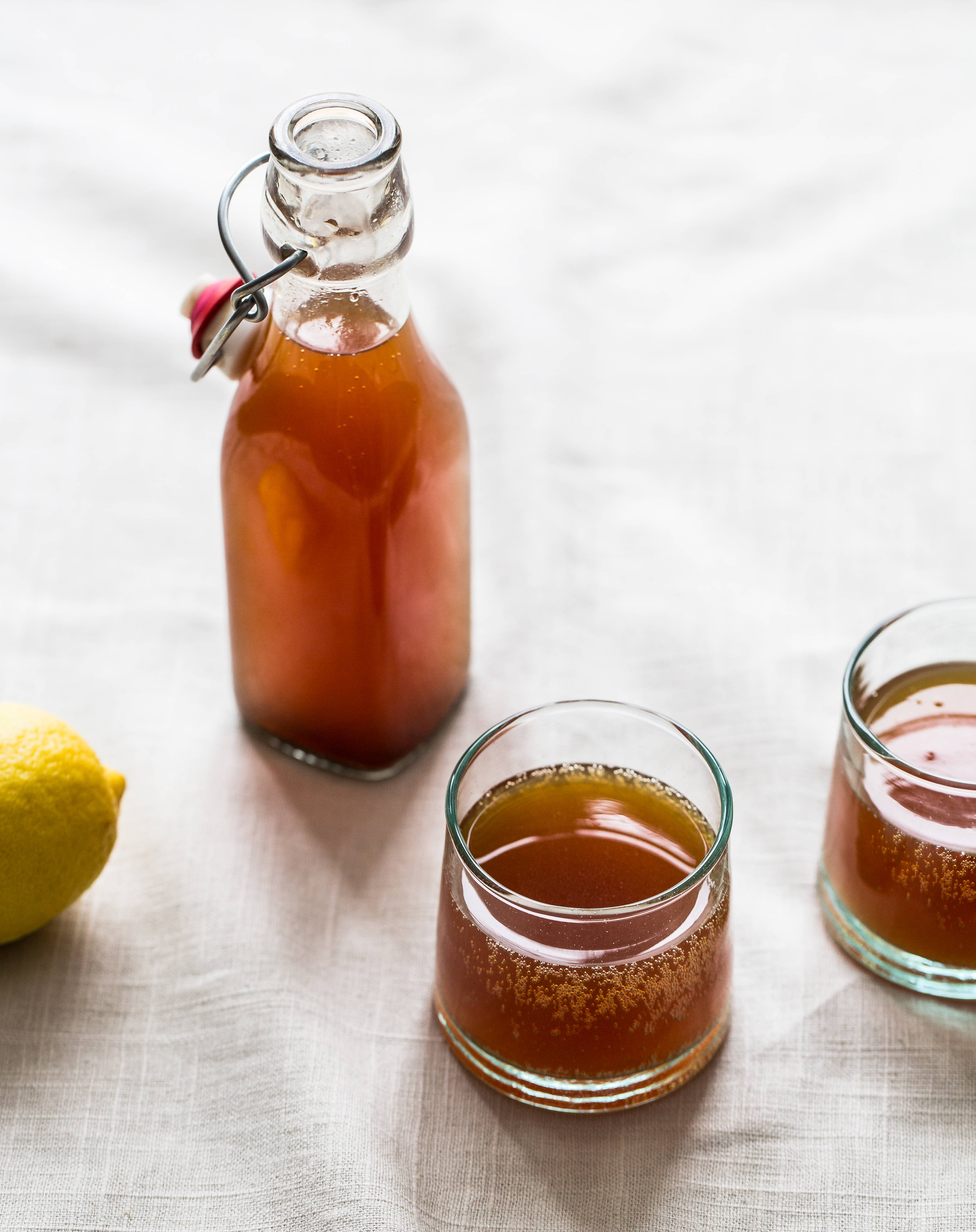
In addition to tea also brew up ginger beer, kombucha, naturally carbonated lemonade and other natural sodas, iced tea and so on when I want a treat. These all taste incredible!
Store-bought salad dressing
This popular brand of balsamic vinaigrette costs four bucks, on sale. It contains: “Water, Balsamic Vinegar (Wine Vinegar, Concentrated Grape Must, Caramel Color), Soybean Oil, Sugar, Salt, Contains 2% or Less of: Extra Virgin Olive Oil, Spice, Xanthan Gum, Natural Flavor, Annatto Extract (Color), Sodium Benzoate and Sorbic Acid and Calcium Disodium EDTA (to Protect Quality).”
Fat (the soybean oil and minimal olive oil) does not mix with plastic. As this Guardian article advises, “Don’t store fatty or oily foods in plastic—many chemicals used in plastic are fat soluble and are more likely to leach into fatty food.”
Alternative
A simple vinaigrette made with detectable levels of olive oil and my homemade wine vinegar will taste infinitely better than store-bought. Just add each ingredient to the salad, along with salt and pepper and toss. It won’t save much money but homemade tastes better and you avoid ingesting fat stored in plastic.
Bags of ice
At the grocery store the other day, I noticed a sticker on the entrance door that advised, “Don’t forget the ice!” With a little bit of planning, you can “Forget the ice!” skip the single-use plastic bags and save money.
Alternatives
Yes, frozen water is very convenient when we need it but we pay a premium for that convenience. I wonder if any company has bottled water vapor yet. Then all three forms of water will be packaged and marketed. (This company sells bottled air. And it has competition.)
You have at least a few alternatives to bagged ice:
- Make ice cubes every day several days in advance before you need them.
- Make giant blocks in a stainless steel bowl. Once frozen solid, let it sit at room temperature for a few minutes to melt a teeny bit before sliding it out. A large block takes longer to freeze—and longer to melt—so plan ahead and make your block early. The block in the pic below lasted in the cooler over an entire 4-day camping trip.
- Fill old plastic containers with water and freeze them. Good contenders are tubs of nutritional supplements or plastic drink jugs you stopped buying after reading this post. Leave a few inches of headspace to allow for expansion. You now have homemade freezer packs minus the chemical goo inside the commercial versions.

Gimmicky kitchen gadgets
Save your money by eschewing banana slicers, 3-in-1 avocado slicers and garlic peelers. I do have a couple of gadgets that I love—fodder for another post!—such as my grain mill. I imagine people sometimes buy these and never use them. I use mine regularly and love it; my family loves the bread. But most “unitaskers,” as Alton Brown calls them, are a waste of money and materials.
Alternative
You can slice bananas and avocados, peel and mince garlic—and more—with an infinity-in-1 chef’s knife that you likely already own. Keep your kitchen drawers and cupboards clutter-free and save money.
Souvenirs
I don’t enjoy dusting. If you buy lots of tchotchkes, you have to dust the tchotchkes, move the tchotchkes, dust the surface the tchotchkes had been sitting on, move the tchotchkes back… If I buy a souvenir, I want something unique and well-made. For the most part, snow globes and miniature monuments and fridge magnets are landfill in transition.
Alternative
Pictures and memories.
Fast furniture
Like fast fashion, fast furniture also squanders resources and overburdens landfills.
The EPA estimates that 9 million tons of furniture are tossed every single year. That’s roughly 5% of everything brought to landfills (a sizable chunk, especially when you consider the amount of food waste and packaging materials thrown away). Not only is it wasteful, but it’s also not a good investment.
“The Fast Furniture Problem,” Architectural Digest
Alternative
I’ll preface this by saying that if I need a new mattress, I’ll buy a new mattress. But for other furniture, I’ll look for secondhand. My daughter MK has moved home for at least a year and needs a dresser, for example. I’ll look first at Habitat for Humanity’s Restore. One hundred percent of profits support Habitat’s building of affordable housing. If I can’t find a dresser at ReStore, I’ll look for an estate sale or check Facebook Marketplace, my Buy Nothing Group or the curb. (I’m amazed by what I find at the curb.)

Facial tissues
The price of facial tissues won’t bankrupt you but disposables waste not only your money but also resources. Puffs, for example, are made almost exclusively from virgin pulp harvested from the carbon-sequestering Boreal forest. You can’t make up such an absurdity.
Alternatives
Make yourself some reusable handkerchiefs. If you sew, cut out squares of worn flannel sheets or pajamas and finish the edges. If you don’t sew, cut up old t-shirts; the edges won’t fray. I store our handkerchiefs in a jar and keep a couple in my bag, along with an unpaper towel. The handkerchiefs take up little space in the washing machine after using them, they cost nothing and, best of all, they feel so good on my nose compared to paper! How did marketers convince us to buy the paper stuff?!

Workout clothes
Statista estimates that globally, the sports apparel market will generate revenues of $191 billion in 2022. Most athletic apparel is made of stretchy fabric—in other words, synthetics. When sythetic fabrics—polyester, nylon and blends—go through a washing machine, they shed plastic microfibers. A typical load can shed 700,000 of these tiny plastic fibers, which enter our waterways and all levels of the ocean food chain, from plankton to marine mammals to us.
Alternative
If you quarantined during Covid, you have old sweats and t-shirts lying around. Dig those out for the gym or jogging or however you exercise.
Halloween costumes
As of writing this post, Halloween is only a few weeks away. Like most holidays, Halloween has morphed into an off-the-rails consumer fest. This year, Americans are poised to spend a record-breaking $10.6 billion. Of that, $3.6 billion will account for costumes.
The NRF estimates that of that $3.6 billion, $1.2 billion will go toward children’s costumes while $1.7 billion will be spent on adult costumes. The remaining $0.7 billion is earmarked for pet costumes.
“How Much Americans Spend on Halloween,” Investopedia
Adults are a bigger costume market than kids (and thankfully, dogs). Most of these flimsy synthetic costumes will be worn once and either discarded immediately or after sitting in a closet for 10 years. And don’t even get me started on pumpkin waste!
Alternatives
Think back to your best Halloween costume of all time. I bet you didn’t buy much for it, if anything. If rifling through your closet doesn’t inspire you, consider hitting the thrift shop for ideas. Or organize a costume swap in your neighborhood or at your school. Save money and keep costumes out of landfill!
Check out my award-winning cookbook!
- Taste Canada silver for single-subject cookbooks
- Second-place Gourmand cookbook award in the category of food waste
- Shortlisted for an award from the International Association of Culinary Professionals
Learn more about my book here.