

Wheat paste is an effective alternative to glue sold in plastic bottles. (Go here for a rice glue recipe.)
Last month, I raffled off two beautiful bread saws that my partner Chandra made out of reclaimed, untreated wood. We raised $1,912 for fire relief! Thank you to everyone who entered the drawing.
Before we decided to do this fundraiser, I wondered what kind of plastic-free packaging I could use to ship the two bread saws. I have never found paper packaging tape in a store here (I’ve looked everywhere) and online, I’ve found only very expensive, very large rolls that I’d never be able to use up.
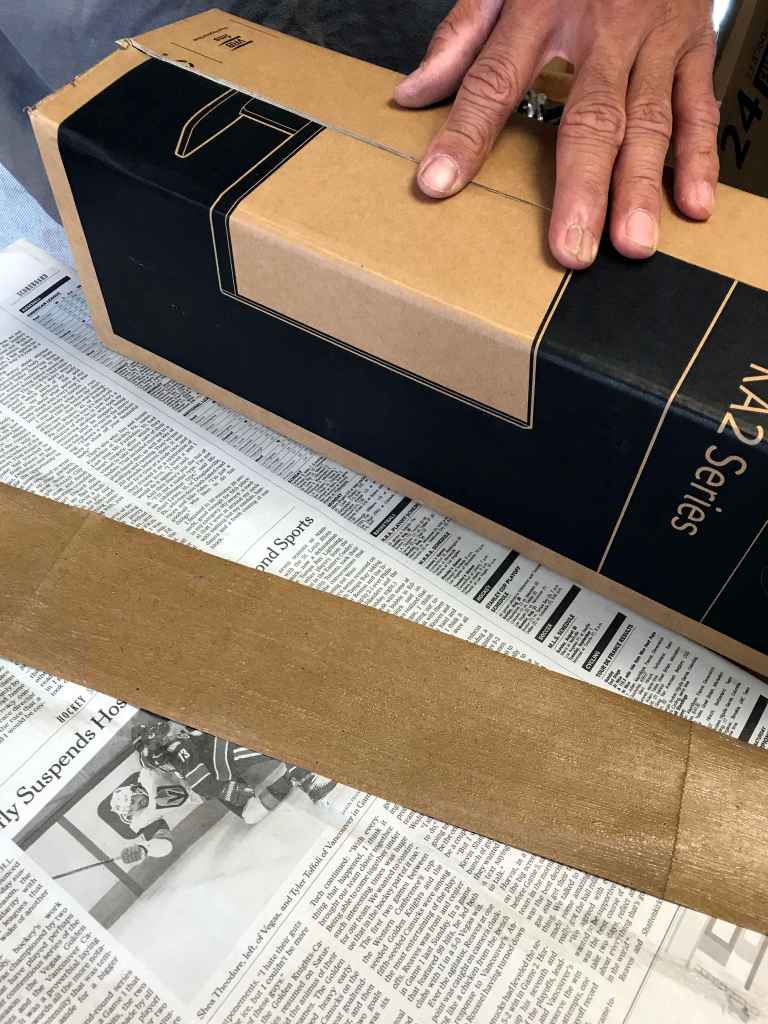
Chandra came to the rescue and said we could make our own paper tape (he actually did all the work). For each parcel, he made custom boxes out of an old cardboard box and cut paper strips out of heavy brown paper bags to use for tape. After making wheat paste and letting it cool, he brushed it onto the brown paper strips and secured the boxes with the homemade tape.




People had lots of questions about wheat paste on social media
Does wheat paste dry clear?
When dry, the glue is essentially invisible. If you use it on glass, you may detect a tiny bit of opacity.
How do I store this if I don’t use it all?
I’ve been storing this current batch of wheat paste in a clean jar in the refrigerator for two weeks. I used some today and it still works well. It does thicken up a bit, so after I removed some, I added water to thin it out before I brushed it onto my paper.
You can also add a splash of vinegar to make the wheat paste last longer. Chandra warns that the wheat paste will no longer be archival however. For most people just wanting to label jars or wrap gifts, that won’t matter.
If I mount a poster to the wall with wheat paste, will removal damage the wall?
Wheat paste is essentially wallpaper glue. When you remove wallpaper, you might damage the paint or the wall underneath. I would glue a test patch first in a closet or behind a dresser or elsewhere that won’t show. Leave your test up for a week or so, soak it with water and carefully remove it. If removing the test doesn’t damage the paint or wall, then consider mounting your artwork or posters on the wall.
Can I make a gluten-free version?
Yes! You can make glue out of leftover rice, for one alternative. Go here for the rice glue instructions.
If I glue homemade tape to a cardboard box, is the box still recyclable?
Yes, the cardboard can still be recycled. Depending on your city, waste management workers tear plastic tape off of cardboard boxes at the recycling depot before they recycle the cardboard. They may leave paper tape on. You can read more about recycling cardboard here.
Can I make tape and stickers in advance to use later?
Chandra told me that I could indeed make tape, stickers or whatnot in advance, let the wheat paste dry and wet it down when I want to use it. But I thought I better try it first. It worked! I cut open an empty flour bag, brushed it with a coat of wheat paste, let it dry and added a second coat a couple of days later (I could have brushed on the second coat sooner but was busy). I waited a day before cutting my strip, wetting it thoroughly and taping my box closed.


My favorite wheat paste use
I envision my Instagram feed filled with jars plastered with homemade labels. Gifts in jars would look super cute with homemade labels glued to them. When you want to remove the label, soak the jar in water for a couple of hours. The label should slip off. (Go here for more on de-labeling jars.)
While I can tell at a glance what my unlabeled jars contain, occasionally someone cooking in my kitchen will have trouble distinguishing spelt flour from whole wheat, curry powder from ground turmeric or, worse, paprika from cayenne. And then there was that one time I mistook confectioner’s sugar for cornstarch…
Several people over the years have asked me for a good way to label jars. I think I’ve found it!


Wheat Paste Recipe


When Chandra worked as the matter and framer at the Cantor Arts Center at Stanford, he made wheat paste to hinge precious works of art. Yes, it’s that good.


Wheat Paste
Ingredients
- 1 cup water
- 3 tablespoons all-purpose flour
- ⅛ teaspoon vinegar optional
Instructions
- Add the water to the pot. Over medium-high heat, while slowly adding the flour, whisk the mixture aggressively and continuously. The paste will begin to bubble. Keep whisking. Within a couple of minutes it will thicken. Turn off the heat.
- Chandra likes his wheat paste quite thick. You might want yours thinner. Remove from heat when the paste has reached the consistency you like.
- If desired, to extend the expiry date on the wheat paste, stir in the vinegar.* (see Note)
- Store leftover wheat paste in a clean glass jar in the refrigerator.
Notes

