

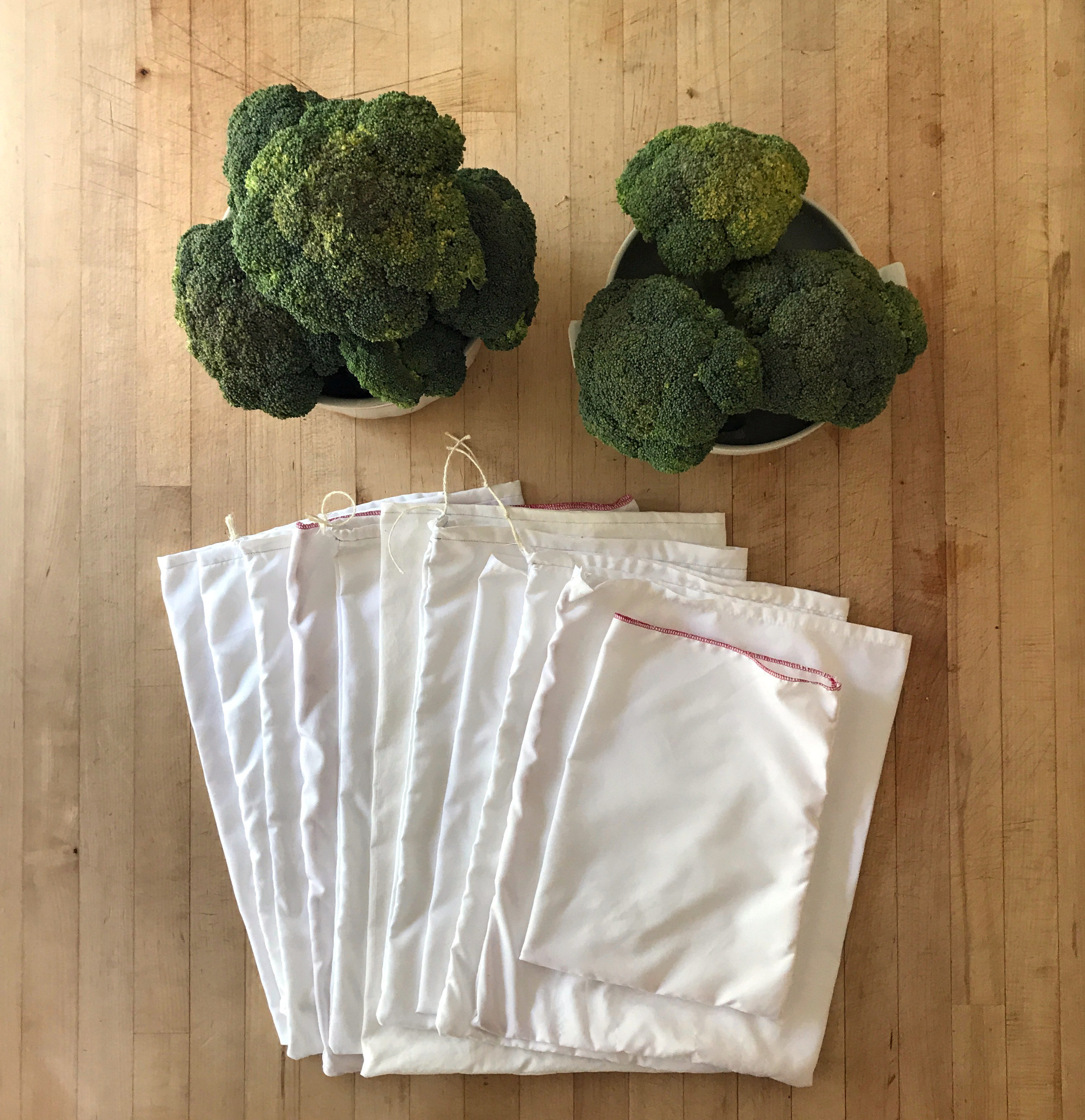
This past Sunday, eight people from the Meetup group I belong to met to sew a pile of simple cloth produce bags. Everyone pitched in. Some ironed, some cut, some sewed. In the flurry of activity, I didn’t do an exact count of the bags we churned out but including the handful I finished up after the event, we easily sewed over 50 in a couple of hours. (We also made some beeswax wraps, which I’ll write about in a separate post soon.)
I sew extremely simple produce bags—rectangles the same size as the plastic ones that stores provide where I live. You can find instructions for my bags here and here. Some people in our group added a casing and drawstring to their bags—sewer’s choice.
Plastic Shopping Bag Bans Are a Start
I wholeheartedly support plastic shopping bag bans but most consumers still put lots of smaller plastic bags into their reusable shopping bags. In all the years I’ve been using cloth produce bags, I don’t recall any cashier ever complaining about them. At the farmers’ market, vendors regularly compliment me on them and often give me an extra small piece of fruit or vegetable.
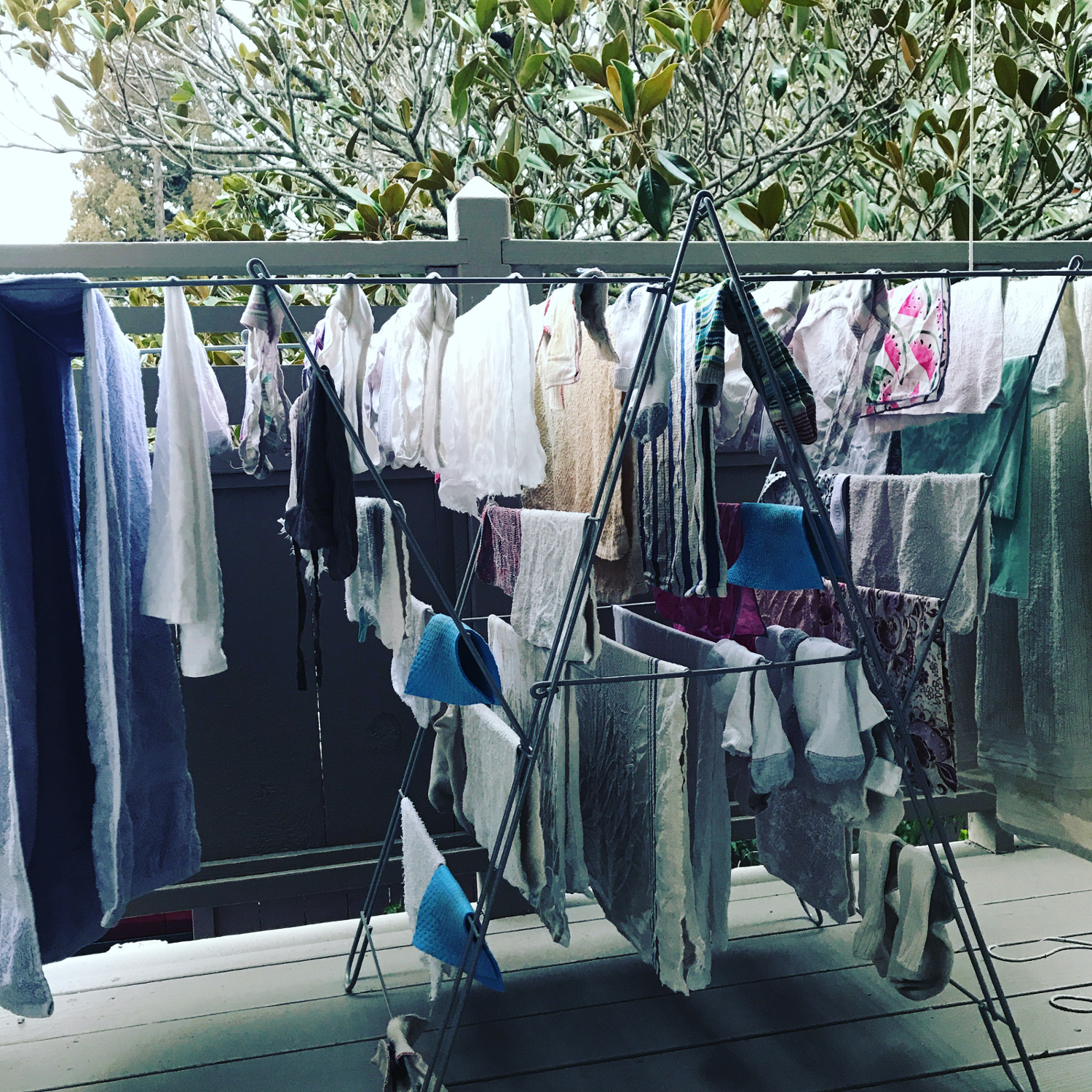
These produce bags last for years. My daughter MK and I sewed our first pile of cloth produce bags in 2011 and I still use them. I store them in my reusable shopping bags, ready for action. Once dirty, they take up very little space in the washing machine. The fact that I rarely use a dryer makes them (and towels, sheets, clothes) last longer.
I use my cloth produce bags for:
- Produce. I usually take at least five with me to the farmers’ market. Leafy greens keep really well stored in these bags in the refrigerator.
- Certain bulk foods. These lightweight cloth bags work well for larger items, such as nuts, beans, rice and popcorn. I have used them to buy flour but prefer jars for that. I find getting every last bit of flour out of fabric bags difficult.
- Freezing and storing bread. People ask often how I store bread. I store whole loaves in these bags in the freezer. I don’t freeze bread for very long—a couple of weeks maximum. I store bread on the counter in these bags also.
- Buying bread and baked goods. I don’t bake all of our bread. Sometimes I buy it at a local small grocery store that sells Acme Bread loose.
- Packing lunches. The smaller bags work well for a sandwich (unless it has lots of juicy pickles, in which case, I use a metal LunchBot).
Find A Group or Form One
During our Meetup, I posted a few live videos on Instagram. Several viewers commented that they wished they had a similar group where they live. And in fact, they may! Through the organization Boomerang Bags, “Volunteers from all walks of life get together to make re-useable ‘boomerang bags’ using recycled materials, as a means to provide a sustainable alternative to plastic bags.” Check the website for a Boomerang Bags community near you. If you can’t find one near you, click here if you’d like to start one.
I organized our sewing fest through the Meetup group, Zero Waste Show and Tell Bay Area. I’ve attended several events now, including a creek cleanup, a community swap meet (read about that one here) and this maker Meetup.
Plan Your Event
To organize an afternoon or evening of produce bag sewing, follow the steps below.
1. Find your people
Meetup makes this easy. You can probably find a group that focuses on sustainability where you live. Join and suggest this activity. If you can’t find a group, you can form your own. You need only a couple of other people to get started. I’d suggest finding these in the real world because you need people in the Meetup group to attract people to the Meetup group. Do you have any like-minded friends? Neighbors? Coworkers?
2. Find a suitable location
If you have a small group of people you know, you could hold your first sewing event in your home. If you don’t have space and you don’t know the people attending, you could rent a coworking space such as WeWork (which now owns Meetup), with everyone pitching in to cover the cost.
Here in the San Francisco Bay Area, some libraries have banks of sewing machines for the public to use on the premises. Your library might have a similar setup.
The sewing will run more smoothly with at least three stations: one for ironing, one for cutting and one for sewing.


3. Pick a date and time
Put a date on the calendar and then figure out the rest. I had been saying for months that I would sew a big new batch of produce bags and it never happened. Putting a date on the calendar forced me to get my serger working and to dig out and wash the sheets people had given to me for the bags.
4. Figure out what equipment you need
For eight of us, we had two sewing machines and one serger (an overlock machine), two ironing boards, two irons, one large table to sew on and one for cutting fabric. Plan on bringing a power bar too. If you offer to bring a sewing machine, get it in working order well before the event.
5. Find the fabric you need
We made our bags out of clean, lightweight, old cotton sheets, thus giving them a second, useful life. Ask around for sheets and other fabric. I’ve found good sheets in thrift shops also. Go for flat, not fitted (no elastic or corners to deal with when cutting). You can cut at least 20 produce bags out of a queen size sheet, more if you make smaller bags. People also brought fabric scraps to use from their stashes. Opt for natural fibers that won’t further contaminate our water supply with plastic microfibers.
6. Figure out what to do with the bags
Everyone in our group took home at least a few bags. I set aside 11 for our community kitchen where I live. On Sunday, we briefly discussed approaching a small co-op grocery store in our area that we think might be open to taking our bags for lending out. I have a vendor in mind at the farmers’ market that also may be open to this. This is our ultimate goal—to get the bags out in the greater community for people to borrow.
We plan on meeting again in May to sew more bags. We’ll see how many we can crank out then.
7. Tally up the bags
I will do this the next time. I would like to have even just a modest idea of how many plastic bags we are keeping out of landfill. Every cloth bag used merely once a week replaces over 50 per year. Multiply that by the 50 (plus) we made and that’s over 2,500 per year. At our next Meetup, I’ll keep a list of all attendees handy so everyone can jot down how many bags they take as they leave, and I’ll count what’s left.

Our little Meetups won’t save the world. We need regulation to drastically curb plastic production and thus pollution. Spending a pleasant afternoon with a group of lovely people to sew reusable produce bags may seem trivial. But these small acts of rebellion, as my friend Meg calls them, can create a ripple effect. Your group may grow and inspire other groups to pop up. Your actions can start a conversation and encourage others to think about our planet and how we’re trashing it. You can help build community and bring about change.
Never doubt that a small group of thoughtful, committed citizens can change the world; indeed, it’s the only thing that ever has. — Margaret Mead